Parenting

Practical Life: From Hand Washing to Entrepreneurship

BlogDec1420.jpg

Practical life is one of Montessori education's core components, and it’s one of the vital elements that make it stand out from other models. The work comes in a variety of forms, too. Guides give direct lessons, children are afforded time and space to practice, and much of the learning is built authentically into the daily routine.

What practical life looks like throughout the different stages of childhood is where things get interesting. Read on to learn a bit about the skills we teach at various ages and how you might implement the practice at home with your own child. 

Toddler Environments

  • Food tasting - In lieu of a traditional snack time, many toddler classrooms include tasting opportunities. This includes a formal sit down with all the children at a table and incorporates teaching children how to pass serving dishes or serve one another. The fun and routine of regular food tasting allows toddlers to try a variety of foods and flavors that they may not have otherwise.

  • Table setting - To prepare for food tasting, children take turns helping to set the table. This is a skill that toddlers are fully capable of (with a bit of guidance) and allows them to contribute to the group while building a sense of confidence.

  • Window washing - The funny thing about young children is they love to clean. For adults, a task like washing windows is just one more tedious item to check off the list; for kids it’s an exciting new adventure that makes them feel grown-up. Toddler guides provide children with the necessary tools, they give a brief lesson, and allow the children to practice.

  • Sweeping - As you might imagine, there are plenty of spills in any classroom! One of the first ways many Montessori guides teach children to sweep is to tape off a small square on the floor. Children are meant to sweep debris into the square to make it easier to then collect with a dustpan and brush. This is something you can try at home, too.

  • Folding napkins - Folding laundry may seem like an endless task, but when your toddlers want to help, let them! Small, square items, like napkins, washcloths, and dish towels, are perfect for small hands to practice with. Demonstrate wordlessly with one or two, then give them a pile to work on. You will be amazed at their intense focus and ability.

  • Handwashing - There are specific Montessori lessons to teach a child to wash their hands. This is an especially important skill for them to master now, and parents can easily demonstrate and guide children through the steps at home as well.

  • Pouring activities - The opportunities for pouring are endless. Montessori environments may provide children with small trays complete with prepared pouring activities. This may include a small pitcher and a bowl that water can be transferred between.

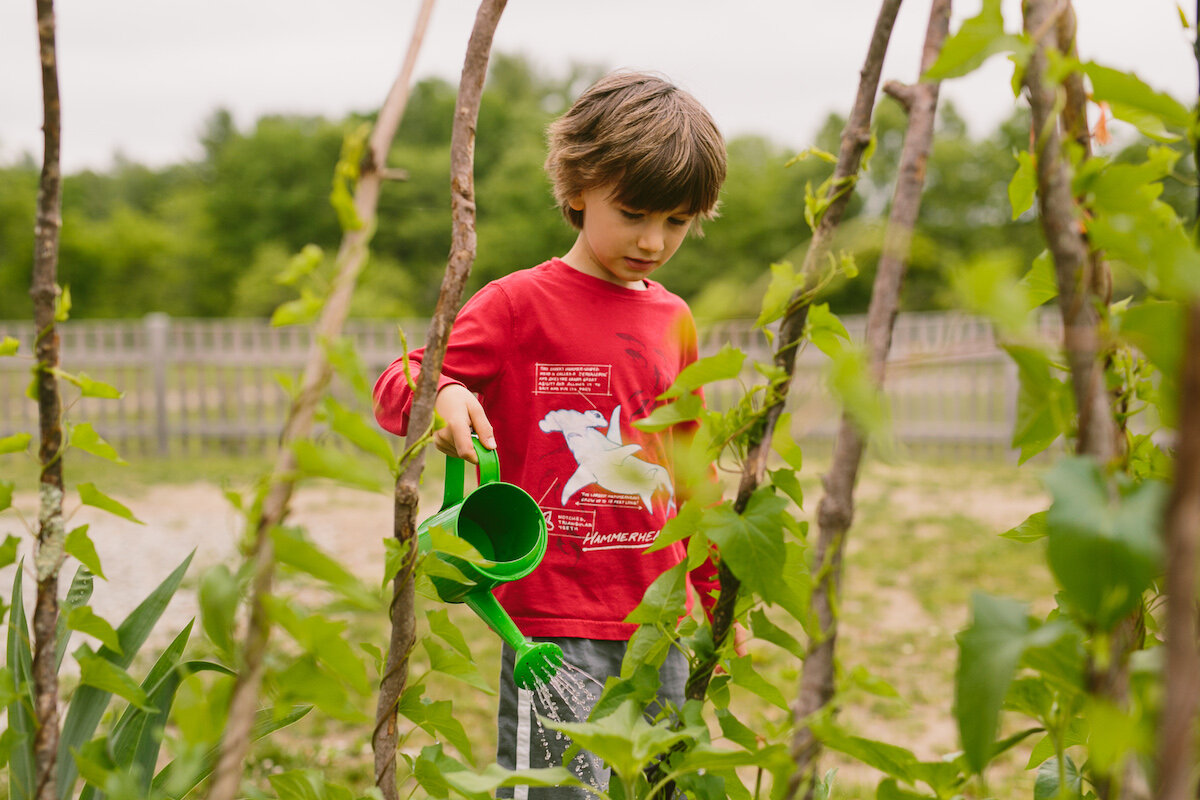
  • Plant care - With guidance, toddlers may begin to learn about basic plant care, including watering.

  • Basic organization - We believe it’s important to teach children organization right from the start, and children in the first plane of development have finely tuned sense of order, which makes this great timing. When a child arrives in the morning, they are responsible for hanging their coat on their designated hook. If a child takes a work off a shelf, we teach them how to return it to its proper spot.

  • Putting on and taking off one’s coat and shoes - Basic self care is important, and another great opportunity to nurture independence. It may take some time and practice, but toddler guides teach and encourage children to put on and take off their own shoes and coats. Want to try this at home? Check out this great video of the “Montessori coat flip.”

Primary Environments

  • Controlled walking - Refinement of gross motor skills is one important area primary children work on throughout the course of their three-year cycle. Montessori guides may tape a circle onto the floor for children to walk on. As a challenging extension, students may hold a bell while walking, with the goal of not allowing it to ring.

  • Carrying items - It’s important to teach children how to carry items properly, whether that be a tray of work, a glass of water, or even a chair safely across the room.

  • Transfer work - Small trays of transfer work can be found on the shelves of any primary classroom. Children work on their fine motor skills by moving small objects (pom poms, beads, stones) from one bowl or container to another using various tools (tongs, spoons, etc.).

  • Using tools - From kitchen tools like whisks and apple slicers, to handy tools like screwdrivers and hammers, primary-aged children have the opportunity to try out and master a wide variety.

  • Pouring activities - Much like in the toddler environment, primary children work with pouring activities. Rice is often used, as well as water, and cleaning up spills is a part of the work.

  • Rolling mats - Montessori children use work mats to define their space (both for themselves and their classmates). Learning how to properly roll and store these mats makes them neat and available to the next child.

  • Plant care - A continuation of the toddler work, children in the primary classroom learn how to water plants, as well as dust their leaves and ensure proper sunlight. They may even have opportunities to garden with their class.

  • Cleaning the classroom environment - Children aged 3-6 are still primed with a sense of order, and they delight in assisting in cleaning the classroom environment. Using real mops, brooms, and sponges, they are given lessons and ample time to practice.

  • Handwashing - Again, a continuation of the work in the toddler classroom, primary students are taught how to carefully and effectively wash their hands.

  • Dressing frames - These lovely Montessori materials consist of a wooden frame with fabric and various types of fasteners. One frame teaches children to button, while another allows for practice zippering, using hooks and eyes, buckling, lacing, tying, and more.

  • Food preparation - There are so many skills to be taught in the kitchen (and classroom!). Children typically start with cutting and slicing, then move on to spreading, stirring and mixing, peeling, juicing, and preparing basic multi-step snacks.

  • Grace and courtesy - We believe that caring for one another is a big part of our basic practical life skillset. We teach our students how to greet one another, how to have appropriate conversations, and how to welcome a guest into the classroom.

Elementary Environments

  • Food preparation - Food prep is often seen as a staple of the primary environment, but it should (and does) continue well beyond. Different schools and teachers approach this work differently, however, and it can take on so many forms. Some classes make a treat for each child’s birthday, while others prepare meals for special occasions, or even weekly.

  • Meal preparation - Beyond the act of chopping and cooking, many Montessori elementary students are able to experience the work that comes beforehand, including recipe selection and shopping for ingredients within a budget.

  • Cleaning the classroom environment - The glorious sense of order that graces the first plane quickly dissolves when children enter their elementary years. This means there are plenty of messes to clean up, and lots of opportunities to teach children how to do so. Working clean-up time into the regular routine is one way we foster a sense of responsibility in our students.

  • Plant and animal care - Elementary children continue to assist with plant care as they did in the primary years, yet this is often extended to assisting the guides with caring for any class pets. This is often done on a rotating basis, as most children are enamored with animals and jobs that involve their care are quite coveted!

  • Handwork - It is during the elementary years that children discover the calming nature of handwork. What often begins with simple finger knitting can take on a wide variety of forms. Children in a Montessori class can often be seen engaging in these types of activities during read alouds, when they complete their work, or when they need a moment to calm and/or center themselves.

  • Community service - During the second plane of development children are able to see the world beyond themselves. They begin to contemplate society and their role within it, while also harboring a deep sense of justice and fairness. This makes it the perfect time to introduce service learning. Service projects are best formulated by allowing the students to drive the mission with adults serving as guides who help out with logistics.

  • Grace and courtesy - As children age, grace and courtesy becomes more about how to interact with others on a deeper level. School-aged children have a strong desire to socialize, but they still have a lot to learn about how to do so with grace. We can help - by teaching skills like conflict resolution, and by reading stories about children who encounter typical social situations, priming them for discussions that create solutions.

  • Going out - Elementary children are ready to engage with the larger community. By allowing them to plan trips that are related to their studies or areas of interests, a whole host of skills can be taught, including phone etiquette, taking public transportation, and how to behave in different settings and speak with different people. Beyond the scope of the traditional ‘field trip’, going out involves the development of critical life skills.

Adolescent Environments

  • Business management - The Montessori adolescent environment is centered on the students working together to run a business. Their multiple years in the community mean they have opportunities to try out a wide variety of roles, too. While the traditional business is a working farm, many Montessori schools have adapted the concept to meet their own local needs.

  • Financial responsibility - Running a business includes making purchasing decisions, setting cost prices, and creating enough revenue to stay afloat. Montessori adolescents are able to have valuable practice making financial decisions before they ever leave for college.

  • Independent interactions with community members - Teens are social creatures, and Montessori programs allow them to develop connections with their larger community. Their work includes reaching out to and planning with other adults and businesses in the local community, giving them experience that will help them succeed in the future and be contributing members of their communities.

  • Meal planning, preparation, and food service - Whether this work is a part of their business or simply regular preparation of meals for one another, middle- and high-school Montessori students are able to have hands-on experience creating and serving meals to others. This will prepare them to learn healthy eating habits and nurture an appreciation for culinary arts.

  • Agricultural skills - Whether a Montessori adolescent program runs a full farm or a CSA for micro-greens, their work incorporates botany and an understanding of local agriculture. At the very least, this gives them an understanding and new connection to their larger food system.

Please note that the skills we have listed for each age group are far from exhaustive. These are just a few of the highlights! We hope you have found this article informative, and maybe even inspiring.  

Grace and Courtesy: More Than Manners

gracecourtesy.jpg

Sometimes it can feel like our society has abandoned previous social norms. In some ways, this is a good thing, especially when social norms are not inclusive or are harmful. Many of these norms, however, are important in nurturing a society in which human beings treat each other with kindness and respect.

Somewhere along the way we forgot our manners.

This brings us to a critical element in Montessori education: grace and courtesy. It’s so important to us, we even name it, and our teachers are trained specifically to address and teach grace and courtesy in their classrooms.

We certainly do not mean to say we live in a world full of rudeness (although it can feel that way at times!); there is plenty of good and plenty of people who do still care about grace and courtesy. What we are saying is that perhaps our society hasn’t emphasized it quite as much as we should have, and important parts of our humanity are sometimes being forgotten in the midst of regular discourse and relationships.

So, what can we do?

We can start by telling you where we focus our efforts. We can fill you in on how we teach the children in our care. When parents are able to recreate these efforts at home (as you likely already do), the effects tend to trickle outward into the community. In the short term, we are all modeling for those immediately surrounding us. In the longer term, we are working together to raise children who will go out into the world and do the same.

When our children are very young (infants and toddlers), the most important way we can teach grace and courtesy is through modeling. We can really show up for them. We can be present. We can be the people we hope they will grow to become. For many of us in today’s hurried world, this can mean slowing down a bit and noticing more.

Is your infant gazing at you? Gaze back. When they babble, echo their sounds or speak to them. When your toddler struggles to find the words to explain their emotions, sit, listen, and be there to supply them with the words they may not have. It’s also important to remember that our children do not just learn from their own interactions with us, but the interactions they see us having with others. Be mindful of how you speak with your partner, how you treat those in your neighborhood, how you interact with the barista at the coffee shop, and so on. Your child will be watching, and learning. 

As our children grow a bit older, we might give them opportunities to practice grace and courtesy in their home and classroom environments. We can teach them how to greet others, how to resolve conflicts, and how to help someone who needs it. We must also teach them how to care for themselves and their environments. From learning to brush their own hair and wipe the crumbs from their face after a meal, to putting away their toys and helping with basic chores, there are so many different ways we can encourage children to learn and grow.

During the early elementary years, children reach a different stage in their development. They are more capable of abstract thought and begin to learn about and think about the larger world around them. They also have an internal drive toward fairness and justice, which makes them primed to learn about peace, kindness, empathy, and generosity. We can be rather frank with children when teaching them about many of the injustices in our world. They want to learn, and they will want to help.

Service projects are a great way for children to engage in this important work. Some projects Montessori students have done with their class include:

  • Selling their old books to raise money to purchase a CSA share for those in need.

  • Visiting a nursing home to sing songs during the holiday season.

  • Cleaning up trash around the neighborhood.

  • Collecting food for and volunteering at a local food pantry.

Find a cause the child is passionate about and help guide them toward being part of the solution. It is important that the child be involved throughout the process for the learning to be effective. They must help decide what cause they want to address, as well as help in developing the plan of action, and completing the action itself. You may notice their concerns during the course of conversations with them, or you may need to ask.

A quick summary of how parents can support grace and courtesy work at home:

  • Allow your infants and toddlers to immerse themselves in the family environment and activities. Listen to them and give them your full attention when they need it. They may not have fully developed language, but they are full human beings, and we can show them the same honor and respect we do to people of older ages. This will not only allow them to feel their own value and worth, it will lay the groundwork for how they treat others throughout their lives.

  • Teach your preschoolers how to take care of themselves and create structures that allow them to practice these skills. Even young children are capable of so much more than most adults give them credit for! Teach them how to meet their own hygiene needs, how to choose appropriate clothing, and how to listen to their bodies’ nutritional cues...and then give them the space to do this work.

  • Preschoolers should also be given the information, tools, and time to help care for the home. Teach them basic chores and enlist in their help around the house. You may be surprised to find how much they enjoy this!

  • Guide your child to care for others. When they are young, the work may be focused on manners and resolving conflicts peacefully. As they grow, this work will continue, but when they develop the capability to look outward, support their desire to contribute to their community. Children innately want to do good. They want to help others. One of the most important ways we can support them is to guide them toward becoming good community members.

Thank you - for taking the time to read this article, for being a part of our community, and for allowing us to join you on your parenting journey. Together, with our children, we can work to create a more peaceful, empathetic, and kind world.

Children and the News

pexels-ketut-subiyanto-4474008 (1).jpg

It seems like this is as good a time as any to talk about how our children interact with the news. The news simply wasn’t designed with children in mind, and although it is certainly an important part of our lives, we have to remember how it may affect our kids. We hope this guide will give you some helpful tips.

Potential Problems

Before we jump into the problems, we would like to stop and acknowledge how important the news is. As adults, it is part of our civic duty to stay informed of current events. To be active and engaged citizens, we must know what is going on in our local, national, and global communities. The work of journalists is a noble pursuit, and we are grateful to the people who work hard to bring us information.

With all that said, not all news is created equal, and most news is not meant for all ages. The news we see and hear is increasingly sensationalized, and it can be hard to know what sources to trust. The way news is reported can often give us a skewed version of reality.

Would you have guessed, for example, that crime in the United States (including violent crime) has significantly decreased greatly over the past 25 years? Conversely, crime reporting has increased significantly and  become much more detailed. This gives us the sense that we live in a much more dangerous world than we actually do.

Whether we have the television on, the radio in the car, we read the news on our devices, or just chatting about events with our partners over dinner, our children are often there. They may see or hear things that are confusing or even frightening. Sometimes we may not even notice or think much about it, but too much exposure to the news, particularly in younger children, can lead to misunderstanding, fears, and anxiety.

So, what can we do?

Young Children (under 7 or 8)

Very young children really do not need to be exposed to the news for the most part. As a parent, you know your child best, however, and while some sensitive 8-year-olds still fall into this category, some kids a year or two younger may fare better.

When our children are little, we can try to save the news for when they are not in the room. Make sure to set aside some time for yourself (easier said than done, we know!) to read the newspaper or check your phone for headlines. If you watch the news on tv, you could do so after your kids are in bed for the night.

One important note: there may be news information you want to share with your children, including news that is not always pleasant. This may include events that will affect them or people in your family, or issues surrounding social justice that factor into values you share as a family. The best way to share this information is to talk about it together. This way you can personally deliver the information in a developmentally-appropriate manner, while also being there for any discussions that may arise.

School-Aged Children

As children get a bit older, they’re more likely to be present for the news, and they’re also likely to hear about big events from their peers. Consider a three-tiered approach:

  • Limit

  • Together

  • Discuss

Limit the amount of exposure kids have to the news. They don’t need to watch a full hour of coverage, nor do they need to watch particularly violent and/or graphic reporting. It’s a good idea for them to start learning about their world, but start small. 

When they are watching, reading, or listening to the news, try to ensure you are there with them. This is important to make sure they aren’t learning about topics they may not be ready for, as well as making sure their sources are trustworthy. Consider your child’s internet access and what they may come across independently. It may be worthwhile to install some parental controls.

Talk about the news together. Ask them how a particular segment made them feel, whether they have any questions, or if they understood what is happening. They may not want to talk much, but starting these conversations is important and will let them know you’re there for the times they do want to process the news with you.

Adolescents

Teens will be getting quite a bit of information independently of their families, whether that be from their friends at school or their own electronic devices. Our biggest job as adults? Checking in.

One of the greatest joys of parenting a teenager is that they are able to have in-depth conversations about more mature topics. They will likely be interested in at least some elements of the news. They will be forming their own opinions. This means you will have so much to talk about!

As with younger kids, we do want to make sure adolescents are learning what to look for in a trusted news source, and how to recognize sources that may not be valid. We also want to make sure the information they may be hearing from friends is accurate. Oftentimes teens hear sensationalized news from their friends, which can lead to lots of misconceptions. We can help them by checking in and asking whether they’ve heard anything about a particular topic, then filling them in on any facts they may be missing.

For more helpful information and suggestions, visit:

AACAP

APA

Common Sense Media

Separation Anxiety: Why It’s Normal and What You Can Do

pexels-ba-phi-1361766.jpg

Every fall, the doorways of classrooms become a place of transition. Children are often excited to skip into their school environment, eager to learn and play. Unfortunately, many children experience some level of separation anxiety, particularly when they are very young. The good news? This is totally normal! Read on to learn more about why, and what you can do to help your child feel good about the time you spend apart.

What does it look like?

Separation anxiety is completely normal. Most young children experience it at some point, and although it can cause stress for both the child and their parents, it’s actually a healthy part of development, especially during the toddler years. Separation anxiety can manifest in many forms. Parents might see their child display some of all of the following behaviors:

  • Crying

  • Physically clinging to parent

  • Loud protesting

  • Persistent worry when separated from parent(s) 

Separation anxiety typically doesn’t last very long for most children and resolves itself within a few weeks. Once toddlers begin to realize that their parents will actually return, their fears tend to alleviate. Even older children can experience short-lived bouts of separation anxiety. These times are often even harder for parents, but it’s all perfectly normal!

Why does it happen?

There are a variety of reasons children may experience separation anxiety, but as we mentioned above, it most often occurs during the toddler years. Any time from about 7 months of age through 2-3 years of age, children may go through a phase during which separating from their parents can be quite upsetting.

For infants, it’s about differentiating between strangers and people they know. This is obviously an important and healthy part of their development, although it can be heart wrenching when dropping your little one off with care givers in the morning before you head to work.

As children get a little older, the reasons shift toward a fear that the parent may leave and not return. After a period of time, the child learns to trust that the separation is temporary, and the anxious behaviors subside.

There are plenty of other reasons why a child may experience separation anxiety. If they are tired, not feeling well, or are experiencing stress or a period of transition in their life, they may feel the need to be closely attached to their parent(s). These feelings are typically short-lived and resolve themselves once the child feels some level of reassurance or once the underlying cause is no longer an issue.

What can we do?

Each child is different, but the following are some strategies that tend to work well for most families:

  • Set aside some extra time in the morning. The simple act of not rushing can create a sense of calm for both you and your child, but it also leaves a few extra minutes for some cuddles.

  • Create a routine. When your child knows what to expect, they will feel more able to trust that everything is okay. This may mean singing a special song in the car on the way to school, walking to the front door together, and making sure to squeeze in one last hug. Find whatever routine works for you and for your child.

  • Be consistent. Once you’ve established a routine, stick to it. This can be a challenge, but it is so important and will do so much to help a child who is feeling anxious. Of course, life has a way of interrupting our plans and routines (especially when you’re trying to get out the door with a young child!) but try to be as consistent as possible.

  • Don’t linger, but don’t sneak out. Staying too long can intensify feelings of anxiety when you do leave but leaving without your child’s knowledge isn’t the greatest idea, either. They may experience feelings of worry or sadness, but they will also be more likely to trust if they know when a parent is leaving.

  • As your child’s teacher or caregiver for advice. Chances are, they have had lots of experience with separation anxiety in children. Teachers are often masters of distraction and redirection, which can help you make a peaceful exit.

What if it’s more?

Once in a while, separation anxiety is more than a phase. Again, your child’s teacher is a good person to consult if you’re concerned. If your child is well past their toddler years, if their anxiety is affecting them in multiple parts of their lives, or if behaviors are stretching past weeks and into months, it can sometimes help to talk to your child’s pediatrician.

Separation anxiety disorder is a more severe and persistent version of what most children experience. The good news is, even children who experience SAD have options to help them overcome their fears and work toward healthy, trusting, and confident periods of separations from their parents.

Want to learn more? Check out this fantastic article for helpful tips.

5 Tips For Cultivating an Adventurous Spirit

adventure.jpg

There are times in our lives when caution and hesitation serve us well. After all, self-preservation is critical to living a long and happy life. But finding ways to incorporate adventure into even the most mundane of routines sparks something special in the human spirit. Adventure shows us the magic of our world and gives us a peek at what might be possible. Cultivating adventure in our children gives them a chance to see what they are really made of while delighting in new places and experiences.

As a bonus, novel experiences are neurologically healthy. Modern theories about brain development focus on neuroplasticity, which is connected to repetition and neural pathways. The more we do something, the more those particular pathways are strengthened, so the more we share adventure with our children, the more that will become a part of who they are.

Be Spontaneous

Routine and structure are really important for children, but so is a sense of flexibility. Plus, spontaneity can be just plain fun! There are hundreds of ways to go about this one, but here are just a handful of ideas to get your started:

  • Stay up late to watch a movie together.

  • Cook or bake something no one in the family has ever tried.

  • Jump in the car to go for an aimless drive.

  • Instigate a surprise game of tag or hide-and-seek.

  • Rearrange the furniture.

  • Have a dance party.

  • Go out for ice cream. BEFORE dinner!

Try Something New Together

Hobbies are important for everyone, and creating new, common interests helps build bonds and pass the time.

You’ve probably heard the Montessori phrase “Follow the Child”. This is especially helpful advice when choosing a new hobby to embark on together. Take a little time to observe your child or consider their interests. Are they into vehicles? Keep an eye out for classic car shows or model train expositions. Do they love art? Pick up a new medium (like oil pastels or sculpting clay) and explore together. Is your child musically inclined? Learn to play an instrument together or look for live performances to attend.

Keep two more important points in mind: make sure you are exploring something you are likely to enjoy, too, and make sure you engage with the topic on a fairly regular basis. This will keep it fun and exciting for everyone.

Venture Into the Woods

It doesn’t actually have to be the woods. It can be the desert, the coast, or any other natural space. Our bodies and our brains crave time in the outdoors; adding an element of adventure creates another layer of benefit.

Many cities and towns have trails marked for public use, yet many of these spaces tend to be sorely underutilized. Search online or ask some local friends for advice if you’re not already aware of your options. You may be surprised to discover how much is actually available.

Aside from building a sense of adventure, spending time in nature is a perfect opportunity to teach your child how to be a steward of the earth. We are advocates for following Leave No Trace principles. When our children learn these guidelines at a young age they will feel reverence for the planet long into adulthood.

Find Ways to Test Physical Boundaries

If you have a backyard, this tip makes for a fun project. If you don’t, there are still plenty of ways to use what’s available in your community to achieve the same goals.

Children are active creatures. They tend to be especially active around 3:00 in the afternoon when we adults are starting to experience an energy slump. This is the perfect time to get them up and moving in a controlled environment that allows them to safely test their physical boundaries.

Kids should learn to climb trees. Balancing on fences or jumping from rock to rock builds not only balance, strength, and spacial awareness, but allows children to nurture their self- confidence. Motions like spinning and swinging are also important for young children who are in the midst of developing their vestibular system or refining their sense of balance and spatial orientation. This development, in conjunction with the development of proprioception (related to the neurons in our muscles, joints, and tendons) are easily supported yet often overlooked.

As parents, we have an instinct to protect our children. This is a good thing, obviously, but it can be easy to forget that children need to take risks, too. Find ways to create an environment in which they can do so or take them to a park or playground that has existing structures and equipment they can play on.

Celebrate Adventure

Adventure is exciting. If each and every one of us never lost our sense of adventure, can you imagine what an amazing world this would be? When your child takes a risk or feels good about a new exploration, celebrate that feeling with them. If they don’t seem to recognize an accomplishment, feel free to point it out. This can be as simple as: “Wow. I know you were a bit afraid to jump down from that rock, but you found the courage and you did it.” Recognize your child’s efforts and accomplishments, not through a lens of judgement (we want to avoid phrases like nice work or good job because then children learn to perform for our approval), but through honest observation.

Adventure can make life a bit more exciting and rewarding for us all.

Enjoy the path ahead!

5 Ways to Live a Montessori Life

livemontessori.jpg

The more we learn about Montessori, the more it tends to seep its way into all aspects of our lives. We find ourselves seeing the world just a little bit differently, and the changes are so positive! This week we thought we would share five simple ways to live a life guided by Montessori values. (You may be surprised to find how closely this aligns to what you already do!)

The quotes throughout this article are those of Dr. Montessori herself.

1. Prepare Yourself

"The real preparation for education is the study of one's self. The training of the teacher is something far more than the learning of ideas. It includes the training of character; it is a preparation of the spirit."

Montessori believed that before a teacher could be effective, they needed to rid themselves of preconceived ideas, take a genuine interest in studying the world and the universe, and look inward to ignite change. Since the parents are a child’s first and most influential teachers, this idea extends beyond the classroom. Some helpful questions we might all revisit from time to time:

  • Do we let our children see us as readers? Do they know we read not just out of necessity, but for pleasure as well?

  • Do we approach elements of parenting and learning in certain ways because it’s the way we experienced them when we were younger, or do we take the time to consider other methods and ideas?

  • Have we taken the time to put on our figurative airplane oxygen mask? Are we physically, mentally, and emotionally prepared to show up for others (including our children)?

  • Do we live with a sense of curiosity and wonder? It can be easy to fall into ruts with work and life, but are we remembering to stop and really appreciate the world around us?

2. Prepare the Environment

“The environment must be rich in motives which lend interest to activity and invite the child to conduct his own experiences.”

“Plainly, the environment must be a living one, directed by a higher intelligence, arranged by an adult who is prepared for his mission.”

You already know that Montessori guides put great effort into creating beautiful, functional learning environments that foster growth and independence. You have likely already tried to implement little tweaks to your home environment. It may not come as a surprise to learn that this is an ever-evolving process.

Your home should function to serve the needs of everyone who shares it. Whether your home is any combination of infants, toddlers, children, teenagers, adults, and seniors, everyone has different interests and needs. Our advice? Start to notice how your family interacts with the home environment and what can be done to ensure everyone can be as independent as it is possible for them to be. Make changes as the people change. Consider:

  • Access to food and drink

  • Access to personal hygiene items

  • Furniture that is suited to various individuals

  • Lighting that allows for different activities

  • Organization, minimalism, and aesthetic

3. Understand Human Development

“Education should not limit itself to seeking new methods for a mostly arid transmission of knowledge: its aim must be to give the necessary aid to human development.... If ‘the formation of man’ becomes the basis of education, then the coordination of all schools from infancy to maturity, from nursery to university, arises as a first necessity: for man is a unity, an individuality that passes through interdependent phases of development. Each preceding phase prepares the one that follows, forms its base, nurtures the energies that urge towards the succeeding period of life.”

Okay, so this is a tall order. What we can say is empathy goes a long way. Sometimes we stop and remind ourselves that every child is exactly the way they are for a reason. This applies to pretty much every situation and goes for adults as well. Our biology and life experiences shape our behavior, and each stage of life builds a foundation for the next. Every skill learned helps prepare us for another. Every relationship we form develops our social understanding of the world.

Want to learn more about children’s development? Read about Montessori’s Planes of Development.

4. Consider a Global Perspective

“This is education, understood as a help to life; an education from birth, which feeds a peaceful revolution and unites all in a common aim, attracting them as to a single centre. Mothers, fathers, politicians: all must combine in their respect and help for this delicate work of formation, which the little child carries on in the depth of a profound psychological mystery, under the tutelage of an inner guide. This is the bright new hope for mankind.”

 “The land is where our roots are. The children must be taught to feel and live in harmony with the Earth.”

As Montessorians, our teaching is based on the idea that we are all interconnected. And by we all, we mean not just humans, but all living things across the planet, as well as the environment itself. If we consider this perspective it’s easy to see how critical it is for us to all be united. To raise ourselves up as a species we must join together to work toward common goals, and we believe that children are the best inspiration to do so.

Each human being is unique, but we are so much more when we think about our connections to each other and to the Earth.

5. Truly Embrace Individuality

“Free choice is one of the highest of all the mental processes.”

“No adult can bear a child’s burden or grow up in his stead.”

“It is not in human nature for all men to tread the same path of development, as animals do of a single species.”

When our children are born they rely so heavily on us for every aspect of their care. Our instincts to protect them are fiercely powerful, and we all want them to have every possible advantage in life. This is a good thing; children need people who are always in their corner, ready to support them no matter what.

But…

We must learn to master the delicate balance of slowly guiding them toward independence. We want our children to be able to do things for themselves, and they are capable of so much. We must also remember to let them be who they are meant to be, not who we imagine them to be. The only person who can determine the path of one’s life is that person themselves. As parents and teachers, our most important task is to support the journey.

As we often tell our students, it all boils down to three simple guiding principles: care for yourself, care for the environment, and care for others. Here’s to a lifetime of Montessori!

Summer Learning: Finding a Balance

summerlearning.jpeg

Families typically undergo a period of transition between the end of the school year and summer vacation. This year’s transition will certainly look very different than most, but it’s still there. We are here to support you as you figure out a balance between learning and relaxing. This will look different for every family, but finding ways to meet the needs of both children and parents doesn’t need to feel impossible.

In what areas does your child need support?

After spending a bit of time this spring working with your child at home, you likely have a pretty good idea about what their strengths and weaknesses are. While summer is a great time to ease up on academics, it’s perfectly fine to spend a little time focusing on skills that your child could use a little extra support with.

Some tips to keep work light, fun, and effective:

  • Identify reasonable goals. Your child’s teacher is a helpful person to consult with on this.

  • Decide how much time to spend each week. Fifteen minutes each day? Ten minutes three days a week? A bit longer for an older child? Keep it brief but consistent.

  • Make it fun. If your child is dreading the work, they’re not going to get a whole lot out of it. Find ways to integrate skill building into other activities, or again, consult your child’s teacher for ideas.

  • In lieu of traditional praise, reframe your observations. Instead of saying, “Good job!” say, “I notice you worked really hard on that. How do you feel?” This practice will cultivate internal motivation rather than a desire to work to please others.

What are some simple things you can do for maintenance?

Let’s say your child is a strong reader. If they don’t spend much time reading all summer long, that strength is likely to fade somewhat. It’s important to find stress-free ways to keep skills sharp over the next several months. Again, keep it light, fun, and brief. Pay attention to your child and let their enthusiasm be your guide. If they love to read, make sure to carve out a bit of time each day for them to do that. If math is fun for them, make up word problems that have to do with your daily life or ask them to help you figure out real-life problems. Is science and nature more their thing? What better time than summer to explore and learn!

How might you enrich daily life?

Before we jump into the possibilities for enrichment, we would like to remind you to keep your expectations manageable. If you have your own work to attend to, or are dealing with family or health issues, coming up with creative fun for your child may have to wait, and that’s okay. When you have a few spare moments, make sure there are plenty of independent options for your child around the house: dishes and snacks within reach, high-interest games and toys available, art supplies, puzzles, and books are all great ways to encourage your child to enjoy their time independently when your attention has to be elsewhere.

That being said, if you do have some more time to spend together as a family, consider how you might want to spend it.

Should the routine be different?

Yes... and no. Summer is a great time to loosen up and relax the rules a little bit. Children still need basic schedules to help them feel grounded and safe, but that doesn’t mean they can’t stay up late one Tuesday night to do some stargazing. You may have specific screen time rules as a family, but it’s okay if you wake up one rainy morning and all decide to stay in your pajamas and watch tv. While it might sound completely counterintuitive, remember two things:

  1. Your child needs structure and routine. Don’t throw that away completely just because it’s summer.

  2. It’s summer. It’s okay to make some adjustments and flex those rules once in a while.

What do children really need right now?

We have all been through a lot in recent months. We know you already know this, but what your child needs most is to have you be there for them. They need to know you love them and will support them. You are the certainty during uncertain times.

As we all move forward defining our new normal, kids are still kids. They help us remember to have fun and enjoy the small things in each moment. They need us to slow down and do that with them. They need us to step away from chores and work on a puzzle with them. They need us to turn off the computer and help them dig a hole in the yard.

We all need to revel in our own little moments of joy. Let this be a summer to make a few memories together. 

6 Simple Reminders: Self-Care for Parents

image-from-rawpixel-id-1207-jpeg.jpg

Parenting is an amazing life experience. We all know how lucky we are to watch our children as they grow into the people they are meant to be. We try to stop and appreciate the little moments. We take hundreds of photos. We try to prepare them healthy food and space to run and play. We tell them we love them and do our very best to really be present.

But-

Parenting is really hard. Especially now. We know it’s so worth it, but combine the responsibilities of guiding our children’s education at home with our jobs, personal lives, financial obligations, and just everyday things adults have to do, there are moments when it can all feel a bit overwhelming. That is totally normal, but it doesn’t mean it’s pleasant. There are also plenty of ways we can proactively make it all more manageable. It starts with prioritizing time to take care of ourselves. We all know this, but it can be easy to forget and get caught up in the needs of everyone else around us.

Consider this as a reminder to slow down and do something for yourself. If it’s been a while and you need a few reminders as to where to begin, we’re here for you. Don’t worry about implementing all these suggestions at once; start slow and try to add in one or two where it feels right. Over time, try to mix in a couple more. As hard as it is to imagine adding more to your already busy life, we promise it won’t feel that way in the long run!

1. Exercise

We’re guessing you read this heading and reacted in one of two ways: you either smiled because you’re already exercising on a regular basis and know and love the benefits, or, like so many of us, you groaned internally because the thought of working up a sweat sounds miserable.

If you find yourself in the former group, you can probably skip to number 2. If you dread exercise, well, hear us out. Exercise is a proven way to reduce stress and increase energy.* Just 30 minutes a day, 5 days a week of moderate exercise is recommended and can make a huge difference. A good guideline to determine moderate exercise is that while you are in the midst of it, you should be able to talk but not sing. You should feel your heart beating a bit faster than normal, your breathing will intensify, and you may work up a sweat after a bit.

The key is to find what works for you. Exercise should be an enjoyable experience or it’s nearly impossible to stick with it. Would you be most likely to exercise if you could spend the time outdoors? In your living room with a YouTube video? It all counts!

2. Eat well

We’re not talking about dieting here. We’re talking about fueling your body with the food it needs to function well. Instead if depriving yourself of the foods you love, reframe your approach and find tasty ways to add in nutrient-rich foods. Make sure you’re getting lots of different fruits, vegetables, and protein. Add in some complex carbohydrates, lots of water to drink, and the occasional treat that brings you joy.

Savor each bite. In the rush of the day it’s easy to slip into a fast pace or eat on the go. Sit, smell, taste, and enjoy your food.

3. Sleep

Isn’t it funny how many children tend to resist naps, but as adults, many of us wish we had time for them? Getting enough sleep each night might help you make it through the afternoon slump.

Can you relate to this scenario? You have spent your whole day working hard and your child is finally asleep. You don’t have much energy left, so you collapse on the couch to watch tv. Before you know it, you’ve watched more episodes of your favorite show than you intended to, and it has become later than you should have stayed up. You get yourself into bed, don’t get quite enough sleep, and wake up groggy to repeat the cycle the following day.

It can absolutely be a challenge to find time to unwind before bed. Take a little time to consider your personal situation and ask yourself what you really want your evenings to look like. Do you want to spend time with your partner? Do you want to catch up with a friend? Could watching one or two episodes of that show leave more for another day?

Once you get into the habit of sleeping enough regularly, you’ll never want to go back.

4. Socialize

Spending time with other people just for fun is so important for our wellbeing. Think about the last time you grabbed a cup of coffee with a friend or went on a date with your partner. Making and nurturing connections makes us feel whole. We just have to work a little harder to make it happen now. 

So, even if it’s once in a while, schedule some time to hang out (virtually, of course) with people who make you laugh, or who are great at listening to your stories, or who you share common interests with. You’ll come away feeling alive, refreshed, and ready to tackle the world. It’s just one important way to remind yourself that you and your happiness are important.

5. Expand

Routines are great. They give is something to rely on and feel grounded in. Unfortunately, monotony can also get pretty boring sometimes. Mixing it up is a great way to feel your own sense of individuality. Novel experiences challenge our brains in positive ways, plus, it can be fun! Some ideas:

  • Take a different route on your daily walk.

  • Listen to a new (to you) genre of music.

  • Try out a fresh hobby.

  • Read (or listen) to a new book.

  • Try a new recipe.

6. Reflect

We saved this one for last for a reason; while it can be done any time of the day, it can be a simple practice to add in during the last ten minutes before bed. It’s simple: take time to be alone with your thoughts.

Reflection can take on a variety of forms, but it’s usually quiet, it’s usually done alone, and it can be really relaxing. Depending on your personal preferences, this may take the form of meditation, journaling, prayer, or something else altogether. Find what works for you.

While we know you’ve likely considered and tried many of the items on our list before, we hope this post has served to remind and encourage you to take care of yourself. Being a parent is one of the most important jobs out there. Not only does caring for yourself prepare you for the task, but it helps you be a great role model for your child.

Have a lovely day.

*For more information visit https://www.mayoclinic.org/healthy-lifestyle/stress-management/in-depth/exercise-and-stress/art-20044469

https://www.sciencedaily.com/releases/2006/11/061101151005.htm

Container Gardening with Children: Botany, Responsibility, Food Preparation, and Compassion

gardening.jpg

If you’re an avid gardener, you’ve likely already started your seeds and planned out your raised beds. You know the sweet reward of eating a sunshine-warmed tomato in the middle of summer, and you’ve seen the many benefits for you and your family that extend far beyond the tasty produce.

But if you don’t consider yourself a green thumb? Curious but never felt like you had the time? Are extensive beds not an option for you? Or would you rather start small before committing to anything large? Regardless of the reason, container gardening is an excellent option for everyone. A container garden can be as simple as a single potted marigold on the porch, vegetables, fruits, herbs, and flowers taking over every possible square inch of your outdoor space, or (most likely) something in between.

Growing a container garden with your children is simpler than you might think, and it’s an enriching experience that will give them skills to last a lifetime. Check out this video for some inspiration:


Expanding Upon the Botany Curriculum

All Montessori classrooms infuse botany into the environment, lessons, and work options. By starting a container garden you are making an authentic bridge between home and school. Your child will have hands-on experiences that will bring skills to life, building on their prior knowledge and giving them even more.

Interested in making direct connections to the Montessori botany curriculum? Here are some tips: 

  • Point out and name the parts of plants.

  • Help your child learn to identify various plants.

  • Discuss what plants need to survive and how you can help your plants meet those needs.

  • Compare different leaf shapes.

  • Talk about plant attributes: annuals versus perennials, vine growth form versus herbaceous, or how individual plants change over time.

  • Make math connections: make predictions, take measurements, collect and chart data.

  • Teach your child about how plants reproduce, and make connections with the organisms that assist in the process. 

Nurturing Responsibility

It may seem obvious, but having a garden (no matter how small) is a great way to teach your child about responsibility. Caring or not caring for plants produces natural consequences in the purest form. If your plants are consistently watered, weeded, and given the correct amount of sunlight, chances are they will flourish and produce beautiful results. Neglected plants, however, and likely to shrivel up and die rather quickly.

It would be totally normal for your child to show excitement and enthusiasm when you first begin gardening. After a week or two, their desire to participate is likely to wane. Use this as an opportunity to talk about what responsibility means. Let them know that the plants are counting on their help to stay alive. Develop structures that will help your child be successful: this could be as simple as daily verbal reminders to water the plants, or you could have a chart on the wall for them to refer to. It goes without saying, but the level of independence we can expect depends largely on their developmental plane.

Building Opportunity for Food Preparation

In a Montessori primary environment, food preparation is a part of the daily routine. Children learn to spread, slice, mix, and create simple snacks for themselves and others. Even in the older grades, many Montessori schools find ways to bring food preparation into their work. This may take the form of preparing lunch for one another, creating birthday walk snacks, or trying various cultural recipes for different world celebrations.

Growing your own food, even if it’s just a few cucumbers, gives your child a chance to extend their food preparation work at home. By learning to create snacks and meals, they are building one of the most critical life skills we can give them. Not only does this create a sense of self-sufficiency, it also gives children an opportunity to care for the other people in their family. Preparing and sharing food together strengthens bonds (and it’s so much tastier if you have grown the food yourself!) 

Cultivating Compassion

For those of us who love Montessori, supporting the growth of the whole child is so much more important than focusing on academics alone. Do our kids need to learn to add and read? Of course they do. They also need to learn how to be kind human beings. The best way to teach this is to make sure they are surrounded by patient and supportive adults who model their best.

Another wonderful way to cultivate compassion is to teach your child the importance of caring for another living thing. Pets are one common way families try this, but caring for plants is another. Over time, even young children will begin to understand that a living organism depends on them.

Have you heard that plants may react positively to certain sounds, including classical music and human voices? 

If you have been debating whether or not to start gardening with your child, we hope this video has given you the courage to try it out! We can’t wait to hear how it goes.

Babies, Toddlers, and Bedtimes

love-baby-boys-family-50692.jpg

At some point or another, we all struggle with some element of our children’s bedtimes. We know they need a good amount of quality sleep but making that happen is no small task. Figuring out what works for your child is best done early on in their life, so today we are sharing some ideas to implement a successful bedtime structure for your baby or toddler.

A few points to remember: all children are different, each child’s needs change over time, and you will have to reestablish your routine after things like vacations, illness, or growth spurts. 

Try a Floor Bed

While this won’t work for every family, using a floor bed is one way to consider Montessori principles. There is no need to purchase anything fancy; simply placing a mattress you already own on the floor will do. The idea is that doing so respects a child’s autonomy of movement and allows them more independence than if they are contained within a crib. It’s easier and safer for a young child to get in and out of a floor bed than attempting to scale their way out of a crib. Many children who use one are able to entertain themselves upon waking because they have the freedom to do so. Of course, parents will need to consider reasonable safety precautions, such as what to do about stairs if the bedroom is not on the first floor.

Consider the Bedroom Environment

Montessori is all about preparing the environment to meet the needs of the child and to nurture independence and growth. Our bedrooms should be a place for relaxation, so take that into consideration as well. Soft, muted or neutral colors are preferable to bright, bold ones. Make sure there is a soft lighting option as well; this gives children a sense of security and calm.

Beyond the bed itself, what else might you include? Most families have an area for changing diapers easily, and there will need to be some sort of storage for clothing. Beyond that, think about relaxing entertainment options. Some ideas:

  • Books.

  • A limited number of toys that are high-interest and developmentally appropriate.

  • Low shelves or baskets to display books and toys. These should be arranged so that a child who is mobile can easily access them.

Develop a Routine

We all thrive on routine, but children especially so. Find what works for your family and stick to it. It helps to begin your routine about an hour before your child’s actual bedtime, so that no one feels rushed and it’s a pleasant experience for all. Every family has its own needs and preferences, but here is one general routine you could use as a starting-off point:

6:30 - take a bath

6:50 - put on pajamas and brush teeth

7:00 - read stories

7:15 - lights out, cuddle, and chat

7:30 - goodnight!

Consider Yourself a Guide

Since we are responsible for the well-being of our children, it’s easy to fall into the mindset that we must ensure everything goes according to the plan we have mentally prepared. As we all know, that’s not how life works. Your child is a person independent of you, and even if they are generally well-behaved, they won’t always want to go along with what you ask of them.

It can be freeing to occasionally remind ourselves: We cannot actually make our children sleep. Only they have the power to do that. All we can do is our best to guide them in the direction we hope they will take. This mentality applies to so many elements of the parent/child relationship, so recalling its importance when establishing early sleep patterns is great practice! This is not to say you should let your child do whatever they like, but like any Montessori environment, it’s all about freedom within limits. We must give our children as much freedom and choice as we can, relative to their developmental and individual needs. 

Decide where your boundaries are, make them known, and give choice within those limits. This is how we set our children up for success and help them develop the independence they need as they mature.

Lastly, frame bedtime as a positive experience. Think about the language you use and the tone of your voice when announcing it’s bedtime. This is easier said than done when we are exhausted ourselves, but it can make a world of difference!

Be Flexible

Remember that bit we said about the importance of routines? While that is critically important, we must also remember with empathy and compassion that nobody sticks to rigid routines 100% of the time. We all have off days, whether it be because we are not feeling well, are in a period of transition, or are experiencing strong emotions. Try to put yourself in your child’s shoes and allow for wiggle room when it’s really needed.

Sometimes we all need a little extra cuddle time. This doesn’t mean your child is trying to stay up later (although that may absolutely be the case!). They may genuinely need a little extra reassurance or closeness.

We hope this post has been helpful. Let us know if you try any of these suggestions! Is there anything else you would add to the list that might be helpful to other families?