Parenting

Creating Family Rituals

familyrituals.jpeg

Think back to your own fond childhood memories.  What sticks out the most?  For many people, it’s the little things that leave the biggest impressions.  Perhaps it was the cookies you made together every Christmas, or staying up late to watch that special movie that only came on once a year, or maybe even the silly song your parents would sing when it was time to wake up for school.  No matter what rituals you remember from when you were young, they meant something to you.  As parents, it’s both fun and important to create some for your own children.

First, let’s define ritual.  Rituals are based on routines, and routines are a necessary component to raising children who feel safe and loved.  While children do need some element of choice in their lives, they benefit greatly from structure as well.  For example, a bedtime routine may include starting at the same time every night and completing tasks in a certain order.  Doing this allows your child to know what to expect so they can focus their learning and energy on other things.  Routines set expectations for the way a household operates.

The shift from routine to ritual is really about the identity of a group of people (in this case, a family).  Having dinner each night at 6:00 is part of the routine, but sitting together at a table and each sharing one good thing about the day turns it into a ritual.  Rituals create deeper connections between family members, allowing everyone to feel good about the time spent together.  

Looking for some ideas?  Try a few of the following:

Mealtimes

  • Make eating dinner together at the table a priority as often as your schedules allow. Even if the meal doesn’t last very long, it can be a nice way to make time for each other.

  • Add special touches: light a candle each night, or use pretty cloth napkins. Little details that make everyone feel special make a big difference.

  • Find a way to get the conversation going. Some families share their “roses and thorns” - what’s going on in our lives that we’re not happy about, and what do we have to celebrate?

Daily

  • Is there a silly element you might add to the morning routine? Sing a song about toothbrushing, dance to a song that gets everyone moving, or make up a handshake.

  • Meditate together. For kids the key is to keep it short and sweet. Try breathing buddies with your little ones ( https://www.youtube.com/watch?v=scqFHGI_nZE ) or loving-kindness meditation with older children (https://www.youtube.com/watch?v=i9X6tkUXa9o ).

  • Be sure to sneak in some family cuddle time!

  • Have a special bedtime routine. Consider having a few special songs to choose from, a special light to use while reading together in bed, or a sweet saying when you tuck them in (your own modern version of “Sleep tight. Don’t let the bedbugs bite!”).

Weekly

  • Mealtimes are often the easiest way to build in regular rituals. Think Taco Tuesdays, breakfast for dinner day, and ordering a pizza on Friday nights.

  • Find something local that you can do every weekend. Some families go to church while other visit their farmer’s market.

  • Make a fun time out of cleaning the house together (really!). Even your toddler can have a blast with a dustpan, and elementary-aged children and teenagers can be so helpful. All family members will have a sense of contribution and togetherness. Play some upbeat music that you know will get everyone moving!

Holidays

Most families have these rituals in place already.  Holiday rituals are often sacred to us; they’re the ones we carry on from our own childhoods and are eager to share them with our children.  Consider whether you already have some of the following rituals in place:

  • Special foods for different holidays

  • Songs that you can sing together in celebration

  • Movies that you watch each year

  • Gatherings you host or attend together

Other ideas

  • Go camping together once or twice a year. The whole process, from packing to setting up the tent is packed with unforgettable rituals.

  • Stay up late to witness special astronomical events outdoors.

  • Volunteer together. Shop for a can drive, help out at an animal shelter, or spend time at your local soup kitchen.

  • Enjoy seasonal outdoor activities together. Go apple picking every year, make a snowman, hike, or go swimming.

We would love to hear more ideas.  Please share any unique ritual ideas your family enjoys together!

Want to learn more?  

Family Routines and Rituals May Improve Family Relationships and Health, According to 50-Year Research Review

https://www.apa.org/news/press/releases/2002/12/rituals

Why Family Routines and Rituals Are Important

https://www.evergreenpsychotherapycenter.com/family-routines-rituals-important/

Family Rituals: What Are They?

https://raisingchildren.net.au/babies/family-life/routines-rituals/family-rituals


5 Reasons Your Child Should Journal This Summer (and how you can get them started)

journaling.jpeg

Whether you have a major family vacation this summer or you plan to take a more low-key and local approach, your child is sure to have some fun experiences and adventures.  Capturing these experiences can be done a variety of ways, and one way is to write them down! Journaling has many benefits for children (and adults, if you would like to join in on the fun).  Even very young children who are not yet writing can journal!

First things first: it’s important to make sure you get the right journal for your child.  If your child is a writer, take them to your local bookstore or office supply store and have them select a journal or notebook they like.  This small act of choice will make them more likely to use it than if you decide for them.  Keep in mind the size of the lines on the pages should be a consideration; early writers often need slightly larger lines to make handwriting a bit more comfortable for them.

For children as young as three years old that have not started writing yet, a drawing journal is your best bet.  We love this one, as its large, spiral-bound pages hold together well and provide plenty of space!

In addition to the journal, you can just use whatever pencils, markers, or other writing utensils you have on hand.

Journaling can be done daily, whenever the child has experienced something special, or just as the mood strikes.  Remember to encourage your child to date each entry, or date it for them if they are on the younger side.

On to the benefits…

1. Journaling is an excellent creative outlet.

Whether the journaling consists of drawing, writing, or a combination of the two, having a designated place to record our thoughts is a perfect way to encourage creative thinking.  This is a space that is truly the child’s own, and they get to write their own perspective in a way that is pleasing to them.  They are likely to explore rich language, dialogue, or testing out phrases they have heard others use.  Use of color can help convey different meaning and feeling, and they will experiment with this!

Creativity is the place where we come up with new ideas, ways to solve problems, and take risks in a way that feels safe and supported.

2. The practice can help children observe the natural world.

Maria Montessori was a scientist who believed strongly in the power of observation, and as educators who follow her methods, we hold this practice in high regard.  Taking the time to notice what is going on around us, using our senses, and recording these observations helps us make sense of our experiences.

Did you and your child move worms from the sidewalk after a rainstorm?  Did they discover pieces of a crab shell on the rocks by the beach?  Did you spot an interesting mushroom while walking in the woods?  If it sparked something in your child, encourage them to write about it as soon as you get home.  They likely learned something important in that moment, and writing about it will solidify that learning, and perhaps lead to even more.

3. Journaling is a great way to explore emotions.

Children experience the same range of emotions we do, but they have not yet developed all the skills for making sense of them or regulating them.  Having a place to write down their feelings is a healthy habit to build, and a positive way to work through difficult situations.

There is something to be said for getting our thoughts and feelings down on a piece of paper.  Even if no one else ever reads it (and your child may prefer it that way), finding words that express our emotions can feel validating. 

The next time your child is feeling sad, angry, frustrated, or even joyfully elated about something, remind them that their journal is a great way to feel their feelings and figure out what they can do with them.

4. Using a journal helps children record important memories.

What would you give to have a childhood journal detailing your summer vacation adventures?  Perhaps you do, and it’s a treasure you will hang on to and share with your own children.  Starting a journal while we are young is a gift that keeps giving.  In the moments that a child writes in it, they reap so many positive benefits.  Months or even years later when they return to their writing, they will be able to relive the memories.

So many of the small moments we experience are fleeting.  If we don’t take the time to acknowledge them, they are gone forever.  A written record helps us enjoy those moments forever.

5. They will become better writers (even if they’re not writing yet).

Just the act of retelling what happened - in words or pictures - is great practice for writers.  Features such as logical sequencing, main events, and supporting details will become naturally woven into the pages of your child’s journal.  Like anything in life, the more we practice, the more proficient we become.

For those that are beginning to write words, they will have unlimited opportunities to experiment with vocabulary, punctuation, and sentence structure.  Without the pressure and confines of standardized conventions (like a teacher correcting spelling), they will feel free to stretch and take risks as writers.  While conventions are important in formal writing, the development of unique and authentic writer’s voice is just as difficult and perhaps even more important.  Having a journal all their own creates the perfect space to learn what their own voice sounds like.

We hope your child enjoys trying our journaling this summer.  If you find the idea inspiring, give it a try yourself and journal right alongside them.  Happy adventures!

5 Simple Ways to Show Her You Care on Mother’s Day

maxresdefault.jpg

Everyone loves to feel appreciated.  With Mother’s Day coming up next Sunday, it’s a great time to think of how you might show the moms in your life what they mean to you.  We offer five simple ideas to celebrate and care for the woman who cares for everyone.

1. Remember to have a card ready.

You could absolutely buy a Mother’s Day card; there are plenty of great ones out there.  Another option (that is free and will likely be treasured forever) is to have your children make a card.  Be sure to write the date inside!  Some quick ideas for children of all ages:

Infants - Paint those chubby little hands and/or feet to make a print on the front of the card.  On the inside you could write a few reasons why you think she’s great, or use one of these beautiful poems: 

“Home” by Carl Sandburg

Here is a thing my heart wishes the world had more of:
I heard it in the air of one night when I listened
To a mother singing softly to a child restless and angry in the darkness.

“Mother, A Cradle to Hold Me” by Maya Angelou

It is true
I was created in you.
It is also true
That you were created for me.
It owned your voice.
It was shaped and tuned to soothe me.
Your arms were molded
Into a cradle to hold me, to rock me.
The scent of your body was the air
Perfumed for me to breathe.

Full poem here: https://adoption-beyond.org/mother-a-cradle-to-hold-me-by-maya-angelou/

Toddlers - Let them draw a picture on the cover, then interview them!  Ask them fun questions and record their answers inside the card.  A toddler’s perspective of the world is sure to make their mother laugh (and perhaps melt her heart).  Some ideas:

  • What is your mom’s name?

  • What is your favorite thing about mom?

  • What is mom’s favorite thing to do?

  • What is mom’s favorite food?

  • How do you know mom loves you?

Preschoolers - Whether they like to draw or paint, let young kids decorate the card themselves.  On the inside, have them tell you three reasons they love their mom for you to write down.  If they have started learning to write their own name, have them sign the card.

Elementary-aged children and older children - Encourage your old kids to write a letter to their mom.  If they seem hesitant, it’s okay to brainstorm ideas with them.  Ask them to think about what’s special about their mom, what they love about her, or a time she did something really nice for them.  If they love art, they can find a special way to incorporate that, too.

2. Take your time and enjoy brunch.

You have two options here: go out to eat or make a meal at home.  Think about what she would love best!  If you choose the former, think ahead: many popular brunch spots require reservations on Mother’s Day.

If you’d like to tackle making brunch at home, you can make it special without it being complicated.  Some ideas:

  • Place fresh flowers and a couple candles on the table.

  • Make her a fun drink.  Think herbal tea, flavored coffee, or a mimosa!

  • Try a new recipe.  This one for crepes is sure to be a hit: https://www.allrecipes.com/recipe/16383/basic-crepes/

  • Have the kids help!  They can assist you in cooking, setting the table, serving Mom, or even cleaning up afterward.

3. Get some fresh air together.

Hopefully the weather will cooperate and you can enjoy a gorgeous spring day together.  Consider a spot near your home that will be low-key and fun for everyone.  Would she enjoy a stroll in the park?  A short hike?  A visit to a nature preserve?

To make the experience extra-special, make sure to do all the planning and prep work.  It’s not easy getting young children out of the house!  Gather water bottles, diaper bags, and snacks.  Get the children’s shoes on, buckle them into their car seats, and do whatever else you can to give her a minute or two extra with that cup of coffee.  These gestures will not go unnoticed!

4. Pamper her.

We would like to re-emphasize that this does not need to be complicated.  Just like with brunch, you have two options: outsourcing or doing it yourself.  

Does the mom in your life enjoy spending time at spas, getting manicures, or treating herself to a massage?  If so feel free to book her an appointment or even give her a gift certificate to her favorite spot.  

Is she the type of mom who never seems to have time for herself?  If so, make sure to build some into the day.  Some simple ideas:

5. Give her something sweet.

One thing that is sure to bring a smile to her face?  A sweet treat!  For most moms, you can’t go wrong with chocolate, but think about her individual tastes.  Whether she’s into cheesecake, candy, croissants, or ice cream, make sure you have some on hand.  As with many of the other ideas we have mentioned, this special Mother’s Day dessert can be store-bought or homemade.  

Mothers give so much because they love their families.  No matter how you decide to celebrate, she is sure to appreciate the time, effort, and love you shower her with.  Enjoy!

Math on the Go!

Zero Energy Hollis school 5 13_1254.jpg

You already know that reading aloud to your child daily can have a huge impact on their literacy development.  Did you know that doing math together at home is also important?  By integrating math into your daily lives at home, you as parents are teaching your child not only that math really is applicable to our daily lives, but that you value it as an area of study.  Finding a variety of ways to work through problems together prevents children from developing the self-narrative of “I’m not good at math” before it ever starts.  

Looking for tips to get started?

In the Kitchen

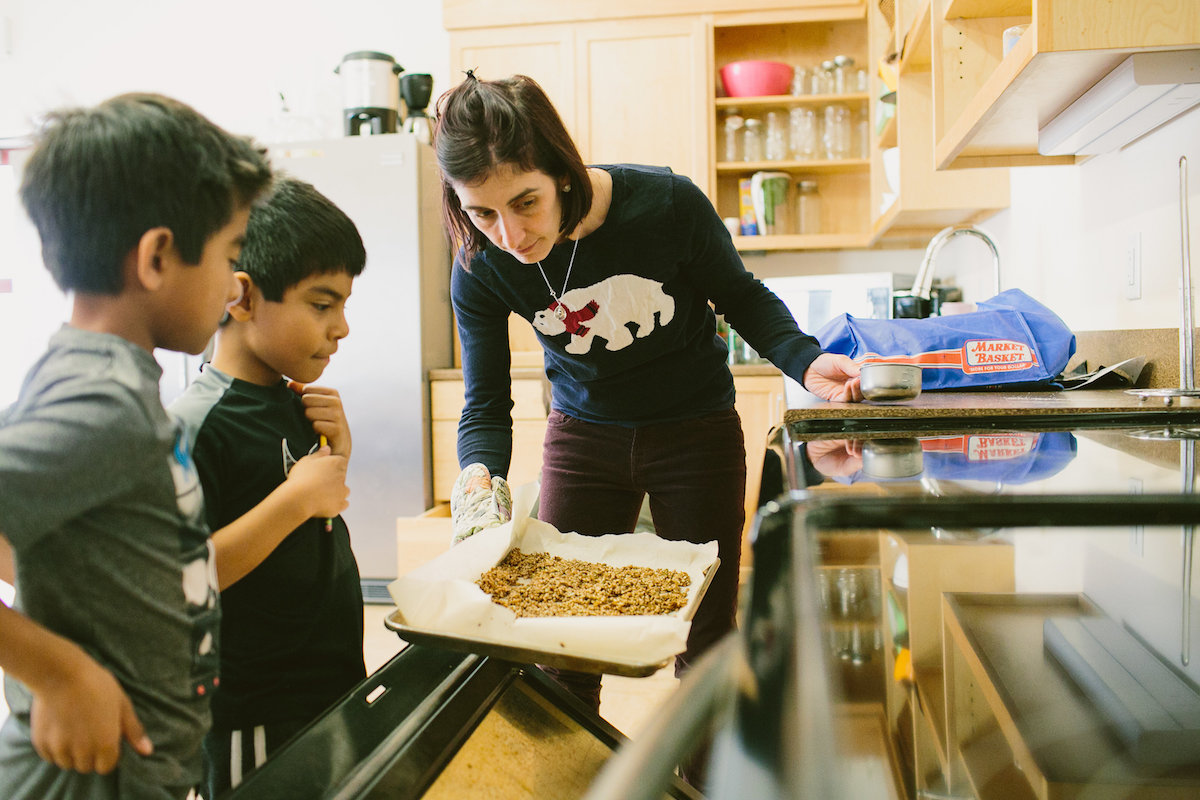
While there are likely nights you need to whip up a quick dinner, get everyone fed and off to bed, it can be nice to find ways to invite your children to cook with you sometimes.  Doing so has a host of benefits, including the development of practical life skills, confidence building, and family bonding, but there are also plenty of opportunities to learn about and practice math skills.

Consider what it takes to make a meal.  From reading a recipe, to combining ingredients, thinking about cooking temperatures, and even how long to cook a meal, there are a wide variety of skills your child can experience first-hand: 

  • Reading written fractions in recipes

  • Comparing differences in volume while adding measured ingredients

  • Adding fractions or utilizing fraction equivalencies

  • Using multiplication or division when halving or doubling a recipe

  • Calculating elapsed time while waiting for a treat to bake

  • Understanding units of measurement concerning temperature

At the Store

Shopping is one of those frequent life necessities, and we often have our children in tow.  Turn this family chore into a fun learning experience by incorporating math.  Here are some ideas for a variety of ages:

  • Counting specific items

  • Identifying numbers on signs

  • Estimating costs of items

  • Rounding costs of items to the nearest dollar and adding mentally

  • Identifying coins and their values

  • Comparing price and quantity to determine product value

  • Weigh produce on the scale

  • Use addition or multiplication to determine cost when buying multiples on an item

  • Determine how much change will be received from the cashier

In the Car

Whether you’re making the quick drive to school in the morning or settling in for a lengthy family road trip, it’s possible to incorporate math skills along the journey.  The key is to make it fun and not work!

  • Notice numbers on signs.  Talk about place value.

  • Similar to the alphabet game, play the number game.  Look for numbers outside and call them out in order.  “I see a 1 on that sign!’  “I spotted a 2 on that license plate!”

  • Play a shape-finding game.

  • Clue kids into mileage information.  Have them figure out how far you’ve traveled or how much further you have to go.

  • Keep track of time.  Solve problems similar to the mileage ones.

  • Make your real-life word problems multi-step: ask your child how their answers might change if you need to drive a certain number of miles or minutes out of the way to make a stop.

  • Estimate fuel costs, both before you arrive at the pump, and guessing how much the tank will need to fill.

  • Skip count together in silly voices.  Count by 2s, 5s, 10s, and more!

The Backyard

Believe it or not, your own backyard is likely full of real-life math opportunities.  Whether you’re gardening, making repairs, or building something together, keep an eye out for things like:

  • Size comparisons: which tree is taller? Wider?

  • Notice the temperature.  If you’re really motivated, keep track over a week and make a graph.

  • Measure everything!  Younger children can stick to non-standard units.  “How many ‘mommy feet’ long do you think this piece of wood is?  Now let’s try your feet!”

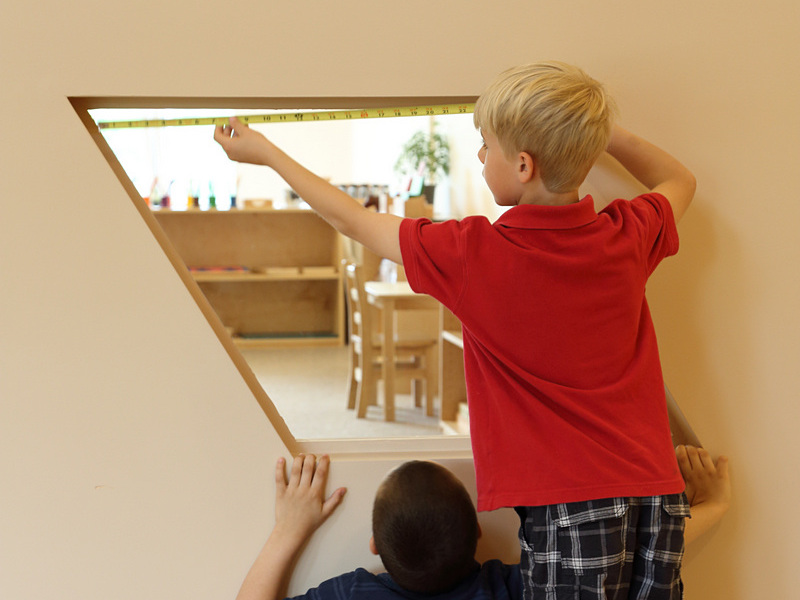
  • Kids love to use adult tools, so show them the correct way to use a measuring tape.  Start with length, and explore perimeter and area with older children.

  • Kids always seem to be collecting small objects.  Use these rocks, acorns, or sticks to count, add, or subtract.

  • With older children, use seeds for math before planting.  Show them an array and how it relates to multiplication and division.

  • Estimation opportunities are everywhere.  How many leaves are on that branch?  How many insects might we find under this log?  How many dandelions are blooming right now

No matter where you are or what you’re doing, your children love just spending time with you.  Finding simple ways to incorporate mathematical thinking can be a fun way to squeeze a little bit of learning out of an already enjoyable experience

Remember to ask your child lots of questions, but don’t feel like you need to give them the answers right away.  When we discover something for ourselves, the information is so much more powerful.  Of course, if they seem confused or ask for help, it’s okay to model and teach!

Let us know what you learn together!

Chores: They’re Good for Your Kids!

chores.jpg

Chores: the word has such a negative connotation.  But does it need to be that way?

Do you remember doing chores when you were growing up?  For some of us, we remember them as a negative consequence.  For others, we never had them and it took us a while to learn how to do them as adults.  Still others remember helping out around the house but not thinking it was a big deal.

It’s all in how we, as parents, frame it for children.

How we present the concepts of chores makes all the difference.  Having kids pitch in isn’t just helpful for us (because, let’s face it, it’s often more work for us on the front end), it’s really good for them, too!

What are the benefits?

There are so many important reasons to incorporate regular chores into your children’s routines at home.  Here are just a few:

Developing independence

As Montessorians, we see great value in teaching kids to do things for themselves.  It feels incredibly empowering to master a task and be able to complete it by oneself.  Young children are at the perfect age to begin this work, as they are constantly looking for ways to do things independently.  

Fostering a sense of belonging

By giving children ways to contribute to maintaining the home environment, you are effectively letting them know they are a valued, important member of the family.  Besides, working side by side to tidy up is bonus time spent together, and couldn’t we all use a little more of that?

Learning practical life skills

We all need to learn how to do our laundry, wash our dishes, and pick up after ourselves.  Just like children need guidance when learning how to read or add, they need the same with basic life skills.  When we get down to their level and show them how to do the job, we are setting them up for a future of success as adults.

Options for all ages!

Well, we can let the infants take a pass here.  Even young toddlers, however, are perfectly capable of learning some basic chores.  The following is a collection of suggestions.  It would likely be far too much to implement all at once, or even for one child to be wholly responsible for an entire list.  Think of it as potential inspiration, or guidelines to help you determine what your child is developmentally capable of.  

Toddlers (yes, toddlers!)

Even little ones have a lot to offer around the house.  Start small and offer child-sized tools.

  • On the floor beside where your child eats, use painter’s tape to create a small square.  Using a small dustpan and brush, show your child how to sweep the crumbs into the square, then into the dustpan.  It can be fun to keep the dustpan available on a nearby hook, beside a small container of colorful pom poms or the like.  Your toddler will love practicing!

  • Teach your child how to fold napkins.  Keep a small basket with napkins in it available for them to practice.

  • Let them help set the table.  Watch their tiny face light up at being given such an important task.  Resist the urge to straighten things out when they’re done!

  • Teach them to put their own toys away and be consistent about having them clean up as soon as they are finished playing.  They may need some help, but they are capable of putting toys back into a bin or on a shelf.

Preschoolers

This is a great age for children to learn chores. They are able to do more than we often think they can, and they are so excited to help! 

  • Clear the table.  They will probably need to make multiple trips to avoid breaking dishes, but they will delight in collecting plates and cutlery to bring to the kitchen.

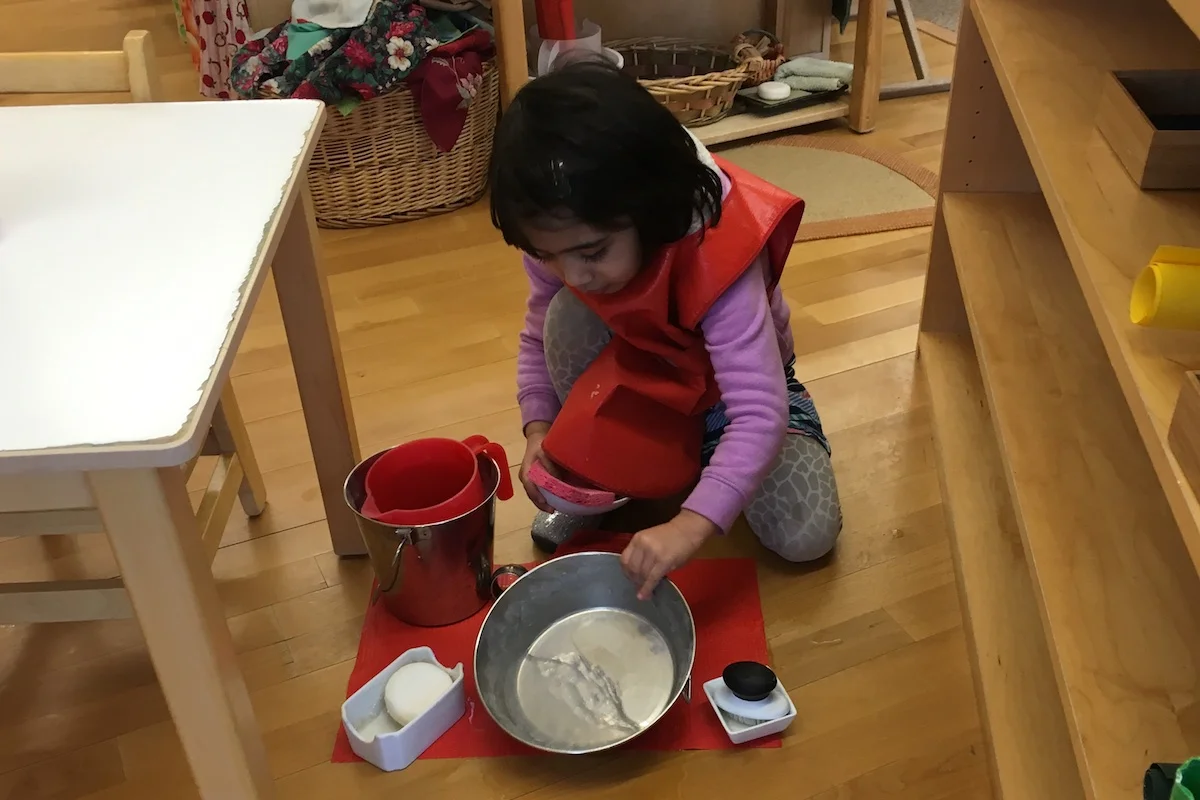
  • Teach them to wash the table.  First, show them how to carefully brush crumbs off into their hands (you can also buy a special crumb set here if it’s easier: https://www.forsmallhands.com/small-crumb-set ).  Next, show them how to wash the table with whatever method you prefer.  It can help to have a small bucket of soapy water with a sponge and dry cloth.  They will need lots of modeling (remember to emphasize wringing out that sponge!).

  • All that sweeping practice they had when they are toddlers?  It can continue now, and they can also learn to mop.  Remember that child sized tools make it easier for them to get the job done.

  • Kids this age can feed pets, although they may need you nearby.

  • Give preschoolers the task of choosing and laying out their own clothing.  In the beginning they will need guidance as to what is weather-appropriate.  Be prepared for some outfits you will perceive as wacky but take that moment to appreciate their blossoming independence and sense of personal style.

  • Show them how to care for plants.  Chances are, they’re already doing this in their classrooms at school to some extent.  Teach them how to water and talk about how we know when plants need water.

Young children

As the child gets older they are capable of so much more.  Children ages 5 through about 8 are very competent, though they may be a bit less enthusiastic than they once were.  Building chores into the family routine will make this easier for everyone.

  • Children at this age can fold and put away laundry.  Start small: a full load of laundry to put away by themselves the first time will only set them up for frustration.  Sit together and teach them how to fold various items.  Sort through clothes and let them choose a category the first few times.  For example, they may fold all the shirts while you work on the rest.  Slowly increase their responsibilities as they gain the skills necessary to complete the task.

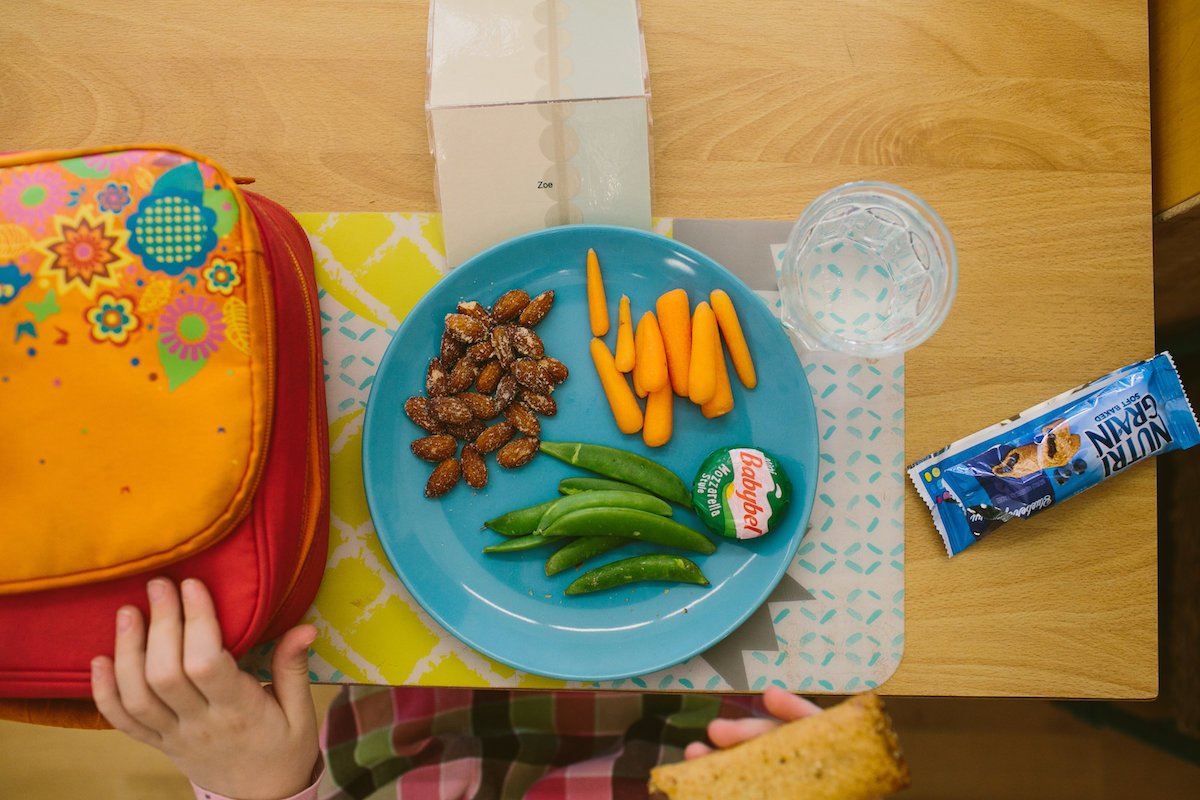
  • Kids who are eating lunch at school can help pack it themselves.  Teach them how to make a sandwich, chop vegetables, and even how to select a balanced variety of foods.  Remember that choice and independence are very empowering.

  • Let them empty the dishwasher.  If they can’t reach a particular shelf, keep a step stool nearby.

  • Chores that are tedious for adults, like dusting or washing the baseboards, are great fun for kids.  If it gives them the sense that you trust them with an ‘adult’ task, they will likely be thrilled to give new tasks a try.

  • Depending on their size, let them vacuum rugs.  

Older children

Again, as certain children get older you may be met with initial resistance whenever introducing a new chore.  Try to keep it light and fun, and present it as a positive: as we get older we may have more responsibilities, but we gain new freedom and privileges.

  • Weeding the garden is a great task for older children, but they’ll likely enjoy it more if you’re weeding alongside them.

  • They are now old enough to do the laundry.  Start small and set the expectation that they do their own laundry.  They will need reminders, but having a system (a basket of their own and perhaps a sticky note with how-to reminders) will help get the job done.

  • Again, depending upon the child’s size, they are likely able to take out the trash and recyclables.  

  • You may consider increasing their responsibilities in regards to pet care.  They may be able to walk the dog, clean dirty cages, and do some basic grooming.

  • If they haven’t already learned, now is a great time to teach them how to make their own bed.  This includes learning how to change the sheets.

  • If your child has been attending a Montessori school, they’ve been learning how to prepare their own food since they were 3 years old.  Take advantage of that knowledge base and let them make lunch for the family once in a while.  They may even want to try more cooking or baking on their own (but with supervision).

Teenagers

Teenagers are able to do most, if not all, of the chores we do as adults.  Remember, we are not suggesting they do all of these chores all the time, but reinforcing the idea that they are capable of any of them will help set them up for success.  Sitting down together and agreeing on a schedule or rotation might be a good starting point.  Here are just a few ideas:

  • Let them mow the lawn or rake the leaves.

  • Have them wash the dishes.

  • Give them a chance to watch younger siblings while you run errands or go to an appointment.

  • Teenagers can do some more thorough cleaning, like wiping down counters or washing the bathroom.

  • Let them cook dinner.  Instead of viewing this as a chore, they may enjoy the opportunity to choose the recipe and help shop for the ingredients themselves.

When giving a child of any age chores to do, the key is to find balance.  Chores are so important for their development, but so are things like play, reading, time together as a family, and time with friends.  Be aware that children can often do more than we think they can, but also be aware of the big picture that is their life.  

Looking for more ways to cultivate independence?  Montessori may be the answer.  Call us today to learn more.

How to Build a Better Lunch

lunch.jpg

Lunch.  It’s something we enjoy every day, and if your child is at school you’re likely helping your child pack one.  We’re here to help you turn this often mundane chore into a fun, healthy, eco-friendly, Montessori-style part of your child’s day.

Pack it up!

As you likely know, Montessori schools rely on the use of natural materials.  In our classrooms we tend to use materials made of wood, glass, and natural fibers.  Although it’s not always possible, we think it’s great when families find ways to incorporate the same approach into lunches.

Let’s start with the lunch bag itself.  You can pick one of these up almost anywhere, and it’s a great idea to have your child reuse the same one from year to year.  Find something durable.  Some families pack the types of lunches that would benefit from having an insulated bag, so consider that as well.

Are you crafty?  Want to create something really unique?  Check out this tutorial that will teach you how to sew a paper bag-inspired reusable lunch bag:

Whatever bag you choose, it’s helpful to have some reusable containers that fit inside.  Many families find stainless steel to be an ideal option for their children, as it’s more eco-friendly than plastic, but a lot less likely to break than glass!  Here are some models that have worked great:

  • LunchBots offer a wide array of shapes, sizes, and configurations.  Choosing a couple different boxes to pack together allows you space for a sandwich on one box, and fruits, veggies, and whatever else in another.

  • PlanetBox provides an all-in-one solution.  The stainless container opens to reveal multiple compartments for different foods.  They come in various sizes, and kids love choosing the customizable magnets that decorate the outside.

  • Multi-tiered bento boxes, like this one, are another great option.  The metal clamps pull off to release 2-3 layers.  This makes it easy to pack different types of food in a small space without everything getting mixed up.

What’s inside?

The actual contents of the lunch are the most important part.  Involve your child in the planning process as much as possible and you will find them much more likely to eat what you pack.  Keep these tips in mind when you get ready to shop:

  • Ask your child what vegetables they would like for the week.

  • Chop vegetables up on Sunday night so you can grab a handful daily.

  • Always keep favorites on hand.  Does your child love peanut butter and jelly?  Make it your go-to and have plenty of everything you need.

  • Use leftovers: dinner can become lunch!

  • Buy lots of fruit.  Kids love it!

  • Think about extra protein options that will keep your child’s energy up throughout the afternoon.

These lists may be helpful if you’re looking for inspiration.

Note: It is very important to know about allergy policies for your child’s classroom.  Some of the items on this list may not be safe for every child.


Fruits

Banana

Apple

Pear

Grape

Melon

Pineapple

Kiwi

Berries

Mango

Orange

Apricots

Peaches

Plums

Pomegranate

Guava

Papaya

Cherries

Vegetables

Cucumbers

Bell peppers

Celery

Carrots 

Fennel

String beans

Broccoli

Cauliflower

Salad greens

Tomatoes

Pumpkin

Seaweed

Squash

Asparagus

Sweet potato

Jicama


Proteins

Meats 

Fish

Dairy 

  • Yogurt

  • Cheese

  • Milk

Eggs

Legumes

  • Chickpeas

  • Beans

  • Peas

  • Lentils

  • Lupins

Tofu

Seeds

  • Pumpkin (pepitas)

  • Sunflower

  • Sesame 

Nuts (*Be aware of classroom allergies*)

  • Almond

  • Cashew

  • Macadamia

  • Pistachio

  • Walnut

Grains

Quinoa

Rice

Oats

Corn 

Pasta

Cereals

Bread 

  • Whole wheat

  • Tortilla

  • Bagel

  • English muffin

  • Baguette

  • Pita

  • Naan

  • Pizza dough

  • Biscuit

  • Corn bread

  • Lavash

  • Pretzels

  • Croutons

  • Challah


Don’t forget…

Please pack a small cloth napkin and placemat for your child to use.  It’s okay to pack two cloth napkins with the intention that one will be used as a placemat.  When groups of children sit together at lunch, there isn’t room for a full-sized placemat.  You can use whatever you already have at home or find them just about anywhere.  

If the food you pack requires cutlery, please pack some of the reusable variety.  You can use what you already have at home, but if you are looking for a nice child-sized option, these are lovely: 

https://www.forsmallhands.com/cooking/serving-clean-up/children-s-hammered-flatware-set

Some classrooms have cups for children to drink from, but it can be nice to pack them a reusable water bottle for lunch as well.  

Most lunches won’t require an ice pack, but in case you include something that may spoil it doesn’t hurt to have one or two small ones in the freezer.

Do you have any lunch tips or ideas to share with us?  Let us know!

How to Handle Challenging Behaviors

Tantrum-boy-568x296.jpg

This post goes out to the frustrated parents.  (So, likely all of us at some point.)

Challenging behavior is an unfortunate part of growing up and parenting.  We know that it’s normal, we know our children need to experience it to grow and learn, but that does not make it any easier in the moment.  If you are anything like us, you might pause from time to time and ask yourself, “What would Montessori do?”

There are no perfect answers, and Dr. Montessori would have recognized that what works for one child will not necessarily work for the next.  We can, however, rely on our knowledge of human development and typical child behavior to help guide us.  We hope this post will provide you with some helpful tips!

As Montessorians, we tend to follow a hierarchy when we address issues with children.  We look at:

  1. The environment

  2. Ourselves

  3. The child 

The Environment

Environment affects us all, and as adults we can carefully craft an environment that suits the needs of our children.  This is why Montessori guides meticulously create classrooms with a specific order and flow to them, and why they are constantly observing and analyzing what should remain the same and what should change.

We feel confident in saying that most of the time, a change in the environment can change the behavior.  Some examples:

  • Does your toddler enjoy dumping the contents of whatever they can find?  While this is a very normal stage for them to go through, it can cause a lot of extra work for us as adults.  Limit their options!  Keep dumpable baskets and boxes up higher where your child cannot reach them and rotate them on a regular basis to keep their interest going.

  • Have you noticed your three-year-old spilling their snack and frequently leaving crumbs behind?  Leave a small dustpan and brush in a space where the child can access it.  You will likely need to show them how to use it many times, but they will get it!  When they do, the joy they will feel from sweeping will be adorable.

  • Are mornings with your seven-year-old rushed and chaotic?  Make a list and post it where they will see it (perhaps the bathroom mirror).  What do you expect the child to do independently in the morning?  The list may contain items like: brush teeth, get dressed, brush hair, eat breakfast, and so on.  Make sure everything they need to get ready is in one centralized space.  Have the child prepare as much as they can the night before to ease the pressure when they are tired.  They can pack their own lunch and lay out their own clothes.

  • Is your teenager having a hard time focusing on their homework?  Create a distraction-free zone.  Have a clutter-free desk in a quiet area of the house.  Make sure devices like cell phones are left to charge in a completely different area of the house.

Ourselves

This is perhaps the hardest part for many of us, but sometimes children’s undesirable behavior is tangled up in our own actions and/or perceptions.  Some questions you may want to ask yourself and reflect on when you feel frustrated include:

  • Is this behavior truly a problem?

  • Are my expectations appropriate for the child’s age and developmental stage?

  • How might my reactions be contributing to the behavior?

  • Am I well rested/fed/de-stressed/fully able to work with my child without letting my own problems be a factor?  

  • Are my reactions based on my own experiences as a child?

We realize that these can be some pretty deep questions.  Our jobs as parents are hard enough and there is no need to be judgmental, especially of ourselves, but reflection can be helpful.  We also know that it’s not always possible to deal with a child’s behavior while being completely stress-free, well-rested, etc., but it can be helpful to recognize when we might be playing a role in what is going on.

The Child

Sometimes there really is something going on within the child that needs to be addressed, and it can be a simpler explanation than we might expect!  Some possibilities to consider:

  • Is the child getting enough sleep?

  • Is the child hungry?

  • Is the child getting sick (coming down with a cold or the like)?

  • Is the child entering a growth spurt or new developmental phase?

  • Has there been a recent change in the child’s routine?

  • Are there changes occurring in the family?

Sometimes a child might be upset about one area of their life and behaviors manifest in a completely different way.  For example, an eight year old may be facing friendship challenges at school.  Instead of talking about the problem, they may unintentionally take their frustration out on the parents.  This is a common occurrence when a child has not fully understood why they are upset, are unable to articulate the issue, and yet feel safe to be themselves fully at home.  Of course we must set expectations that our children are to be kind, but having this insight may help get to the root of many issues.

Regularly talking to our children, especially as they get older, can be very helpful in helping them navigate through the common (yet sometimes painful) experiences of growing up.  Many families find that bedtime tends to be when their children speak freely about what’s bothering them.  Even as your child gets older, set aside time in the evening to be together.  This can be time together reading, cuddling, or talking about the day.  

Final thoughts

Two last bits of advice that are perhaps the most important: do not expect perfection and find yourself a supportive group of parents to talk to.

We know our children will not always be perfect, and neither will we.  Children will push boundaries and make mistakes - lots of them - and as parents we won’t always know the best way to handle things.  We will learn together.

Having a group of parents that you can vent to and celebrate with is so helpful.  Whether you meet up for coffee, chat on the phone, trade tips on Facebook, or sit on the sidelines together at soccer games, remember to reach out to others.  We are all in this together.

Logical and Natural Consequences

table scrubbing.JPG

Raising children is a beautiful, surprising, heart-warming, and challenging adventure.  But what’s the best way to navigate through the challenging parts?  As humans, we all make mistakes, and are constantly learning throughout our lives.  How might we best guide our children through their learning in a manner that is both gentle and effective?  It turns out we need a variety of strategies, but some work better than others.  In this blog post we highlight some of the most effective ways of helping your children learn from their mistakes.

Natural Consequences

Natural consequences are whatever happens naturally as a result of a person’s action or inaction.  Natural consequences are not determined by an adult, they simply occur.  For example, if your child decides not to wear a coat outside in the winter, the natural consequence is that they will feel cold.  If they choose not to eat, they will feel hungry.  No negative parental intervention is necessary, and in fact, should not be applied.  When your child experiences a natural consequence, chances are the experience itself will teach them what they need to learn.  We need not remind them that we had suggested the coat or breakfast.

To summarize, natural consequences happen all on their own.  There is no adult control in these situations, and the consequence itself is not planned, but rather a natural outcome of interacting with the physical world.

Logical Consequences

Logical consequences are implemented by an adult (typically a parent or teacher), and they are directly related to the action of the child.  For example, if your child spills their snack on the floor, you might remind them where the dustpan is and ask them to clean it up.  

What’s really important is to remember the intention and structure of a logical consequence: it is not a punishment, but rather a gentle learning opportunity that is directly connected to the behavior.  The goal is not to have the child repent for having done something wrong, but to give them an opportunity to recognize an error that they may avoid in the future.  We must be careful and avoid shaming the child, and to present the situation in such a way that the child is not defined by the behavior.  The behavior is simply something the child did that we would like to teach them not to do.

Do These Consequences Really Work?

Yes...most of the time.

There are times we should absolutely step in and not allow natural consequences to occur.  These instances include: 

  • When your child is in danger

  • When someone else is in danger

  • When a natural consequence encourages the child to repeat the behavior or if they don’t seem to mind the consequence (it’s clear the natural consequence is not having the desired effect).  For example, sneaking lots of candy might be fun!  The natural health consequences are not immediate and therefore might not make a big impression right away.

Natural and logical consequences are empowering for children.  They leave the child in control of the situation and provide valuable learning opportunities.

A How-to Guide

Perhaps the most important idea to remember is that natural and logical consequences are not punishments, but rather an opportunity for the child to learn more positive behaviors.  When observing a natural consequence that might help the child learn from an experience, resist the urge to step in and help your child.  The natural consequence may not be pleasant, but if it’s appropriate and not hurting them, it’s okay to let them learn from it.    

When you are trying to determine an appropriate logical consequence, it’s important to keep it age/developmentally appropriate.  If your 2 year old takes out all their toys and makes a big mess in their room, they will likely need your help as they work to clean up.  A 7 year old, however, is probably capable of doing the job themselves.  

Make sure that any logical consequence is directly related to the behavior you are trying to correct.  Some examples:


Behavior

Your 5 year old was dancing while eating and spilled yogurt all over the floor.

Logical Consequence

Walk them through the process of cleaning up.  Bring them to retrieve a bucket and sponge, help them fill it with soapy water, and demonstrate 1 or 2 wipes before letting them do the rest.


Your 6 year old was asked to clean up their blocks before bedtime but did not do so.  

Let your child know you will be putting the blocks in a box and they may not use them for a certain amount of time.  You might put the box in your closet for a few days.


Your 8 year old was playing baseball in the front yard where you had asked them not to and they broke a neighbor’s window. 

Help your child find ways to earn money so that they may help replace the window.


Your 12 year old chose to play video games instead of doing their homework.  They don’t seem phased by the natural consequence of having their teacher notice.

Let your child know they may play video games when their homework is finished, but not before.


Your newly-driving 17 year old did not return home by the agreed-upon time.

Make sure your child knows this consequence ahead of time, but perhaps they will not be allowed to use the car for a specific amount of time.


A few final points to keep in mind: natural and logical consequences often take time and patience.  While they are typically the best course of action for building resilient children in the long run, only rely on them when you are in a position to fully commit.  If you give in halfway through, the teaching opportunity is lost.  It can also take time to come up with appropriate logical consequences, and with the realities of life, that’s not always a possibility.  Let’s imagine that your 5 year old spilled the yogurt as you were rushing out the door to get to an important meeting.  You may want to talk to your child as you wipe it up quickly and teach them how to mop later that afternoon.  

Good luck!  As always, please let us know if you have any questions or comments.

Mindfulness for Children

008-IMG_4317.jpg

You may be very familiar with mindfulness, or you may have a vague notion of a buzz word that has something to do with meditation.  Regardless of your experience, we are here to detail the ways in which mindfulness can be beneficial to your children.  Being more mindful helps people reap a multitude of benefits, anyone can participate, and learning alongside your child can be fun!

What, exactly, is it?

Merriam Webster defines mindfulness as:

  1. the quality or state of being mindful

  2. the practice of maintaining a nonjudgemental state of heightened or complete awareness of one’s thoughts, emotions, or experiences on a moment-to-moment basis

also: such a state of awareness

Sometimes it can be helpful to define mindfulness by stating what it is not.  Mindfulness is not about clearing the mind.  It is not about silence or ending conflict.  Mindfulness is definitely not a quick fix for anything.  Mindfulness provides us with a way of looking deeper at our lives.  We learn to observe events, sensations, and feelings while acknowledging them and accepting them for what they are.  

In today’s society it can be easy for everyone - children included - to get caught up in the daily rush.  Mindfulness allows us to slow down and be present.  Many who are new to the practice may wonder how they might find the time to squeeze in one more thing.  Once you form daily habits of mindfulness you will see your schedule open up, and you may realize your life feels a lot more free and flexible.

Setting realistic expectations

It’s important to remember that mindfulness is nonjudgemental.  Although it does tend to help people in many ways, it wouldn’t be fair to try it with the intention of making a child become, say, more attentive.  Improved attention and focus are a likely outcome, but cannot be expected.  Mindfulness is different for everyone, and acceptance of oneself and each other is a healthier and more realistic goal.

On a more basic level, you may be excited to try these exercises and ideas, while your child may not be.  We find that many kids do love the meditations and games detailed below, but they’re not for everyone and that’s okay.  So, as you give mindfulness a try with your children, keep in mind that they are their own independent people.  Everyone will take away something different from the practice.

The raisin meditation

Mark Williams and Danny Penman have written a great book entitled Mindfulness, an Eight-Week Plan for Finding Peace in a Frantic World.  This book is written for adults, and we highly recommend it as a resource.  It’s full of scientific explanations regarding how behaviors are dictated by brain function and what we can do to create change within our own lives.  As a bonus, it contains a link to meditation audio files.  Although not a book for children, there is a fantastic exercise contained within that kids love: the raisin meditation.

Sit in a quiet space with your child.  Feel free to light a candle (or not) and get comfy.  Ask your child to open their hand, palm facing upwards, and place a single raisin in the middle.  Tell them not to eat it just yet and take another raisin for yourself.  The goal of this exercise is to slow down and pay close attention, seeing if you can notice attributes that are typically overlooked during the business of our everyday lives.  We use all of our senses to zoom and observe this raisin closely.

  • Sight - Look carefully at your raisin.  What do you see?  Allow your eyes to explore the ridges and valleys, to notice color variations, and to find the spot where this dried grape was once attached to a stem.  What words might you use to describe these observations?

  • Sound - With a raisin, this will surely be a little silly, but that’s okay!  Hold the raisin gently to your ear and have a listen anyway.  Children will revel in watching their parents listen to a piece of dried fruit as they do the same, you will all confirm its silence, and have a giggle before moving on to the next step.

  • Smell - With delicate, inward breathes, take in the scent of the raisin.  What do you notice?  What could you compare it to?  Try not to rush this step; take the time to really pay attention.  Find words to describe the scent.

  • Texture - This will be done in two parts.  First, gently feel the exterior of the raisin with your fingertips.  Repeat the process of noticing and describing.  When everyone is ready, place the raisin on your tongue.  Without chewing use your tongue to pay attention to what the raisin feels like in your mouth.  Later, when you do end up swallowing it, notice the sensations as it travels down your throat.

  • Taste - Likely the moment your child has been waiting for, ask them to take their time while chewing and tasting the raisin.  Because you have spent so much time noticing every detail of this tiny piece of fruit, the anticipation may make it seem like the tastiest raisin you have ever eaten!  Is it sweet?  Sour?  Bland?  Intense?

This activity can be repeated with almost anything, and it’s a great idea to do so.  Wait a few days and try the whole process over again with a chocolate chip, slice of cucumber, or whatever else you happen to be eating.  At mealtimes, take a few moments to be intentional about appreciating your food.  Notice what it looks like, smells like, feels like, and chew slowly to discover more about how it tastes.  Most importantly, have fun while doing so!

Looking for more mindfulness games and activities?  Try these ideas:

  • Object box - Find a small collection of very similar items (cards, pennies, pebbles, etc.)  Each player chooses one and has one minute to study their item carefully.  The items are then placed in a box and shaken up.  Players try to find their original item.

  • Creature search - Take a walk along a familiar path or through a park you frequent.  Everyone has to pay attention and find as many living organisms as possible.  It’s amazing how much we overlook even when we spend time in nature!

  • Visual breath games - There are many variations of this.  Try blowing bubbles or using a pinwheel with your child.  Encourage them to take a deep breath in through their nose and feel the air as it leaves their mouth.  They can take tiny breaths or big breaths, slow breaths or quick breaths. 

Meditation resources

These videos will give you examples of some common, basic mindfulness meditations.  We recommend that you use the videos for their audio.  Children should not be watching the screen as they listen so they can focus on all their senses.

Body scan meditation: Direct your awareness to specific parts of your body, noticing sensations (or lack of sensations).

Loving kindness meditation: Take time to love yourself and send loving thoughts to others. 

Observing thought meditation:  This type of meditation is best for children ages 6 and up.  This video explains why it’s helpful, while this one guides children through the practice. 

We hope this post has been interesting and informative.  If you try any of the meditations or ideas with your children, we would love to hear how it goes!  

5 Ways to Help Kids With Anxiety

anxiety.jpeg

Anxiety is a completely normal part of the human experience.  Both adults and children experience anxiety from time to time.  As children grow, they go through so many changes physically, cognitively, and emotionally, it’s understandable that they may feel nervous occasionally.  You will likely notice your child pass through a number of phases in which they display anxious behaviors.

If you feel like your child’s anxiety is more than just a phase it’s important to talk to your pediatrician.  Anxiety can negatively affect people in a myriad of ways, and it’s important for kids with chronic worry to get help that will change those patterns.  

The good news is there are things we can do at home and school to help children deal with their anxiety, both proactively and reactively.

In the Moment

It helps to have some strategies on hand for when a child is experiencing anxiety.  It can be difficult to learn a new skill while our bodies are experiencing nervousness, so try these out with your child while they are calm the first time.

  • Mountain breath - This is a kid version of the well-known 4-7-8 technique.  If you’re not already familiar, Harvard graduate Dr. Andrew Weil developed the simple exercise.  After releasing the air from your lungs, breath in for a count of 4, hold your breath for a count of 7, and release the breath slowly for a count of 8.  This slows your breathing while also allowing your body to absorb more oxygen.  Ideally 4-7-8 should be practiced several times a day and then used as needed.  For the children’s ‘mountain breath’ version, have your child hold up all five fingers on one hand.  Using the index finger of the opposite hand, they will trace up and down each of the five fingers, pretending they are mountains.  Say, “We climb up the first mountain (breath in), stopping at the top to look around at the view (hold breath).  Then we climb down this side (breath out)”.  They continue this with the remaining four fingers.  The count of 4-7-8 is less important for kids than the pattern and practice.  For more information on Dr. Weil’s technique check out this video:

  • Grounding exercise - The amygdala is a small, almond-shaped cluster located deep inside the brain.  It’s one of the most primitive parts of our brains and serves many functions.  The amygdala is connected to fear conditioning, and is connected to why we react in fearful ways to certain situations and stimuli.  Think of it as your fight or flight center.  

    When we are in the midst of panic, our brains lose the ability to behave according to the reality of a current situation.  Our bodies feel like there is great danger and our amygdala is feeding those false connections.  The good news is there are tools we can teach children to trick that part of their brain and remind themselves that they are safe.

    A grounding exercise uses the senses to remind the brain there isn’t really any immediate danger and that we are safe.  As a quick reference, remember “5,4,3,2,1”.  First, we use our sense of sight.  We look around and locate five things we see and name them, simply.  This can be done aloud or in our heads.  For example, we may say, “Light. Floor. Hand. Paper. Table.”  Next, we identify four things we can feel, and touch them as we name them.  “Hair. Fabric. Wood. Skin.”  We then name three things we can hear. “Breath. Fan. Car.”  The final two steps include identifying two things we smell and one thing we taste.  These steps are not always practical, and it’s okay to skip them.  Again, try to teach this exercise to your child when they are feeling calm so that it’s more accessible to them when they are not.  

    For a video of an extended version of this exercise, watch here:

  • Straw & cotton- This exercise is fun, and likely seems more like a game.  Using a piece of tape (painter’s tape or washi tape works well), create a line about two feet long on a hard floor - carpet won’t work.  Place a cotton ball on one end of the line and using a drinking straw, blow on the cotton ball in an attempt to have it travel the length of the line.  It can be challenging to control one’s breath and keep the cotton on the tape, but it’s a fun and silly exercise.  Doing this distracts the child from anxious thoughts and forces them to control their breath.  If they get really good at it, you can create a tape maze on the floor instead of a simple line.  Have fun with this one!

Creating Routines

Routines help everyone, but especially children, to feel safe and centered.  While flexibility and spontaneity are also important, it’s a good idea to create predictable structures for kids.  Read on for some ideas on how we can support our kids and attempt to prevent anxiety.

  • Morning and evening routines - Waking up is hard.  Especially on these chilly, darker, winter mornings!  Decide on a routine that works for you and your family, then be sure to stick to it.  One sample: get up, use the toilet, get dressed, brush teeth, brush hair, eat breakfast, put shoes on, go to school.  Repeat every day in the same order.  For some children, it helps to keep at least some version of this routine on the weekends.

    Consider the same idea in the evening.  Another sample (but do what works for you!): take a bath, put on pajamas, eat dinner, brush teeth, read two stories, cuddle for five minutes, go to sleep.

  • Preparing ahead - In the evenings, it really helps to get as much done ahead of time for the day ahead.  Much of this responsibility falls to parents, but as children get older they can certainly pitch in.  Some ideas:

    • Making lunches

    • Laying out clothes

    • Keeping bags, jackets, and shoes ready by the door

    • Have healthy breakfasts prepared

    • Leave lots of time - kids often take longer to get things done than we expect.  Instead of rushing them through what needs to be done, wake them up a little earlier or start bedtime sooner than you think you need to so that everything gets done and everyone gets a good night’s sleep.

  • Presetting for changes - Routines are great, but it’s impossible to stick to them all the time.  You may have an early morning meeting, your child may have a doctor’s appointment, or any other number of unpredictable variables may come up.  When this happens it’s unsettling to us as adults, but it can really throw kids off and spark anxiety.  To help ease their concerns, we can preset them ahead of time whenever possible.  The night before a change in routine, take the time to tell your child what will be happening and how it will affect them so they know what to expect.  When something unpredictable happens, take a moment to stop and speak to your child calmly and softly; let them know what’s going on, and what you think will need to be done next.  Including children in conversations about changes is empowering for them, and will likely help them feel calmer about whatever situation they are in.

We hope this post will help you and your family prepare for tough moments of anxiety.  If you try any of these ideas we would love to hear how it goes.  Do you have other tips or tricks?  Let us know!