Parenting

Shifting from Summer to School

Transitioning from Summer to School

Although it can be hard to think about the end of summer days and the return to routine, there is value to getting back into a consistent schedule. Steady, well-thought-out routines help our children develop good habits that can last a lifetime. In addition, the consistency of routines can decrease stress, ease anxiety, and reduce irritability (for both children and parents!). 

Ideally, the transition from summer to the school year can happen gradually so your child can gently adjust to the skills and schedules that will allow for a smooth start on the first day. Here are a few things to consider as you begin this shift.

Casual Conversation & Calendars

We’ve found that it helps to begin by casually talking about the start of school. While out shopping, you can notice aloud how stores have back-to-school items and comment about how it’s almost time for the school year to begin. Because young children live in the present, it is important to keep the time frame general.

If you do talk about school with your child, it’s best to try not to build up false expectations about what they will do in school. Modeling curiosity and openness can go a long way. If you drive by a school, for example, you can wonder aloud: “I wonder what children in this school do after they walk in the door.” Or “I’m so curious about what kinds of activities children enjoy doing during their school day.”

Older children who have a solid concept of linear time can benefit from having a family calendar that is visible to everyone. They might want to mark off a countdown to the first day, or help set some benchmarks for getting back into a normal sleep schedule. 

Sleep Routines

One of the hardest parts of coming out of vacation mode can be shifting back into a school sleep schedule. Rather than just expecting that everyone will adjust on the first day, it’s best to gradually transition into the school-year bedtime and wake-up routine. 

If late bedtimes have become the norm, it can be most effective to start the process about 10 to 14 days prior to the first day of school. First determine what time your child will need to wake up in order to have a peaceful, unhurried morning. You can then start waking your child up a little earlier each morning. In addition, you’ll want to have bedtime begin a little earlier each night. Making these changes in 15-minute increments works best. The goal is for your child to begin getting up rested and refreshed at the wake-up time you’ve determined. 

We recommend establishing an age-appropriate bedtime and sleep routine. Having a calm mind at bedtime and developing good sleep habits, has long-term benefits for your child. For more information visit the Sleep Foundation. 

Morning Routines

Having enough time for a calm, consistent morning routine decreases stress and anxiety for everyone. Plus, children really appreciate having some ownership over the process. 

To prepare, you can make sure your child has clothing and shoes that are easy to put on and take off. For younger children, you can have two outfit options available so they can choose what they want to wear. Older children can select their clothes the night before and lay them out for the next morning. 

It can also help to collaborate with your child to create a visual schedule of what needs to happen each morning: getting up and out of bed, getting dressed, eating breakfast, brushing teeth, preparing lunch and snacks, etc. You can add images to the schedule and even turn it into a checklist. If you laminate the schedule or checklist, children may appreciate using a dry erase marker to check off each item they have completed.

Preparing Snacks & Lunch

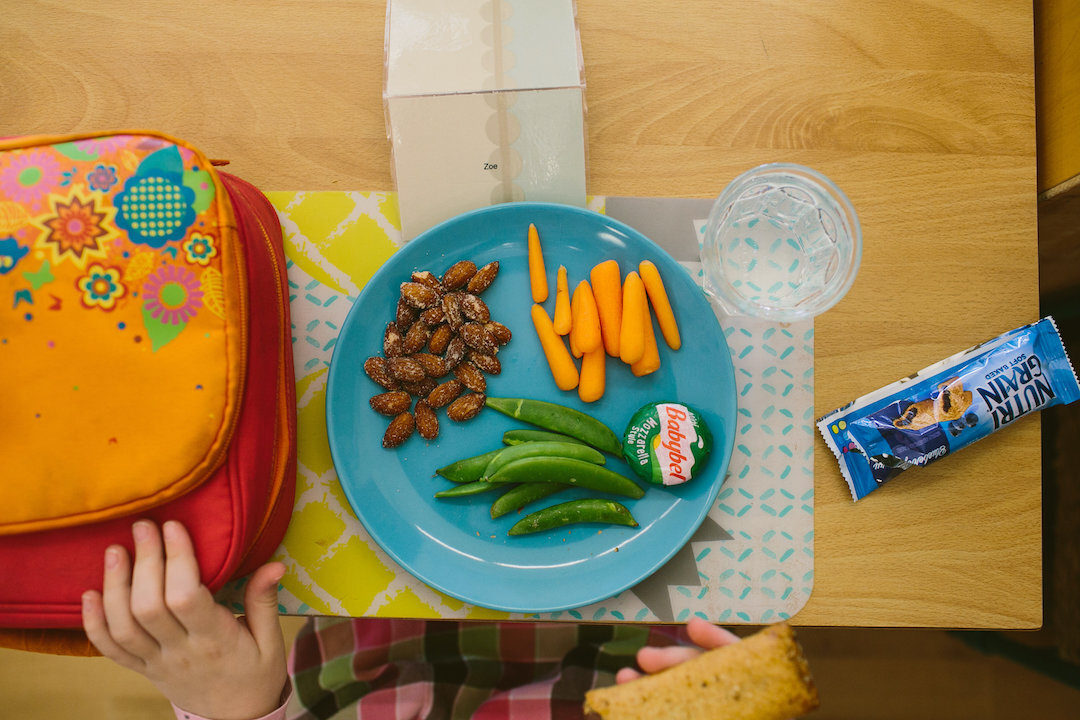
Having snacks and lunch prepared ahead of time can ease a great deal of morning stress. Even the youngest children can help get their snack and lunch food ready. Sometimes having everything ready the night before is easiest, so all children need to do is put containers in their lunch bags to be ready to head out the door. That being said, with enough advance preparation and plenty of time built into the morning schedule, preparing lunch and snacks can easily happen in the morning. 

To support children in making their own lunches, we just need to make sure to have some healthy options prepared and accessible. This can mean having a low section of the cupboard or refrigerator designated for child-friendly snacks and lunch options. You can do some minimal food prep–like hard-boiling and peeling eggs, slicing up chicken breast, or chopping vegetables–and then have the items ready in small, easy-to-open containers.

If you pack your own lunch alongside your child, you can also model choosing healthy foods and serving sizes. 

Stay Organized

Your child (and you) benefit from a sense of order and predictability. Thus, we recommend dedicating and preparing a space in your home for all school necessities, such as backpacks, lunch bags, shoes, etc. Ideally, this space for school items is attractive and child-sized. Having low hooks or a small shelf near the door can allow your child to develop a strong sense of capability and independence. 

Even before school begins, you can practice coming home and putting everything where it belongs. Your child can be in charge of hanging their backpack on a low hook and even putting their lunch containers in the sink or dishwasher. 

If the space gets a little disheveled, you can take a few minutes together with your child to tidy up the items and appreciate how much better things feel when everything is in its place. 

The transition from summer to school year can be an opportunity to establish teamwork and collaboration with your child. So that your child can be an active participant in the process and so that you don’t end up taking on all the stress, remember to ease into the new routines, allow time and space to prepare consistent systems, and provide just enough support for your child to experience some independence and success in the process. The result? Healthy habits and a more peaceful practice for everyone. 

Want a quick reference for the transition from school to summer? Download this one-page printable!

Independence Day, Montessori Summer Vacation-Style

Montessori July 4th

For many people in the United States, July fourth is a time for cookouts and fireworks. We get together with family and friends, enjoy our favorite potato salad, and spend some quality time in our backyards.

As adults, we know there’s a whole lot more to the day than that.

Whether you’re reading this on Independence Day, or sometime after, everything we mention below is still totally relevant and applicable. And even though we are well into summer vacation, we know many of our families never step out of Montessori mode. If that describes you, read on.

Do a deep dive into the holiday’s origins

We often rely on books to help us teach children, and this situation is no exception. A quick trip to your local library will be all you need to find an armload of age-appropriate reading material. The main points you’ll want to cover include:

  • Why did early Americans feel the need to break free from England’s rule?

  • What was the process like to establish the United States?

  • Why do we celebrate on July fourth?

Searching for relevant pictures, articles, and videos online can help enrich kids’ experience, as can visiting historical sites if you happen to live in certain parts of the country.

Consider different perspectives

The establishment of the United States, along with large chunks of its history, aren’t exactly celebratory for some groups of people. Again, it’s helpful to lean on books to share this type of information, and especially books that are written by authors who represent the group they are teaching about.

The land we now refer to as the United States of America was inhabited by many nations of Indigenous people for thousands of years before Europeans arrived. The native perspective is that the land was stolen, and this was followed by centuries of forced relocation and mistreatment.

Another important perspective to consider is that of black Americans. The US economy originally relied heavily on the enslavement of people from Africa, and our nation’s beginnings are rooted in some pretty horrific practices that continue to have rippling effects even today. Most of us are very aware that race is at the forefront of modern American society, and the issues we still need to address have their beginnings in America’s earliest days.

Do young kids need to know every detail about what has happened in our history? Of course not. As always, keep what’s developmentally appropriate in mind. It is important to note that our children are much more aware, and studies show they develop biases much earlier than most adults realize.

Explore independence days in other countries

It would be impossible for us to list each country around the globe that celebrates an independence day; the list is just too long! Take a look at this unofficial compilation if you’re curious.

Here are a few fun highlights:

  • Bastille Day is July 14 and celebrates the beginning of the French Revolution. The French love their parades and fireworks, but they also have a special tradition of opening fire stations for community dance parties.

  • Bolivia begins its two-day celebration with grand parades on August 6.

  • India celebrates its independence from Great Britain on August 15 by flying colorful kites.

  • Who else could we imagine celebrating their independence with surfing races than Australia? Theirs takes place on January 26.

  • Norway celebrates on May 17, and children are front and center. There are children’s parades around the country, as well as special parties in schools.

Help your child develop their own independence

As Montessorians, we believe all humans have the right to freedom and independence, and this includes children. Note that freedom does not mean the right to do whatever you want, whenever you want. In a community, whether it be a family or a global society, our choices should never encroach on the freedoms of others. For adults, this often takes the form of laws or social norms. For children, it’s all about the concept of freedom within limits.

What can you do to help nurture your child’s independence? If you’ve been a Montessori parent for a little while, you may already have a basic sense of where to start. It’s a huge topic, which we could never fully summarize here at the end of this article, so instead we’ll include a few ideas and starting points.

  • Learn as much as you can about child development. Utilize books, articles, and ask questions of people you know. Lean on us at the school as a resource.

  • Practice observing your child. Our tendency is often to jump and help or react. Wait. Notice. Reflect. What does your child really need?

  • Follow the child. We all have preconceived ideas of what our kids need and how they will progress; it’s only natural. The important bit is to be mindful of this fact, and to examine the moments in which you could potentially inject your expectations onto them, and then don’t do it. This is way easier said than done.

  • Give your child choices whenever you can. This might be as simple as offering your toddler two shirts to choose from, or it might be as difficult supporting your adolescent as they reject the college you wish they would attend.

  • Embrace mistakes and failures. This means on the part of you and your child. You’ll both make them, and they’re always opportunities for growth and learning. No one is born knowing everything, and it’s only through our errors that we become more complete human beings.

We hope this article has been fun and informative. Please know that we value you as important members of our community. We are grateful that you care so much about your child’s learning experience. And we wish you all a celebratory holiday with your loved ones.

Summer, Montessori-Style

Summer is a great time to relax a bit, have fun as a family, and enjoy some new experiences. If you’re looking to continue your child’s Montessori experience at home during these warmer months, you have come to the right place. We believe in keeping it simple, but here are some tips you might appreciate!

Take a Deep-Dive Into Personal Interests

Is your child into dinosaurs? Ancient Egypt? Horses? Summer can be the perfect time to help them explore these interests further. The key is to find ways to work their passions into the types of things you were already going to do anyway. A few places to start:

  • Ask your local librarian for help finding both nonfiction and fiction books that would appeal to your child’s interests.

  • Figure out if there are any relevant day trips you could take to get in-person experiences (museums, farms, historical sights, parks, etc.)

  • Find ways to bring your child’s interests into the kitchen. You might find yourself recreating various cultural dishes or baking up some panda-shaped cookies.

  • Turn family movie night into a learning experience with a documentary.

Connect With Each Other

Find ways to reconnect. During the regular school year, life can get busy. Embrace the slower pace of summer and reevaluate how you and your child can spend meaningful time together. This will change as they get older, as will your common interests.

As with all things Montessori, just remember to follow the child.

If you have an infant, toddler, or preschooler, your together time will include lots of cuddles and caretaking. It’s almost easiest at this age, because our youngest children rely so heavily on our presence. (Just remember to take a little time for yourself!)

As your child gets older, continues to develop their independence, and socializes increasingly with their peers, there will naturally be more changes in how you interact with each other. Spending time outdoors together is a favorite for many families, as is creating regular traditions (like the family movie night we mentioned earlier).

Get Outside! (Of Course)

We know you won’t be surprised to hear us encouraging this point! During the school year, kids get outside every day for recess. Now that they’re home more, it’s critical to ensure they’re still getting this time. Combine their needs with the gorgeous weather, and you’ll find endless opportunities.

For the little ones: go to a playground, take a walk in a local park, or just sit out in front of your house. They will delight in watching a bug crawl by, smelling the scent of flowers, and feeling the dirt on their bare feet.

For older children and teens: the possibilities are endless. Keeping their developmental needs in the forefront of your mind will make them much more likely to be enthusiastic. This could include making time outside a social activity with their friends, giving them choices of activities, and making it a regular part of their daily routine.

Read, Read, Read

Kids may take a break from academics in the summer, but reading should never stop. It’s important to find ways to make reading a part of the daily routine, no matter the age of your child. For pre readers, find a time you can sit together each day to read a book together. For older kids, carve out plenty of time for them to read on their own daily. A few tips to keep the reading going:

  • Let your child see you reading for enjoyment. They want to model their behavior after you, and this can be very powerful.

  • Get excited about books. Make sure your child knows they are important to your family.

  • Don’t push emerging readers too hard. Give them access to books, read to them, but recognize that they need to feel good about books.

  • Ask for help when it comes to book-resistant tweens. Some kids seem like they don’t want to read, when in reality they would rather read about their specific interests, or stick to a very specific genre. Let them immerse themselves completely in the types of books they love; they’re getting something important out of them and will evolve eventually.

  • Bring books along for the ride. When you go for outings, keep a few in your bag. You never know when a quiet moment of boredom will arise, and you will be prepared.

Explore Your Community

Feeling connected to your community is good for all of us. Start small and see where your efforts take you.

For young children, their community might be just their neighborhoods. Walks will give them a sense of familiar “landmarks”, neighbors, and neighborhood workers. Recognizing that gorgeous garden down the street or waving to the mail carrier every afternoon are little things that help children recognize they are part of a bigger group of people who live and work together.

As your children get older, you might expand upon their experience. Explore what makes your town special, whether that means checking out historical landmarks, buildings or institutions of importance, enjoying annual festivals, or participating in community events. Service experiences are always a good idea. This could mean joining a town clean-up effort or volunteering with a local organization.

Do you already have fun summer plans in the works? We would love to hear about your Montessori summer, whatever that looks like for your family. Enjoy the time together!

How to Encourage Joyful Readers

Proficient reading skills set our children up for success in so many ways. Cultivating a love of joyful reading provides them with a lifetime of inspiration, entertainment, and knowledge.

Do teachers teach kids to read? Of course. What parents do at home plays an enormous role in a child’s perspective and success. Here are our tips to support learning and make reading a positive experience that your child will carry with fondness throughout their lives.

Read to your child - early, often, and as long as they will let you

It’s never too early to begin reading to your child. Even infants benefit greatly from hearing the sound of our voices; listening to spoken language is one of the ways most children learn to speak and communicate with others. The tone of your voice also brings comfort, lends familiarity, and reading together daily can become a special part of a child’s routine.

As infants and toddlers begin to grow, board books are perfect because children can learn to turn the pages themselves without fear of accidentally tearing them. When you read to your child at this age, they will delight in the stories and your voice, but they will also begin to learn how to hold and use a book.

As your child gets older, the types of books you read to them will change, but we advocate for sticking with it as long as they are willing. Many families find they still read to their child into their preteen years and beyond. Even when children get to the point of complete reading independence, it’s still a treat to have someone tell us a story.

Be a reader yourself, and let your child see

For so many of us, reading takes on different roles in our lives at different times. You likely had a time in your life when you read for pleasure, though you may or may not do so now. Some parents would like to read more, but feel like they never have enough time.

Consider this a note of encouragement: you deserve the time to read for yourself. Books enrich our lives. They give us a healthy escape when we need one. They teach us and give us new perspectives.

Even if it’s just for ten minutes a day, carve out some time in your routine to read for yourself. Subtly or not, make sure your child knows you’re doing this. While the reading is for you, you may as well reap the benefits of your child seeing you as a reader. Our children look to us as models; we may as well become the people they need us to be by treating ourselves well.

Celebrate the diversity of books

There are heaps of incredible children’s books out there. You may have a few that hold a special place in your heart from your own childhood. You may want to explore current award winners with your child. There are many new titles that cover a vast array of current important topics. Go ahead and explore these all together. 

Yet another example of ‘follow the child’, your child will develop literary preferences. We think this is great! Find ways to support their book interests, while also introducing them to new authors, genres, and topics. The more they explore, the better.

Keep in mind this also means your child might be interested in books you would never choose for them! Whether you find yourself dreading yet another sparkle princess fairy book or fart-joke-heavy graphic novel, it’s good to find balance. Some books are like candy: it’s great to enjoy them as long as we fill our diet with other more nutrient-dense choices as well. We also believe that any book that makes a child excited to read is a good thing.

Visit your local library regularly

Some books are nice to have on your shelves at home, especially if you plan on rereading them over and over throughout the years. The truth is, however, children can become fairly voracious readers if we provide them with good materials. Regular trips to the library allow them to explore more books than we could ever keep in our homes.

Libraries also provide so much more than just books to borrow. Many have reading programs to encourage children, programming to get them involved with learning and creativity, and lots of other resources that support literacy and parenting. Every library is different, but they all work hard to serve their unique communities.

If you are able, a weekly visit to the library can become a special ritual you create with your child. Perhaps you go every Tuesday after school, or Saturdays before soccer practice. Whatever you decide, it’s something your child will look forward to, and can add to their list of positive associations with books and reading.  

Explore different ways to enjoy literature

Whether your child is a reluctant reader, pre-reader, is differently-abled, or not, audiobooks are a valuable resource. We often speak of the ways technology might level the playing field for everyone, and audiobooks are one option that allow more people to appreciate and engage with literature.

There are many ways to access audiobooks:

  • CDs - Often expensive to purchase, these are often available at libraries.

  • Stream - Using services like Audible, CloudLibrary, or Hoopla, folks can listen to audiobooks directly from their own devices.

  • Playaways - Available at many libraries, these are standalone devices with a single audiobook recorded. All you need to do is plug in your headphones. 

We will leave you with one final thought: reading should be fun. If your child is resistant, there’s probably a good reason. Give them some time, explore other strategies, and ask their teacher for more tips. 

Wishing you all a lifetime of joyful reading!

5 Ways to Follow the Child

Follow the child.

It’s a beautiful, perfect, profound, and frequently used Montessori mantra. Our entire educational approach is built upon those three words. They are backed by science, proven by generations of children, and consistently revered by families around the world.

It seems so simple, but the truth is, everyday life can make them seem so challenging.

Today we break it down into five real, manageable ways to “follow the child” in your life.

1. Stop, look, and listen.

Observation is where everything begins. It seems so obvious, but it’s hard. Balancing parenting with the rest of our lives means we are often rushing around, doing our best, and feeling stressed from time to time.

This is not always possible or realistic but we’re going to say it anyway: find the time to slow down, stand back, watch your child, notice what they’re doing, and really listen to what they’re saying. Not just for 30 seconds, but really take some time to observe them from a distance. You may be paying close attention, but the best way to gain insight is to watch quietly until they forget you’re even there.

You will likely be amazed by what you learn.

There’s no need to even draw any concrete conclusions from what you notice; just paying attention and learning more about who your child is at this moment in time will give you amazing insight. It will inform your own parenting in ways you may not expect.

2. Make the time.

Just as we mentioned above, we know this is not always possible. Perhaps one of the greatest challenges of parenting is finding the time for just about everything.

The truth is our children usually need more time than we do. It takes them longer to get ready in the morning, there are falls and injuries that will need tending to, there are feelings that will become hurt, and a whole bunch of other unplanned events that occur during the course of every single day.

When possible, plan some extra time into whatever you’re doing. Expect the unexpected, because it will happen, and extra time will allow you to be whatever your child needs you to be in the moment.

Do children need to learn to be flexible and keep a schedule? Absolutely! But they are learning and being able to stop and address issues as they happen is so valuable.

3. Truly and enthusiastically embrace individuality.

As parents we do everything within our power to ensure our children’s success. We care about their nutrition, their education, their emotional well-being, their social skills, and countless other aspects of their lives. We know we can’t control it all, but we just hope that all our hard work will pay off in the end.

Guess what? It will. It just won’t always look exactly the way we imagined it would.

For each and every one of us there will come at least one point in time when our child will express the desire to choose a path which we did not envision for them. As long as it’s positive (not harmful or hurtful to anyone), our job is to support their endeavors. It sounds so simple, but when faced with the reality, it can be tough.

It can help to practice early and often. Maybe you always dreamed of your child following in your footsteps and playing basketball, but they are more interested in ballet. We need to honor those personal preferences in celebration of the unique person they are. Perhaps everyone else in your family is an extrovert, but your child is more introverted. It might take some adjustments and learning about their needs, but finding ways to support those needs will let them know they can count on you.

Sometimes our children will travel down paths they don’t even choose for themselves, but that we didn’t anticipate nonetheless. They may struggle with something or have incredible and unexpected strengths in other areas. No matter who they are or where their life leads them, kids need to know their parents are on their team, no matter what.

4. Examine your own biases.

Our expectations as parents come from a lifetime of information we’ve taken from our own environments and experiences. Whether positive or negative, these perceptions of how things should be color the way we parent our own children.

Remember at the beginning of this article when we encouraged you to slow down and observe your child? The same approach can be used to look within yourself. Rules, structure, and boundaries are important, as are expectations for our children. The important piece is to often ask yourself: “but, why?”

When we make parenting decisions, we can refer to some handy self-reflection questions:

  • What are my values?

  • Does what I’m saying reflect those values?

  • Am I doing this because it was my experience as a child, or because I believe in it?

  • Is this what society expects, or what I think is right?

  • Does this support my child?

It’s pretty enlightening to notice some of the choices we make and what they are really based on.

5. Keep learning.

The never-ending task of all humans - parents included - is to always continue learning. Some of this will happen with experience as we grow, and some of it will be information we seek out from other sources.

Not only does a continuation of learning help us to be the best parents we can be; doing so shows our children how much we value curiosity, knowledge, and self-improvement. It lets kids know that no one, not even their parents, has all the answers, and that’s okay. It’s so much more important to want to learn more, to know where to look, and to do our very best.

Practical Life for the Holidays

The holiday season is nearly upon us, and no matter how you celebrate, this time of year is often steeped in family traditions. The foods, smells, decorations, songs, and gifts echo in our memories for a lifetime. As a parent, it can be magical to experience the holidays through your child’s eyes; everything is so exciting and full of wonder.

Many families involve their children in preparing for special days and celebrations. By doing so, you may already be engaging in what Montessori refers to as practical life, or the teaching and practicing of skills that a person will use to get by in their everyday lives as an adult. Practical life covers a wide range of skills, but this time of year is ripe with opportunities — and not just for the preschool crowd. Check out our ideas below!

Caring for the Self

As with everything, it’s important to consider where your child is developmentally, what their interests are, and set your expectations accordingly.

Choosing what to wear

Special occasions call for special outfits. It can be fun for parents to pick out adorable clothing for their small children, but it’s also nice to involve kids in the process so that they are able to share in the fun and develop a sense that their opinion is important. Younger children (toddlers, preschool-aged) might benefit from being able to select from two or three choices that you have found ahead of time.

Older children enjoy (and deserve) to be more involved in selecting their own clothing. It can help to talk about what you’re looking for ahead of time and what your expectations are. If a family occasion calls for something more dressy than jeans, let your child know. Remember that choice is important, but so are limits. Be open-minded (this can be even more challenging when your teenagers are developing their sense of self through style), but it’s okay to let your child know that you have the right to veto an outfit. Ultimately, it all comes down to finding something you can both appreciate and that is appropriate for the occasion.

Practicing hygiene

There are two main opportunities in this category this time of year: practicing hygiene in social situations and taking advantage of extra time at home together to teach new skills.

When it comes to actions like using a napkin to wipe ones’ face at the dinner table, toddlers will find this new concept fun and exciting, but even your elementary-aged child may need some reminders and practice. Although your children are likely experts on the following by now, it doesn’t hurt to remind them what to do when they need to cough, sneeze, or blow their nose around others.

Enjoying some vacation time and days around the house together? What better time to teach your three-year-old how to brush her hair, your five-year-old to floss, or give your twelve-year-old a crash course on skin care?

Food preparation

This item on our list may just be the most fun.

Many families have traditional recipes they share for special holidays. What are yours? Could you teach your child how to make Grandma’s jelly-filled cookies? Your famous vegetable side dish? That roast everyone looks forward to enjoying once a year?

Regardless of what you’re making in the kitchen, there’s a way for pretty much everyone to get involved. Whether it’s simple slicing or complicated multi-step directions that need to be followed, it’s great to teach children how to make their own food. It’s extra special when you’re sharing memories and creating new ones.

Budgeting

This is a special section just for the teens in your life. They may be at an age when they would like to start participating more in gift-giving. Enter: budgeting lessons. Whether you give them a certain amount to spend or they have their own money (saved or earned from a part-time job), many of us wish we had gotten financial lessons when we were younger.

What does your teen already understand about money? What do they still need to learn?

Caring for the Environment

Caring for ourselves is important, but so is taking care of the space we live and exist in. The skills in this section focus on the home and beyond.

Cleaning

It seems like cleaning tasks tend to increase this time of year. There is cleaning to be done ahead of time, maintenance cleaning should you be expecting visitors, and cleaning once the season is over and everything needs to be put away.

It’s never-ending!

Hand your toddler a dustpan, teach your third grader to load the dishwasher, and remind your adolescent how to properly sort the laundry.

Outdoor work

Some people need to start shoveling snow this time of year, while others are still gardening. Depending on where you live, the jobs are different, but there are almost always tasks to be taken care of outside of your home.

If your children are still young, kid-sized tools can help. Smaller rakes, shovels, and the like aren’t too hard to find, and they can make all the difference. Our children want to participate in family tasks; finding ways to let them help increases their confidence, teaches them valuable skills, and lets them know that all family members are important and can/should contribute.

Grace and Courtesy

The way we interact with others on a social level is an important set of skills that we carry with us throughout our lives. Kids pick up a lot on their own and just by playing with one another, but some bits need to be taught. This is a great time of year to talk about, model, and practice grace and courtesy.

Interacting with relatives

Does your son need to hug his aunt? Not if he doesn’t want to. Does he need to say hello and learn how to have a polite conversation (even if it’s short and sweet)? Definitely.

When our students enter our building, their teachers greet them at the door in the morning with a smile and a hello. They look one another in the eye, and our staff teaches children what they expect in return. Manners matter; showing other people basic respect is the foundation for positive human interaction. Too often children are excused from pleasantries, but we believe the opposite should be true. Let’s teach them while they’re young!

Before celebrating holidays with family members, talk to your child about what you expect. Role-play together so they have a chance to practice ahead of time. If, in the moment, they don’t quite get it right, don’t fret. There’s always next time.

Giving gifts

Gift giving is not synonymous with spending money. It’s about showing the people we love that we care about them. It can be making something special by hand or spending quality time together.

If your family exchanges gifts this time of year, talk to your child about how they might like to contribute. It’s also nice to consider giving charitable gifts - what are some ways your family might work together to support folks or organizations in your community this time of year?

Showing gratitude

Expressing our thanks is a win-win. We let others know that we notice and appreciate them, but it also feels good to be grateful. Consider some ways you would like your child to show gratitude and lead by examples. This may be as simple as saying the words aloud and with conviction, or you might teach them how to write a nice thank you letter to drop in the mail.  

Movement with Purpose

The way we move through the world is one last set of practical life skills that are taught in Montessori schools. Traditionally this work would be left to the primary classroom, but our suggestions extend to the years beyond.

Decorating the home

While this doesn’t apply to everyone, many families have old or fragile holiday decorations, with some having been passed down for generations.

Let your child know how precious special items are, and how they need to be handled and cared for. Then, as you are comfortable, let your child participate in decorating with these items. There is always a risk that something may break, so start small!

Dancing

This final point is just for the fun of it. Moving our bodies feels good and moving our bodies joyfully to music feels great.

So crank up some tunes and have a fun dance-fest around the living room with your kids! You’ll all be glad you did.

5 Ways to Support Independence as They Grow

montessori-independence.jpg
“The child’s development follows a path of successive stages of independence, and our knowledge of this must guide us in our behaviour towards him. We have to help the child to act, will and think for himself. This is the art of serving the spirit, an art which can be practised to perfection only when working among children.”
— Dr. Maria Montessori

It’s nothing new to hear us advocating for children’s independence. After all, it’s a cornerstone of our Montessori practice, and we believe one of the most important keys to fully educating a child.

It’s also no surprise to consider that independence looks vastly different depending on your child’s developmental stage. When we meet a child where they are and offer them opportunities to do things for themselves, it’s simply amazing to encounter what they are capable of.

Here are a few ideas that parents can consider when aiming to support their child’s independence.

Infants: Freedom of Movement

Our sweet newborn babies don’t ever stay little for long. Before long they are working to roll over, scoot, sit, crawl, stand, and even walk. These milestones are so exciting as they happen, but in hindsight, they seem to zip by in a flash.

Figuring out how to move independently is one of your baby’s most important tasks. They are driven to do so instinctually, and as adults we can be there to support this work. 

One choice that some parents make (please know we understand it’s not a perfect choice for every family) is to give their infant a floor bed. Rather than being confined to a crib, this allows your growing baby an opportunity to independently explore their environment when they wake in the morning. Using a floor bed means creating a bedroom environment that is completely safe and developmentally appropriate for your baby to explore independently; consider laying soft carpet on the floor and having a low shelf with simple toys they can access. Many parents find that rather than awaiting their child’s cries to be lifted from a crib in the morning, the child instead spends quite a bit of time moving and playing quietly.

Another big tip we have for parents of infants: when your child is learning to walk, they’re not very good at it. The only way for them to get better is to practice, and they have a strong drive to do so as much as possible. Although it may force us as parents to slow down and plan extra time into our schedules, consider relying a little less on carrying and strollers (although they certainly have their place in our routines) and a little more on giving your child time to use their own developing skills.

Toddlers: Dressing

This section is perhaps the most fun in this entire article. Toddlers learning to dress themselves is not only an important skill, but it is, frankly, adorable.

Start simple and give limited choice. Let your child choose between two different shirts, then show them how to go about putting it on. In the beginning, they will need lots of help, but as time goes on resist the urge to insert their tiny hands into the sleeves and give them a chance to figure it out. They will. It will take some time and many unsuccessful attempts, but each time they try they will get closer to being able to do it themselves.

As time goes on, your child might select their whole outfit. Another practical tip is to choose (or have them help you choose) a week’s worth of outfits ahead of time. Hang enough low hooks on your child’s bedroom wall and allow them to choose their clothing and get dressed each day. As with everything, this will be slow going in the beginning, but in the long run the independence gained will not only save time but instill critical feelings of confidence.

After taking the above mentioned steps, all that’s left to do is sit back and enjoy the interestingly paired items of clothing and the smile on your child’s face.

Primary-aged: Helping Tasks

Shocking but true: between the ages of 3 and 6, kids LOVE chores. By helping them learn and engage in important daily tasks while they are young, you are instilling habits that will last a lifetime.

Our children watch us go about our daily lives and they want to be a part of what we do. They want to be like us, so when they see you sweeping the floor, they want to help. From dusting, to laundry, from cooking to caring for pets and plants, your child wants in on the fun. Let them!

There are countless tasks that young children are fully capable of completing (or at the very least, assisting with). Rather than list them here, we share some general guidelines to help the process along. 

  • Follow your child’s interests. They will let you know, whether by actions or words, what they want to try.

  • Carve out time to slow down and let this work happen. Will it take them ten times longer to sweep up their own spill than if you did it for them? Absolutely. But putting the time in now is well worth it in the long run.

  • Embrace mistakes. Teach them to embrace mistakes. Mistakes are how we learn.

  • Learn to view chores as contributions we all make to our families. By working together (children included), everyone is part of a team. With this mindset, your child will take great pride in their work.

Elementary-aged: Trust Moments

This step varies significantly from child to child and in each family. Your family’s values and comfort level, combined with your child’s individual development and abilities should be carefully considered.

During the elementary years, your child is ready to start setting off on their own in tiny ways. Letting them do so can feel thrilling for them, yet completely nerve-wracking for us. Take it slow and talk a lot about what each added freedom entails.

Basically, you’re finding small ways you can give your child opportunities to be safe, trustworthy, and independent. Some examples: 

  • Playing alone in the backyard - Discuss clear boundaries and expectations. In the beginning, you may be watching like a hawk from the kitchen window, but in time this will become a great option for your child as well as for you.

  • Retrieving items at the grocery store - Start small by asking them to grab something within your line of sight, but gradually ask them to retrieve an item from one or two aisles over. As a bonus, this will speed up your shopping trip!

  • Walking the dog/getting the mail - Similar to playing alone in the yard, set clear safety rules and talk about “what ifs”. What will your child do if they hear a car coming? What if the dog tries to chase a squirrel? Ask these questions repeatedly until you feel confident they fully understand.

  • Going to a friend’s house - This may not be something new, but as they get older children will want to spend more time with their friends. Again, talk about how they might handle various situations, but also discuss how they might contact you if they need to.

  • Babysitting - In the beginning, this might mean your 8-year-old reads to their 4-year-old sibling while you cook dinner. By the end of the elementary years, however, your child might actually be ready to take on some real babysitting jobs.

Adolescents: Exploring Interests

As your child leaves their younger years behind and inches toward adulthood, they will naturally begin to explore different interests as they figure out who they are and what they like. All they really need from us is to support this exploration. This will range significantly, from hobbies to potential careers.

We spend many years caring for our children when they are young and giving them every advantage possible so that they may grow to become successful and happy adults. Nothing can quite prepare us for this eventuality, though. And what we imagine our child blossoming into can be very different from the future they imagine for themselves. In these moments, we like to remind ourselves that we have worked hard to guide our child’s independence. They are individual human beings capable of making hard decisions. They will make mistakes, but they will also surprise us.

Our children often turn to us for guidance and support throughout adulthood. Perhaps the greatest feeling of all is to step back and appreciate that this unique human being, who steps out to make their mark on the world, let us hold their hand for a few years while they figure out how to do it.

Let’s Talk Lunch

Montessori-lunch.jpg

The beginning of a new school year is nearly upon us. For many families, this means packing a daily lunch for your child to take along with them. Whether this is your child’s first year doing so, or you’re just looking for some fresh ideas to keep things simple, healthy, and fun, read on.

What lunch is (and isn’t)

Lunch is an opportunity for your child to refuel and nourish themselves in the middle of the school day. They’re working hard, growing lots, and eating good food will keep them feeling good through the afternoon.

Lunch doesn’t have to be Pinterest-worthy. (Although it absolutely can be if you’re into that.)

We have all stumbled upon those photos of cute bento boxes with flower-shaped cucumber slices. They really are adorable. But are they necessary? Let this serve as your reminder that lunches for your child can be lovely and ornate, or they can be lovely and simple. Both will be appreciated. Both will be gobbled up. Both will serve their purpose.

We are not here to shame the parents who do create these miniature culinary masterpieces. We just don’t want everyone to feel the pressure to do so.

Nutrition simplified

Raise your hand if you’ve ever experienced the following: Your child eats nothing but peanut butter and strawberry jelly sandwiches for three months straight. You decide to be prepared and buy several jars of the coveted jelly. The next day, they declare they don’t eat peanut butter and jelly (perhaps even insisting they never did like it), and they decide they are ready to explore new foods.

We’ve all been there.

Even the most adventurous eaters get into ruts sometimes, then change their habits seemingly on a whim. It’s normal and will probably happen a number of times as their tastes develop.

The pbj scenario does serve as a helpful reminder, however. Kids can have their nutritional needs met rather simply. Of course, we are not dieticians, and your best resource for information is your child’s pediatrician, but there’s room for a balanced diet even when it comes to more “selective” eaters.

When putting together a lunch, we like to consider the following: Does the lunch include some protein, fruits/veggies, carbohydrates, and healthy fats? If so, it’s a well-balanced meal. Even that peanut butter and jelly sandwich checks off all the boxes. And there are countless ways of providing what kids need.

Here’s a great list in case you’re looking for one: The Essential School Lunch Grocery List

Keeping it green

We encourage families to utilize reusable containers whenever possible. We know there are times in all of our lives when convenience wins out over being green, but reducing single-use containers is one important way we can all care for the planet our children will inherit. If you’re reading this article, we know you could be anywhere on the spectrum; some folks rely heavily on prepared and prepackaged foods, while others make their own hummus out of the bulk chickpeas they cooked and soaked. Most of us are somewhere in the middle.

We have found the key is making one small change at a time, watching it become a habit, and then taking on another small change when you’re ready.

A few ideas (links are for examples; many of these types of products can be found in stores nearby):

Keep in mind - the greenest option is to use what you already have. If you choose to purchase items for packing lunches, consider selecting products that will last for many years.

Utilizing little helpers

You probably won’t be surprised to hear us suggest having your children make their own lunches, specifically once they reach elementary. This involves a little teaching and learning in the beginning, but in the long run, your child will become more independent and you will have a little more time to focus on other things.

Start by modeling. Have your child join you in the kitchen as you prepare their lunch and show them what to do. Slowly and deliberately go through each step in packing a lunch so they can have a good example of what it looks like.

Next, make lunch together. Have them join you in the kitchen again, but while you make a sandwich they can be chopping up some fresh vegetables. Team effort!

Ask your child what they would like to pack. Having them participate in the planning and shopping makes the task a fun activity for them and gives them more ownership over creating a healthy meal. Teach them what a balanced lunch needs and go over examples of what that might look like.

Lastly, let them do the work! Each of these steps could take a matter of days or weeks, depending on your child. Keep it fun, notice whether they need any more or less support, and revel in their ability to help care for themselves and contribute to their family.


We hope this article has given you some inspiration! Do you have any more ideas or suggestions for other families? We’d love to hear from you.

Establishing the Flow: Your Guide to a School Year Started Off Right

IG image 2August2021.jpg

It’s that time of the year again. Over the course of the summer, and even with the best of intentions, some of our routines tend to dissolve and give way to relaxation and adventures. Which is great!

The school year is creeping closer, however. Now is the perfect time to consider what your family will do to prepare for the transition back.

Unless this is your child’s first year heading to school, you’ve probably been through and considered all this before, but it’s always nice to have a little refresher. Read on for our tips to make the start of the school year as smooth as possible for everyone.

Sleep

Perhaps the most important bit to consider, your child’s sleep schedule is critical to their success. There are three elements to focus on: how much sleep your child needs, when that sleep should take place, and the quality of sleep.

So just how much sleep does your child need? It depends on the individual, but age plays an important role. Here are the AAP's recommendations on how much sleep children should get within each 24 hour period. (Times include naps.)

12 - 16 hours

11 - 14 hours

10 - 13 hours

9 - 12 hours

8 - 10 hours

4 months - 1 year

1 - 2 years

3 - 5 years

6 - 12 years

13 - 18 years

Once you know how much sleep your child should be getting, and what amount works best for them, figuring out bedtime is as simple as counting back, considering factors like when you need to leave in the morning and how long it takes to get ready.

Is their desired bedtime nowhere near their current bedtime? Take the transition slowly. Start by having them go to sleep just 15 minutes earlier, then another 15 minutes earlier every few days until you reach your goal.

As for quality of sleep? That’s all about creating a relaxing environment. A darker, cool room works best, and establishing a regular and soothing bedtime routine will help them drift off to dreamland easier. Keep the routine the same each night, whether that includes a warm bath, reading, or even using a little lavender-scented spray.

Schedule

We touched on this above, but creating a regular schedule is really important. When children know what to expect, they are much better equipped to take on the day. There will certainly be moments and days when routines are interrupted, but if we prioritize them most of the time, children benefit greatly.

Every family is different, but consider what you want your morning to look like. Some questions that will help guide you in creating a schedule:

  • What time should you leave the house to arrive comfortably at school/work?

  • What tasks could be done ahead of time (perhaps the night before) to alleviate the morning rush?

  • What is your child able to do independently, and what will they need help with?

The same basic concept goes for evening routines as well. As we mentioned in the section on sleep, a focus on calming rituals prepares your child’s mind and body for a restful night of sleep. If the steps remain the same night after night, bedtime will only become easier as the weeks pass by.

Emotions

It is totally normal for children (and even adolescents) to experience big emotions as back-to-school approaches. They may feel excited, anxious, apprehensive about being apart from you, as well as a wide range of other thoughts and feelings.

If your child feels distraught at all, it can be really hard for parents to see. For some of us, the natural reaction is to do whatever we can to minimize the concerns and help them move on. The very best thing we can do, however, is to acknowledge their feelings. When you notice behavior that is reflective of emotional tension, ask them how they’re feeling. If they’re very young, help them name their emotions. Acknowledge that these are normal ways to feel.

Validation is key here. Should we ease their fears a bit by talking about what to expect and addressing their concerns? Of course! But those talks may not erase their worries, and that’s okay. Let them know you recognize their emotions and that it’s okay to feel however they feel.

Parents can experience overwhelming emotions at this time, too. You may surprise yourself! If you’ve been able to spend extra time with your child all summer long, the thought of so much time apart can be hard (or not). Perhaps your child is starting in a new class or is beginning their final year and it has you thinking about how quickly they are growing up. Think of it as a great way to model what to do in the face of challenging feelings.

Expectations

Even with careful planning and the best of intentions, nothing ever goes quite as planned, especially when it comes to our children. Maybe the first day of school is creeping closer and you’re still struggling to get the kids into bed before 9:00. Maybe your eight-year-old is super nervous about starting at a new school. Maybe it’s a challenge to balance your own work schedule with morning drop-off.

Whatever you do, expect the unexpected. Know that we are here to support the children and families in our community. The first couple of weeks at school may be bumpy, they may be smooth, or (most likely) they’ll be somewhere in between. We hope you and your child are looking forward to the start of a new year, and we can’t wait to see you all again!

5 Things Montessori Parents DON’T Need to Do

IGimage 26July2021.jpg

Parenting. It’s one of the most incredible journeys available to the human experience. But in recent decades, it’s become a little bit more stressful. Between our evolving culture and the constant availability of information via the internet, parents are constantly bombarded with suggestions, studies, and opinions about what they must do in the best interest of their child.

Of course, we all know there isn’t just one perfect way of parenting. We all need to find our own way and the best way for our child. We know that it’s impossible to take all the advice, but it can still feel pretty overwhelming.

This article? It’s the complete opposite.

We want to let you know that it doesn’t all fall on the parents. There are plenty of things it’s totally fine (and actually a great idea) to let go, or at least fade in importance a bit. So, without further ado, here are five things Montessori parents do not need to do:

1. Purchase Montessori materials

We love the enthusiasm. It’s so beautiful when new-to-Montessori families want to go all-in and create a mini classroom at home. We love the thought behind it! We do think Montessori can translate into the home environment. Just...not with the classic materials.

Montessori materials should not be used in the home without a properly trained Montessori guide. There are two main reasons for this. First off, these materials were created to be used in a specific sequence and in very specific ways. There are special ways to present the materials, and teachers learn all of this when they attend their Montessori training courses.

The second reason is - there are so many other more enriching ways Montessori can be applied in the home! We encourage parents to learn about the philosophy and find ways it naturally fits into your everyday life. There’s no need to spend lots of money on fancy wooden learning materials. Let the materials remain in the classroom environment and allow the basic ideas of Montessori to trickle into the home and reverberate into the rest of the child’s life.

2. Focus on academics

Let us be totally clear: we are in no way saying that academics don’t matter. Quite the opposite! We know they matter.

In a high-fidelity Montessori school, the curriculum and methods support a very rigorous academic program. Children will be mastering advanced skills at younger-than-average ages. You will likely be astounded by what you see your own child learning.

It’s just that we don’t think that should be the only focus of school.

We are confident that our students will have appropriate and enriching academic opportunities, and they will also be held to appropriate expectations. We also know that learning is very much an individual process. It’s not linear, there will be plateaus, and there will definitely be unexpected twists and turns.

We trust that the child will arrive at the destination when they are supposed to. We also know that along the way we have many other important tasks: to support their social and emotional growth, to expose them to creative and artistic pursuits, to ensure sufficient time spent in nature, and to understand what it means to be a peaceful member of a community.

3. Hesitate to communicate

Throughout your child’s academic career, you will have lots of questions. That’s great! Regardless of what’s on your mind, we want parents in our community to always feel comfortable talking to us.

Teachers are busy people, but they are completely dedicated to the well-being of their students. So when they see an email, note, or voicemail from a parent, rest assured that they’re eager to get back to you.

We believe that education is a three-way partnership between the child, their parents, and our guides. Communication is the key to everything running smoothly.

So the next time you’re unsure about whether or not to reach out, please do! We are here to help.

4. Compare children

This is such an easy trap to fall into! Parents love to talk about their children, and we often find ourselves chatting with other parents. This inevitably leads us to notice what other people’s children are up to, and our minds can sometimes (naturally) compare that to what our own child is doing.

We all know this already, but it’s worth the reminder. Don’t compare your child to others! Child development varies widely, so what sometimes seems concerning to parents isn’t at all.

That child that started reading earlier than all the others? That doesn’t mean they’ll turn out to be a better reader than anyone else.

Your son is still wetting the bed at night but your daughter stopped years before? It’s completely normal.

Your child’s best friend is advancing quickly in math, while yours is frustrated at not being able to do the same work yet? Use this as an opportunity to explore the beauty of differences between people.

If we follow the child, we allow them to become the incredible, unique individual they are meant to become.

5. Homework!

One big perk in Montessori schools? There’s no homework!

Rather than spending hours struggling through Common Core math standards-based worksheets each night, you can play a board game together. Or go for a walk around your neighborhood. Or encourage your child to explore their own interests.

Our students work so hard throughout the regular school day, we see no need to continue that work in the evening at home. If adults are supposed to seek out a healthy work/life balance, shouldn’t it be the same for children?

Reading together each night? A great idea - and a way to bond. Working together on a long-term project? Yes! It’s fun, educational, and stress-free. Beyond that, we encourage you to embrace the benefits of your child not having any homework.

Are there any items on this list you think might be difficult to let go of? Are there any more we should add? Let us know what you think.