Bringing Food Prep Into Your Kitchen

foodprep.jpg

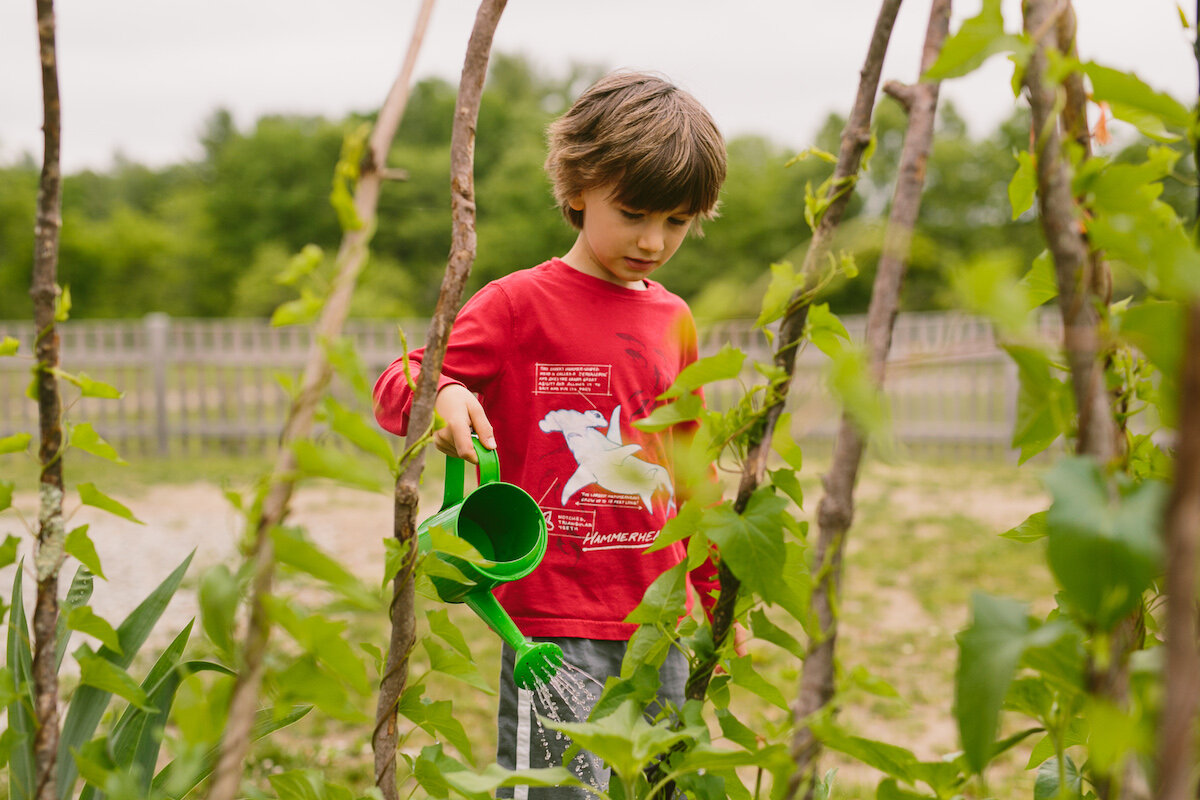
One of the many joyful aspects of a Montessori environment is food preparation. Learning how to prepare one’s own food is a critical life skill, and it has always been a part of Montessori learning. While toddlers learn to sit together and gracefully serve and share food, at age three our primary students begin to prepare it for themselves. Even in classrooms for older students, guides find ways to work in this important practice for children. There are plenty of ways you can support your child’s developing skills at home.

Start Small: Give Mini-Lessons

We treat food prep the same as we would any other subject. We teach small skills in isolation and with intention. Parents can work the same approach into their kitchens at home. Simply demonstrate what to do, then give your child a chance to try it for themselves. The following are some ideas to get you started:

  1. Cutting and Slicing: We don’t recommend giving your four-year-old your sharpest knife, but there are lots of good options to teach this skill safely. Whether you choose to use a butter knife or try a kid-friendly wavy chopper, learning to cut and slice are good first skills to teach. Think cucumbers, celery, boiled eggs, bananas...whatever they like to eat is a great place to start!

  2. Spreading: This one is pretty self-explanatory. Utilize a variety of spreads and surfaces, like cream cheese on bagels, nut butter on celery, butter on toast, or hummus on a cracker.

  3. Mixing: Stirring and blending are natural next steps. Children can learn to whisk eggs, make instant pudding, or help combine ingredients for a meal you're putting together.

  4. Using Various Tools: Once they’ve mastered the above mentioned skills, your child is ready to learn how to use other tools, including a melon baller, vegetable peeler, cheese grater, rubber spatula, potato masher, juicer, tongs, or an ice cream scoop. Introducing a wide variety of tools will keep them engaged and interested.

  5. Using Heat: Once you feel your child is ready you can begin to introduce recipes that require heat. Start simple: teach them how to make their own toast. You can then move on to whatever works for your family. They may enjoy making pancakes, rice, tea, or popcorn. 

  6. Measuring: While measuring is critical to following recipes and learning to cook, it’s also an excellent way to bring math into the kitchen. They sky’s the limit on this one. You could teach your child to follow family recipes or discover new ones together!

Provide Opportunities For Practice

Food preparation shouldn’t be a one-time experience. The long term goal is to encourage children to gain skills independently while building up their interest and confidence. To do this, we must give kids ongoing opportunities to get into the kitchen and make food for themselves and for others.

Find ways to make this work for you. Once your child has a few skills mastered, perhaps they can be in charge of preparing their own daily snacks. As they get a bit older, they can take on the responsibility of making their own lunch, or even someday preparing dinner for their family!

Encourage Independence and Exploration

It can be tempting to come up with a plan and force our children to stick to it. It is helpful to remember, however, that “follow the child” is our motto, and for good reason. Perhaps you planned to have your child learn to chop carrots while helping you prepare dinner, but they are suddenly really into apples. Take cues from their interests and the experience will be far more rewarding for them (and for you, too!).

Whenever possible, step back and let them take over. The key is teaching them a skill so that they may master it themselves. As children get older, let them explore cookbooks and even begin to create recipes of their own.

Teach About Nutrition

While there’s certainly nothing wrong with teaching your child how to whip up a batch of cookies, food prep at home is a great way to teach your child about healthy eating. As you work with various ingredients it can be nice to talk about their benefits. We all enjoy the pleasure derived from eating delicious food, but knowing on a scientific level how different foods are beneficial to our bodies adds an extra layer of interest.

This is a great article if you’re looking for more tips on how to teach your child about nutrition.

Give Trust...and Make Room For Errors

Within reasonable safety parameters, try to step back and let your child make mistakes. Mistakes are a critical part of learning, and we need to let them happen (even if that means a little more work). There will be spills. There will be smudgy faces. There will be burnt baked goods. There may even be a splatter or two on the wall. Let it happen.

This is a nice time for us to recognize that food prep is part of the Montessori practical life curriculum. Another important part of practical life is cleaning. They may need help at first, but you can teach them to wipe up those messes!

We hope this post will inspire you to get your child into the kitchen more, and we know they will love it! Enjoy the successes, embrace the messes, and have fun eating together.

Book List: Books About Trees

It’s hard to imagine our world without trees. Silent and towering, they give us far more than we give them. Our children have a natural fascination with trees, from the time they are very young. This week we celebrate these magnificent plants with a list of books that we hope will inspire and cultivate awe and the desire to give trees the care and love they deserve.


Trees by Carme Lemniscates

Lemniscates’ stunning illustrations are the star of this book for young children. Infants, toddlers, and preschool-aged children will enjoy the simple text and the basic plot of trees changing during different seasons. 


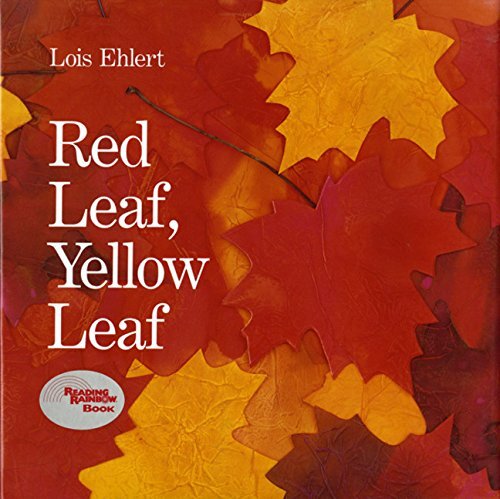
Red Leaf, Yellow Leaf by Lois Ehlert

This book has been loved by generations of children. In lieu of more typical illustrations, Ehlert utilizes interesting materials to create collage on each page. Children will learn important factual information about the lives of trees, specifically within the context of the narrator’s beloved sugar maple. 


Maple by Lori Nichols

Maple is the name of a young girl, but it is also the type of tree her parents planted in celebration when she was born. Maple and her tree grow up together, and as an only child, her tree often serves as a trusted companion. Maple does not remain an only child forever, and her trusty tree helps ease her into sisterhood (with baby Willow).


Who Will Plant a Tree? by Jerry Pallotta, illustrated by Tom Leonard

Renowned children’s author Jerry Pallotta created this book to teach young children how many living things unknowingly help plant seeds. Tom Leonard’s illustrations help convey the various ways seeds might hitch a ride: stuck to fur or feathers, buried, dropped, pushed along in the water, and (much to children’s delight) pooped out. 


The Lumberjack’s Beard by Duncan Beedie

This adorable book will have readers giggling for sure, but it also conveys an important message. A lumberjack inadvertently displaces several animals from their homes, and after inviting them to live in his beard for a while, he experiences a change of heart and goes about righting his wrongs.


The Great Kapok Tree: A Tale of the Amazon Rain Forest by Lynne Cherry 

A young man enters the rain forest intent on cutting down a kapok tree. Lulled to sleep by the heat of the jungle, he rests against the tree’s trunk for a nap. While he sleeps, various animals whisper their pleading requests that he reconsider. When he awakes, finding himself surrounded by those he dreamed about, he decides to leave the tree (and all those who rely on it) alone. 


Wangari’s Trees of Peace: A True Story From Africa by Jeannette Winter

Wangari grew up “...under an umbrella of green trees in the shadow of Mount Kenya in Africa.” She was fortunate enough to have an excellent education, eventually traveling to the United States to earn degrees in biology and science (as well as advanced degrees in Germany and Kenya). Upon returning home to Kenya, she was shocked to find the trees she once loved had vanished. Ignoring the naysayers, she taught the women of Kenya to plant one tree at a time, creating economic independence for families and restoring the natural state of her beloved nation.


The Tree Lady: The True Story of How One Tree-Loving Woman Changed a City Forever by H. Joseph Hopkins, illustrated by Jill McElmurry

Born in the mid-nineteenth century, Kate Sessions adored trees. She grew up surrounded and inspired by them. She attended UC Berkeley, where she was the first woman to receive a degree in science. A move to San Diego, which was mostly barren in terms of trees at the time, inspired her life’s work. With the cooperation of city officials she began planting a wide variety of trees, some of which remain to this day. Sessions transformed both the landscape of the city and the perspectives of its people.


Ultimate Explorer Field Guide: Trees by Patricia Daniels

Created specifically for children, this field guide is filled with enticing illustrations, diagrams, photographs, and helpful information. Beginning with some important general information about trees, the book covers a wide variety of the more popular trees one might encounter. Created by Daniels for National Geographic Kids, this book is an excellent option for kindergarten and early lower elementary children.


Peterson Field Guides to Eastern Trees and Western Trees

Peterson’s field guides are, in our opinion, some of the best available. If your child is interested in trees, or if you would like to try identifying some near you, these books will prove to be invaluable. Montessori children are accustomed to classifying and identifying various organisms due to their in-depth study of biology; field guides are an excellent resource to support curious learnings and those who love nature.


Why Choose Montessori?

whymontessori.jpeg

We know parents have choices when it comes to their children’s education. We know these choices are not easy. There are many factors to weigh, but we hope this article will help you make an informed decision at least as far as Montessori is concerned. Montessori education has been successfully serving children and families around the world for over a century. The basics remain - and for good reason. Our methods are consistently backed by current research in education and human development. As we move forward into a new future, we believe Montessori has what it takes to prepare children.

Montessori Meets Children Where They Are, Without Judgement

Conventional methods of education were developed specifically to prepare large numbers of children to enter the workforce. Traditionally, little thought has been given to differentiating instruction or catering to the needs of individual children. That has been changing in recent years, but many schools are still in the early years of personalizing education.

Montessori schools are specifically designed to allow each child to move at their own pace. We know that learning is not linear, and that children are not ready to learn specific skills according to an adult-prepared timeline, or in perfect harmony with their peers. Kids who need more support with certain skills get that support, and those who are ready to move ahead are able to find the challenges they crave. We do not teach a whole class of children the same skill at the same time; that may seem more efficient from the perspective of an adult tasked with teaching, but it’s not necessarily what serves the children the best. No two people should be expected to grow at the same rate, and it’s our job as educators to meet children where they are and give them the support they need to get where they want to be.

Montessori Emphasizes More Than Just Academics

Lots of people use the phrase ‘teaching to the whole child’ but in Montessori schools we mean that on a very deep level. We do not teach just to convey academic information. In fact, academics share equal emphasis with our efforts to develop other aspects of the child, including emotional, social, sensorial, and practical life development. We integrate the arts and movement into everything our children do, rather than isolating these areas of study into a separate class. We intentionally teach children how to navigate and resolve conflict and how to adhere to grace and courtesy social norms. 

Our greatest task is, we believe, to give children a global view of the world. We want them to understand the interconnectedness of all things so that they may be fully integrated members of their greater community as they grow and mature.

...But The Academics Are a Huge Strength 

The above mentioned being said, Montessori academics are often hailed as some of the highest standards there are. It is not uncommon to see four-year-olds in our schools reading, six-year-olds completing long division problems, and nine-year-olds classifying botanical specimens. These tasks are completed joyfully, in part because we present information in such a way that children discover it for themselves rather than passively taking in facts given by an adult.

Another reason Montessori students seem to work at an advanced academic level is because of what we call sensitive periods. Through years of observation, Dr. Maria Montessori noticed that young children seemed primed and particularly interested and ready to develop certain skills during very specific time periods. While, of course, there is variation between individual children, she noticed some general patterns that have helped us develop our curriculum. One interesting example is that of the study of geometry. Many of us were first exposed to the subject during our high school years, when it turns out that primary- and elementary-aged children are not only interested in geometry, but have a great capacity to learn far more than we typically give them credit for. This is why you may hear your five-year-old talking about rectangular prisms, or your seven-year-old discussing the differences between isosceles, right, and scalene triangles.

Our Schools Cultivate Community

A Montessori school is more than just a school. First and foremost we are there for our students, but we believe schools have the capacity to be so much more. We aim to make meaningful connections between everyone involved. Some of the ways we do this include:

  • Giving our guides opportunities to connect with one another for development

  • Encouraging our guides to form connections within the larger Montessori network

  • Making sure parents and guides have ample time to discuss the child’s growth and needs

  • Providing opportunities for parents to form relationships with one another

  • Supporting families via parent education offerings

  • Gathering as a whole school periodically

  • Forming bonds between children at different levels

  • Reaching out to make connections with the local community

  • Giving our educators and families a voice in school decision making

We also believe that it is our job to take the guesswork out of making these types of connections. We aim to build in structures that make it simple for everyone to find commonalities and open streams of communication seamlessly.

Montessori Aims to Lift Up Humanity

We know. This is quite the lofty goal. From the very beginning, Dr. Montessori saw it as her mission to improve the world through education. She believed that by giving children the honor and respect they deserved, the benefits would trickle through to families, the community, and society in general. She believed in equality of all people, and saw that education has the potential to be a great leveler. 

Montessori schools aim for peace. This starts between individuals, and teaching our youngest students how to be kind and gracious toward one another. A great respect for the environment and other living beings is another important aspect of our work, as is a reverence for the wide diversity of cultures around the globe. Combined, these elements are meant to cultivate within the child a respect for themselves and others, as well as a desire to ensure connection and fairness for all.

We hope this article has been helpful. To continue the conversation, connect with us for a chat or to schedule a tour. We look forward to meeting you.

Summer Learning: Finding a Balance

summerlearning.jpeg

Families typically undergo a period of transition between the end of the school year and summer vacation. This year’s transition will certainly look very different than most, but it’s still there. We are here to support you as you figure out a balance between learning and relaxing. This will look different for every family, but finding ways to meet the needs of both children and parents doesn’t need to feel impossible.

In what areas does your child need support?

After spending a bit of time this spring working with your child at home, you likely have a pretty good idea about what their strengths and weaknesses are. While summer is a great time to ease up on academics, it’s perfectly fine to spend a little time focusing on skills that your child could use a little extra support with.

Some tips to keep work light, fun, and effective:

  • Identify reasonable goals. Your child’s teacher is a helpful person to consult with on this.

  • Decide how much time to spend each week. Fifteen minutes each day? Ten minutes three days a week? A bit longer for an older child? Keep it brief but consistent.

  • Make it fun. If your child is dreading the work, they’re not going to get a whole lot out of it. Find ways to integrate skill building into other activities, or again, consult your child’s teacher for ideas.

  • In lieu of traditional praise, reframe your observations. Instead of saying, “Good job!” say, “I notice you worked really hard on that. How do you feel?” This practice will cultivate internal motivation rather than a desire to work to please others.

What are some simple things you can do for maintenance?

Let’s say your child is a strong reader. If they don’t spend much time reading all summer long, that strength is likely to fade somewhat. It’s important to find stress-free ways to keep skills sharp over the next several months. Again, keep it light, fun, and brief. Pay attention to your child and let their enthusiasm be your guide. If they love to read, make sure to carve out a bit of time each day for them to do that. If math is fun for them, make up word problems that have to do with your daily life or ask them to help you figure out real-life problems. Is science and nature more their thing? What better time than summer to explore and learn!

How might you enrich daily life?

Before we jump into the possibilities for enrichment, we would like to remind you to keep your expectations manageable. If you have your own work to attend to, or are dealing with family or health issues, coming up with creative fun for your child may have to wait, and that’s okay. When you have a few spare moments, make sure there are plenty of independent options for your child around the house: dishes and snacks within reach, high-interest games and toys available, art supplies, puzzles, and books are all great ways to encourage your child to enjoy their time independently when your attention has to be elsewhere.

That being said, if you do have some more time to spend together as a family, consider how you might want to spend it.

Should the routine be different?

Yes... and no. Summer is a great time to loosen up and relax the rules a little bit. Children still need basic schedules to help them feel grounded and safe, but that doesn’t mean they can’t stay up late one Tuesday night to do some stargazing. You may have specific screen time rules as a family, but it’s okay if you wake up one rainy morning and all decide to stay in your pajamas and watch tv. While it might sound completely counterintuitive, remember two things:

  1. Your child needs structure and routine. Don’t throw that away completely just because it’s summer.

  2. It’s summer. It’s okay to make some adjustments and flex those rules once in a while.

What do children really need right now?

We have all been through a lot in recent months. We know you already know this, but what your child needs most is to have you be there for them. They need to know you love them and will support them. You are the certainty during uncertain times.

As we all move forward defining our new normal, kids are still kids. They help us remember to have fun and enjoy the small things in each moment. They need us to slow down and do that with them. They need us to step away from chores and work on a puzzle with them. They need us to turn off the computer and help them dig a hole in the yard.

We all need to revel in our own little moments of joy. Let this be a summer to make a few memories together. 

How Do Montessori Guides Address Avoidance?

avoidance.jpg

One of the top questions parents ask about Montessori is: How do teachers deal with children avoiding work they don’t want to do? This is a really important concern, and becomes increasingly so as children get older. Most families know Montessori centers on student choice, and it can be hard to envision that value working in conjunction with accountability. The good news is it’s something we take very seriously. In fact, our entire approach is based on the idea that we must teach children to develop strong work habits and encourage them to be driven by internal motivation rather than reacting to external factors. This takes time, but Montessori guides are there to support children as they navigate the journey.

Give Them Choice

Having choice is actually a powerful tool in combating avoidance. When children (or people of any age) have freedom to make their own decisions, it’s empowering. Knowing that others trust in us to do the right thing is often all it takes to do the right thing. No one likes to feel micromanaged. We allow our students to choose the order of their work; some like to start the day off reading, while others prefer math. We also let children have autonomy in other ways. They get to decide when they need to use the toilet, have a snack, and move their bodies. There are, of course, procedures to follow in order to keep everyone safe, but we don’t believe kids should have to ask permission to address their basic needs, nor should they have to do so on a schedule that is convenient for adults.

The big picture: comfortable children that feel respected and trusted are much more likely to work hard and meet expectations.

Quietly Observe

If there is one statement that can help us reframe our perspectives with empathy it’s this: Each child is the way they are for a reason. There is a reason a child is avoiding something. As adults, it’s our task to discover what that reason is, and find gentle ways to address it. Montessori teaches us to think like scientists and use observation as a way to learn and make more informed decisions. Some questions we make ask ourselves as we observe a child who is struggling:

  • Is the work too challenging?

  • Is the work too easy/is the child bored?

  • Is the child experiencing emotional upheaval in their life?

  • Are the child’s basic needs being met?

  • Is the physical classroom environment supportive of the child’s work?

When Montessori teachers are trained, they learn to first look to the environment, then examine themselves and their own actions. Only after considering the first two possibilities do they look to the child themselves as a potential source of the issue.

Appeal to Their Interests

Sometimes all children need is a ‘hook’. Although Montessori materials in the classroom are meant to be used in a very specific way, and deviation distracts from authenticity and effectiveness, there is some room for flexibility. This can be very helpful in modifying work so that it will best meet an individual child’s needs. A guide may consider a child’s favorite color when setting out pouring or scooping materials, favorite animals when presenting zoology lessons, or other interests when gathering reading materials. The key is to consider what a child is avoiding, then find a way to make it more enticing.

Hold Them Accountable

While Montessori doesn’t utilize punitive measures, that doesn’t mean we don’t hold children accountable. If we expect children to do certain things, it’s our job to make sure they follow through. The following are critical in making this happen:

  • Clearly explain the expectations.

  • Provide an environment and time that allows for expectations to be met.

  • Observe children to ensure they meet expectations.

  • Guide when necessary. This may include redirection, suggestions, or working together to create a plan.

As children get older and academics become more of a focus, getting work done becomes much more important. Beginning in the kindergarten year or lower elementary, Montessori guides typically begin to utilize work plans. These can take on a variety of forms, but they are generally a visual schedule, created in collaboration between the guide and the child, of what must be done. Students can typically choose the order in which tasks are completed, but adults check in to make sure there is follow through. In the event the child is not meeting the expectations, a guide will typically meet with the child to discuss new strategies. They may help the child develop time management strategies, give suggestions as to seating, or provide tips for effective work habits. The child leaves the meeting with concrete strategies to try, and the adult and child reconnect at some point to evaluate progress.

It helps to remember that learning to work is part of the child’s work. Rather than forcing children to do what we want when we want them to, we take a more long-term approach. Our goal is not just to share information, but to help children become joyful learners. We want them to walk away from Montessori being able to feel confident in their abilities and ready to take on challenges. We all want to avoid certain tasks from time to time. Our job is to teach children how to manage their time well and accomplish whatever it is they need to get done.

Perhaps unsurprisingly, this work can be carried over into the home as well. The more parents learn about Montessori, the more the concepts become part of parenting and the life of the child. We hope you will reach out to us if you have any questions or would like to discuss this topic further.

Book List: Math Books for Children of All Ages

In Montessori schools, children tend to really love math. It’s no wonder, with gorgeous materials created to appeal to their senses and developmental stages. One fun way parents can support their children’s love of math is by reading to them about it. This month we have curated a list of books that will appeal to children of all ages, whether they are learning to count or discovering the magic of Pi. Check out these titles and let us know what you think!


Numbers by John J. Reiss

There are some iconic early counting books out there, but if you’re looking for something fresh to inspire a love of numbers, check out this beautiful little book. With bold illustrations and sturdy pages, children can learn to count to ten and beyond (there’s even a page for 1000!).


How Much Is a Million? by David M. Schwartz, illustrated by Steven Kellogg

Is your child ready to expand their understanding of place value? Are you looking for a way to help them conceptualize larger numbers? This charming book is both fun and educational, giving kids concrete ways to visualize one million. How tall are a million children? How long does it take to count to a million? How much water would a million goldfish need? Find the answers to these questions and more!


The Grapes of Math by Greg Tang, illustrated by Harry Briggs

Adding, subtracting, multiplying, and dividing are important skills for all young children to learn. Finding different ways to look at groups of numbers can make operations work a breeze. The Grapes of Math uses clear illustrations and catchy rhymes to challenge children to find new ways to count larger numbers. Your child is sure to have fun figuring out these math riddles with you.


One Hundred Hungry Ants by Elinor J. Pinczes, illustrated by Bonnie MacKlain

Everyone loves a picnic, including ants! In an attempt to get to the food as soon as possible, the ants keep rearranging themselves into different groups. Two lines of 50 is surely faster than one line of 100, right? What about five lines of 20?


Measuring Penny by Loreen Leedy

Lisa’s teacher asks the class to go home and measure something. What could be more fun than measuring your pet dog? This book discusses multiple standard units, nonstandard units, comparisons, and a myriad of ways to measure. Lisa and Penny have fun at the park, where there are plenty of other dogs to measure, too!


The Lion’s Share: A Tale of Halving Cake and Eating It Too by Matthew McElligott

An ant attends the Lion’s annual fancy dinner, along with a number of other animals. The sweet ant is shocked by the terrible behavior of the other guests. Beyond their awful table manners, they divide a cake with no regard for fairness (although they do give readers a great lesson about fractions along the way!). When the ant offers to bake the king a cake, the other animals try to outdo her, with each doubling the offer of cakes. Kids will be amazed and amused!


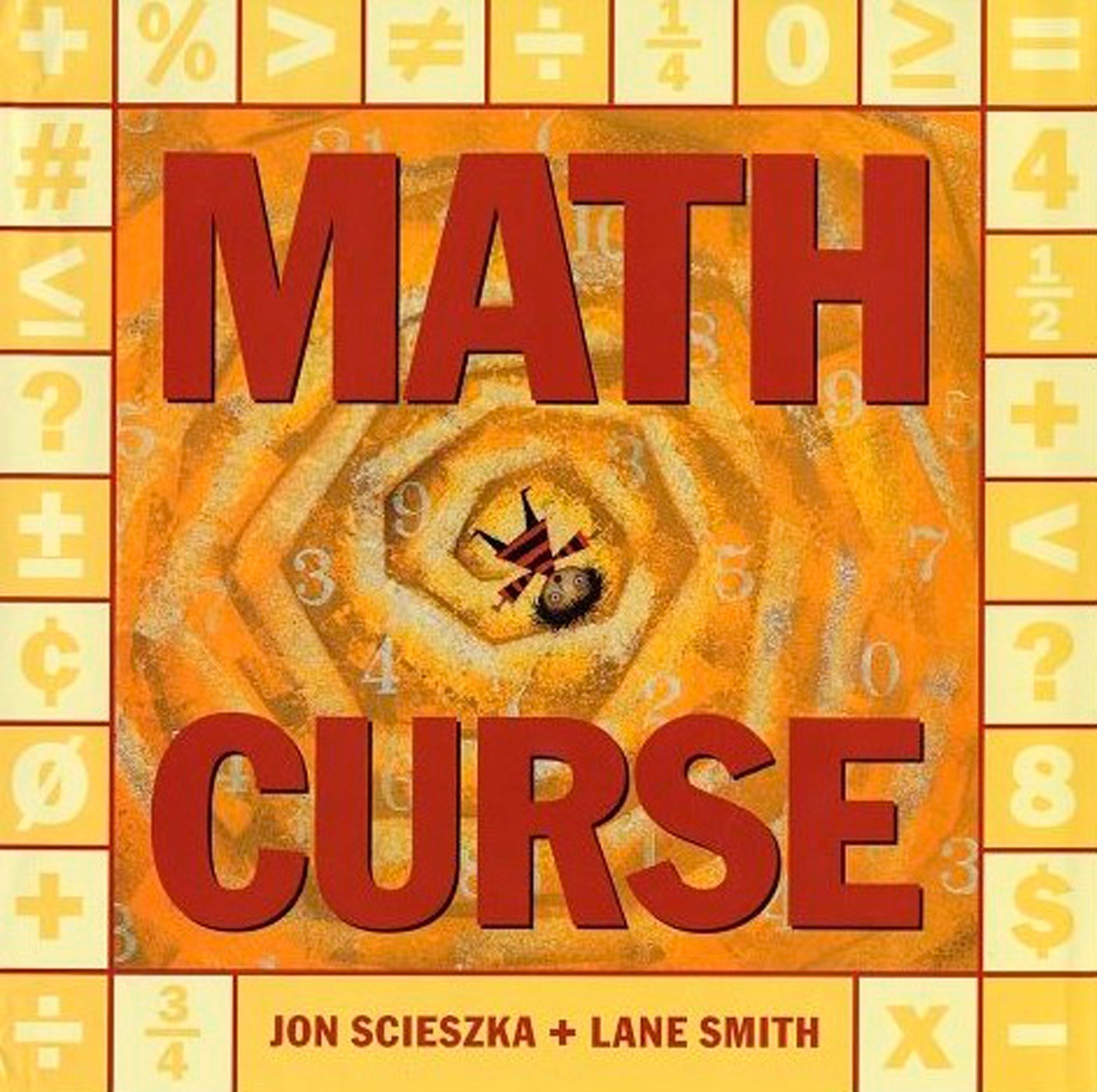
Math Curse by Jon Sciezka, illustrated by Lane Smith

What would you do if your math teacher told you that basically everything in life could be a math problem? If you’re the main character in this book, you might feel like you have a math curse. When life is suddenly numbers, fractions, and word problems, how can you possibly think about anything else? When even the character’s dreams become math problems, they realize they have to find a solution.


Sir Cumference and the Dragon of Pi by Cindy Neuschwander, illustrated by Wayne Geehan

When Sir Cumference has a stomach ache, his son Radius runs off to find some medicine. He accidentally turns his father into a dragon, and finds a mysterious mathematical poem to help him undo the magic. While searching for answers, Radius sees circles everywhere, but he needs to figure out how to measure circumference in order to save his dad. He does, of course, and what better way to celebrate than with some pie?


The Boy Who Loved Math: The Improbable Life of Paul Erdos by Deborah Heiligman, illustrated by LeUyen Pham

Young Paul did not live his life like most people. He struggled with seemingly simple tasks, yet he was always thinking about math. As a four-year-old, he enjoyed mentally calculating how many seconds old people were. This story highlights the fact that there is a place in this world for all of us. The genius of this one boy was realized as he traveled the world collaborating with other mathematicians.


What’s Your Angle, Pythagoras? by Julie Ellis, illustrated by Phyllis Hornung

While we don’t actually know anything about the childhood of the famed Pythagoras, Ellis imagines the types of mischief (and learning!) he may have gotten up to. Curiosity can lead us in many different directions, and Pythagoras goes on a voyage with his merchant father. His passion for buildings leads him to learn about angles, and how a knotted rope helped early builders calculate precise measurements. He explores some more, and uses patterned tiles to discover the concept of squaring.  

6 Simple Reminders: Self-Care for Parents

image-from-rawpixel-id-1207-jpeg.jpg

Parenting is an amazing life experience. We all know how lucky we are to watch our children as they grow into the people they are meant to be. We try to stop and appreciate the little moments. We take hundreds of photos. We try to prepare them healthy food and space to run and play. We tell them we love them and do our very best to really be present.

But-

Parenting is really hard. Especially now. We know it’s so worth it, but combine the responsibilities of guiding our children’s education at home with our jobs, personal lives, financial obligations, and just everyday things adults have to do, there are moments when it can all feel a bit overwhelming. That is totally normal, but it doesn’t mean it’s pleasant. There are also plenty of ways we can proactively make it all more manageable. It starts with prioritizing time to take care of ourselves. We all know this, but it can be easy to forget and get caught up in the needs of everyone else around us.

Consider this as a reminder to slow down and do something for yourself. If it’s been a while and you need a few reminders as to where to begin, we’re here for you. Don’t worry about implementing all these suggestions at once; start slow and try to add in one or two where it feels right. Over time, try to mix in a couple more. As hard as it is to imagine adding more to your already busy life, we promise it won’t feel that way in the long run!

1. Exercise

We’re guessing you read this heading and reacted in one of two ways: you either smiled because you’re already exercising on a regular basis and know and love the benefits, or, like so many of us, you groaned internally because the thought of working up a sweat sounds miserable.

If you find yourself in the former group, you can probably skip to number 2. If you dread exercise, well, hear us out. Exercise is a proven way to reduce stress and increase energy.* Just 30 minutes a day, 5 days a week of moderate exercise is recommended and can make a huge difference. A good guideline to determine moderate exercise is that while you are in the midst of it, you should be able to talk but not sing. You should feel your heart beating a bit faster than normal, your breathing will intensify, and you may work up a sweat after a bit.

The key is to find what works for you. Exercise should be an enjoyable experience or it’s nearly impossible to stick with it. Would you be most likely to exercise if you could spend the time outdoors? In your living room with a YouTube video? It all counts!

2. Eat well

We’re not talking about dieting here. We’re talking about fueling your body with the food it needs to function well. Instead if depriving yourself of the foods you love, reframe your approach and find tasty ways to add in nutrient-rich foods. Make sure you’re getting lots of different fruits, vegetables, and protein. Add in some complex carbohydrates, lots of water to drink, and the occasional treat that brings you joy.

Savor each bite. In the rush of the day it’s easy to slip into a fast pace or eat on the go. Sit, smell, taste, and enjoy your food.

3. Sleep

Isn’t it funny how many children tend to resist naps, but as adults, many of us wish we had time for them? Getting enough sleep each night might help you make it through the afternoon slump.

Can you relate to this scenario? You have spent your whole day working hard and your child is finally asleep. You don’t have much energy left, so you collapse on the couch to watch tv. Before you know it, you’ve watched more episodes of your favorite show than you intended to, and it has become later than you should have stayed up. You get yourself into bed, don’t get quite enough sleep, and wake up groggy to repeat the cycle the following day.

It can absolutely be a challenge to find time to unwind before bed. Take a little time to consider your personal situation and ask yourself what you really want your evenings to look like. Do you want to spend time with your partner? Do you want to catch up with a friend? Could watching one or two episodes of that show leave more for another day?

Once you get into the habit of sleeping enough regularly, you’ll never want to go back.

4. Socialize

Spending time with other people just for fun is so important for our wellbeing. Think about the last time you grabbed a cup of coffee with a friend or went on a date with your partner. Making and nurturing connections makes us feel whole. We just have to work a little harder to make it happen now. 

So, even if it’s once in a while, schedule some time to hang out (virtually, of course) with people who make you laugh, or who are great at listening to your stories, or who you share common interests with. You’ll come away feeling alive, refreshed, and ready to tackle the world. It’s just one important way to remind yourself that you and your happiness are important.

5. Expand

Routines are great. They give is something to rely on and feel grounded in. Unfortunately, monotony can also get pretty boring sometimes. Mixing it up is a great way to feel your own sense of individuality. Novel experiences challenge our brains in positive ways, plus, it can be fun! Some ideas:

  • Take a different route on your daily walk.

  • Listen to a new (to you) genre of music.

  • Try out a fresh hobby.

  • Read (or listen) to a new book.

  • Try a new recipe.

6. Reflect

We saved this one for last for a reason; while it can be done any time of the day, it can be a simple practice to add in during the last ten minutes before bed. It’s simple: take time to be alone with your thoughts.

Reflection can take on a variety of forms, but it’s usually quiet, it’s usually done alone, and it can be really relaxing. Depending on your personal preferences, this may take the form of meditation, journaling, prayer, or something else altogether. Find what works for you.

While we know you’ve likely considered and tried many of the items on our list before, we hope this post has served to remind and encourage you to take care of yourself. Being a parent is one of the most important jobs out there. Not only does caring for yourself prepare you for the task, but it helps you be a great role model for your child.

Have a lovely day.

*For more information visit https://www.mayoclinic.org/healthy-lifestyle/stress-management/in-depth/exercise-and-stress/art-20044469

https://www.sciencedaily.com/releases/2006/11/061101151005.htm

Container Gardening with Children: Botany, Responsibility, Food Preparation, and Compassion

gardening.jpg

If you’re an avid gardener, you’ve likely already started your seeds and planned out your raised beds. You know the sweet reward of eating a sunshine-warmed tomato in the middle of summer, and you’ve seen the many benefits for you and your family that extend far beyond the tasty produce.

But if you don’t consider yourself a green thumb? Curious but never felt like you had the time? Are extensive beds not an option for you? Or would you rather start small before committing to anything large? Regardless of the reason, container gardening is an excellent option for everyone. A container garden can be as simple as a single potted marigold on the porch, vegetables, fruits, herbs, and flowers taking over every possible square inch of your outdoor space, or (most likely) something in between.

Growing a container garden with your children is simpler than you might think, and it’s an enriching experience that will give them skills to last a lifetime. Check out this video for some inspiration:


Expanding Upon the Botany Curriculum

All Montessori classrooms infuse botany into the environment, lessons, and work options. By starting a container garden you are making an authentic bridge between home and school. Your child will have hands-on experiences that will bring skills to life, building on their prior knowledge and giving them even more.

Interested in making direct connections to the Montessori botany curriculum? Here are some tips: 

  • Point out and name the parts of plants.

  • Help your child learn to identify various plants.

  • Discuss what plants need to survive and how you can help your plants meet those needs.

  • Compare different leaf shapes.

  • Talk about plant attributes: annuals versus perennials, vine growth form versus herbaceous, or how individual plants change over time.

  • Make math connections: make predictions, take measurements, collect and chart data.

  • Teach your child about how plants reproduce, and make connections with the organisms that assist in the process. 

Nurturing Responsibility

It may seem obvious, but having a garden (no matter how small) is a great way to teach your child about responsibility. Caring or not caring for plants produces natural consequences in the purest form. If your plants are consistently watered, weeded, and given the correct amount of sunlight, chances are they will flourish and produce beautiful results. Neglected plants, however, and likely to shrivel up and die rather quickly.

It would be totally normal for your child to show excitement and enthusiasm when you first begin gardening. After a week or two, their desire to participate is likely to wane. Use this as an opportunity to talk about what responsibility means. Let them know that the plants are counting on their help to stay alive. Develop structures that will help your child be successful: this could be as simple as daily verbal reminders to water the plants, or you could have a chart on the wall for them to refer to. It goes without saying, but the level of independence we can expect depends largely on their developmental plane.

Building Opportunity for Food Preparation

In a Montessori primary environment, food preparation is a part of the daily routine. Children learn to spread, slice, mix, and create simple snacks for themselves and others. Even in the older grades, many Montessori schools find ways to bring food preparation into their work. This may take the form of preparing lunch for one another, creating birthday walk snacks, or trying various cultural recipes for different world celebrations.

Growing your own food, even if it’s just a few cucumbers, gives your child a chance to extend their food preparation work at home. By learning to create snacks and meals, they are building one of the most critical life skills we can give them. Not only does this create a sense of self-sufficiency, it also gives children an opportunity to care for the other people in their family. Preparing and sharing food together strengthens bonds (and it’s so much tastier if you have grown the food yourself!) 

Cultivating Compassion

For those of us who love Montessori, supporting the growth of the whole child is so much more important than focusing on academics alone. Do our kids need to learn to add and read? Of course they do. They also need to learn how to be kind human beings. The best way to teach this is to make sure they are surrounded by patient and supportive adults who model their best.

Another wonderful way to cultivate compassion is to teach your child the importance of caring for another living thing. Pets are one common way families try this, but caring for plants is another. Over time, even young children will begin to understand that a living organism depends on them.

Have you heard that plants may react positively to certain sounds, including classical music and human voices? 

If you have been debating whether or not to start gardening with your child, we hope this video has given you the courage to try it out! We can’t wait to hear how it goes.

Montessori: A Woman Who Flourished in the Face of Adversity

maria-montessor-with-kids.png

Dr. Maria Montessori: You probably know her as the woman who created a unique method of educating children. You may know she was from Italy and was one of the nation’s first female physicians. What you may not know is she was a woman who consistently faced adversity throughout her life and still managed to cultivate incredible progress.

During Dr. Montessori’s childhood, literacy rates were very low across Italy. She was fortunate, however, and received a more advanced primary education than most. Still, women of her time were expected to focus on domestic work. Those that went on to professional careers were often in the field of teaching, a job she ironically said she would never pursue. She originally had an interest in becoming an engineer, but eventually decided to pursue medicine.

Montessori’s father made it clear that he was not in support of her decision, which was a sentiment echoed by other male figures in her life. Upon meeting with a professor of medicine at the University of Rome to discuss her plan, she was denied the opportunity to apply to the program. She enrolled at the university anyway to study math, science, and physics, and after several years worked hard to take and pass the entrance exams necessary to enter the medical program. Women were not allowed, and her enrollment was denied.

Not one to take no for an answer, Montessori persisted. Her efforts even garnered the support of Pope Leo XIII, and she was eventually granted admission to the medical program.

Throughout her time studying medicine at the university, Montessori faced discriminatory standards that would frustrate any one of us. As a woman, she was not even allowed to walk to school by herself, so her disapproving father walked with her each day. She could not enter lecture halls alongside her male peers and was made to wait outside until everyone else was seated. The idea of her standing alongside men during dissections of naked human cadavers was considered highly inappropriate, so she was forced to do her own dissection work alone in the evenings. 

Despite everything, Montessori went on to graduate in 1896. Her accomplishments were recognized and she was asked to represent Italy at an international women’s conference. At the conference, scores of protesting women gathered outside, frustrated with the privileged bourgeois women of the conference whose ideas of feminist reform were not enough in their eyes. The women outside believed in revolution, and felt that the slow pace of reform would get in their way.

Montessori was chosen to address the crowds. She spoke passionately about the movement of feminism and how it was not bound to a specific social class. Her words were uniting, and she was well received not just by the women outside, but by the press and the other international delegates as well.

Montessori’s feminist ideals were radical for her time. She believed in equal pay for women. She believed that women who wanted to study in the areas of math and science should be allowed to, but she thought that did not excuse them from being proficient in the areas of domestic life as well. To that end, she believed that boys should be taught practical life skills in the home just as well as girls, and these beliefs carried over into her eventual development of the Montessori primary program.

Several times during her early career, Montessori was charged with overseeing children who were not deemed competent by the standards of society. Each time, she used her scientific background and approaches to develop new ways of working with the children and guiding them to exceed the expectations of others. This first happened in a psychiatric ward where she noted young children housed alongside mentally ill adults. They were forced to exist in plain rooms with nothing to entertain themselves. Gathering ideas from educators who came before her, she began to develop methods and materials to help these children learn. They did, and before long she became the director of a new school in Rome that was to educate children that typical schools were unable to, as well as to train other teachers to do so. Unsurprisingly, this venture was a huge success. On standardized tests, the children at the school were even able to perform as well as or better than their peers in typical schools.

The next phase of her life and career was a natural progression. San Lorenzo, Rome, was a very poor area in which parents who had to work during the day were forced to leave their young children at home. The children ran amok and caused general mischief and destruction. Thus was the creation of the famous Casa dei Bambini, the first Montessori school; a school within the apartment complex of the children it served. It opened in 1907 and welcomed children ages 2-6.

It was at Casa dei Bambini that Montessori developed many of her founding principles and materials for what would become the primary program. The school was such a huge success that for the remainder of its existence welcomed people from around the world who would come to see it for themselves. Countless people would visit to observe and leave astounded and inspired.

Decades later, after the Montessori method had begun to spread around the world and find enthusiastic supporters in many countries, a political shift began to take place globally. In Montessori’s own Italy, Mussolini rose to power and brought the country into a fascist regime. Somehow, the two came to an understanding: Mussolini wanted Montessori to further develop her work in Italy, and she, denying allegiance to politics of any kind, accepted the support. She felt that her work would bring about peace in the long run, while he was more focused on the fact that Montessori students presented as well-behaved and compliant. When it eventually became evident that he intended to use her schools as a vehicle to train a nation of young fascists, Montessori schools across Italy quickly closed and she fled the country.

For the next twenty years she lived in Spain and cultivated a vibrant and strong extension of the Montessori movement. Sadly, in 1936, the country found itself in a civil war and Montessori and her family quickly escaped to England.

At one point, after having lived in so many different places, she was asked about her nationality. Her response? “My country is a star which turns around the sun and is called Earth.”

Dr. Montessori was a woman who never let others stand in the way of her own progress and success. She lived through two world wars, was a staunch supporter of the early feminist movement, proved her abilities academically, and went on to dedicate her life to enriching the lives of others. She did not allow others to hold her down, and used her own success as an example of what we are all capable of.

Montessori stood, and continues to stand, as a beacon of hope for humanity. She was nominated for the Nobel Peace prize in 1949, 1950, and 1951. She died in 1952 in the Netherlands, yet her legacy carries on.

Book List: Housebound Edition

Hello dear families. We are sending out our love and support during this challenging time. We know you are stuck at home, but we hope you have found some beautiful moments or ways to make it work. In lieu of our regular book list this month, we created one that may be helpful in this unique situation. The list consists of two parts: books that may be helpful in content if you are so inclined to order them online and prefer physical books, and sources for ebooks for children. 

Books About Health and Viruses

Germs Are Not for Sharing by Elizabeth Verdick, illustrated by Marieka Heinlen

Perfect for toddlers and preschoolers, Germs Are Not for Sharing has simple text and clear illustrations that teach and remind little ones what they should do when they are sick. For example, “Cough, cough, cough! What do you need to do? Turn your head away. Cough into your sleeve.” 


A Germ’s Journey by Thom Rooke M.D., illustrated by Anthony Phillip Trimmer

Ideal for lower elementary-aged children, Trimmer’s mischievous-looking green germ character, combined with Rooke’s clear explanations give kids a better sense of how we spread germs to one another and what they do in our bodies. Perfect for giving information to children who are curious to learn more about why we are self-isolating and how our immune systems work to protect our bodies, this book couldn’t be more timely.


Microbiology: It’s a Small World! By Simon Basher, illustrated by Dan Green

For the science lovers: Basher’s book gets into descriptions of various microbes. Striking drawings will appeal to kids, as will more information than they will find in a typical storybook. From the first discoveries of bacteria, to how our bodies defend themselves against germs, and facts about a variety of microbes, there is plenty of fascinating information to satisfy curious kids.


Books About Emotions and Compassion

The Invisible String by Patrice Karst, illustrated by Joanne Lew-Vriethoff

Our children are undoubtedly missing friends and family. We can help them remember the unwavering connections of love with this sweet book. When two children are frightened by a thunderstorm and unsure about their mother’s request that they return to bed, she teaches them about the invisible strings that connect us all.


Have You Filled Your Bucket Today? A Guide to Daily Happiness for Kids by Carol McCloud, illustrated by David Messing

While this book was written with children in mind, the message is for everyone. Even the most peaceful of families is likely getting a little stir-crazy right about now. Learn how to fill your bucket and how you can help others with their own. It’s helpful to stop and remember that our thoughts and actions can have profound effects on ourselves and those around us.


Peace Is An Offering by Annette LeBox, illustrated by Stephanie Graegin

Peace Is An Offering blends beautiful illustrations with an even more beautiful message. The book reminds children that even small acts of kindness make a really big difference in the lives of those around us. It does touch on tragedy without being overly graphic or upsetting. For example, there is mention of needing a home, towers falling, and losing a loved one. We recommend watching a video of the book being read aloud in YouTube if you unsure whether the story would be right for your child.


Free Ebook Sources for Children

hoopla | streaming audiobooks, music, video & ebooks

Hoopla runs in connection with public libraries. Check with your local library to see if you have access. (Bonus: There’s plenty of great titles for adults as well!)


Amazon’s Top 100 Free Kindle Books

This list is updated each hour to reflect the most popular books downloaded by users. You may be surprised by what you can find at no cost!


International Children’s Digital Library

This site contains thousands of titles in a multitude of languages. Readers get to look at high-quality scans of actual books pages, which can be a refreshing treat when it comes to ebooks.


Barnes & Noble Free eBooks for Kids

The store boasts more than 5000 titles geared toward a range of ages. Another added benefit is the ability to sort through various categories of interest, so  you’re not just scrolling through a muddle of books that won’t interest you child.


As always, we love to hear your feedback. Whether you end up checking out one of the recommendations and want to share your thoughts, or if you have another book or resource you think the families of our community would appreciate, please feel free to reach out.

Happy reading!