5 Tips For Cultivating an Adventurous Spirit

adventure.jpg

There are times in our lives when caution and hesitation serve us well. After all, self-preservation is critical to living a long and happy life. But finding ways to incorporate adventure into even the most mundane of routines sparks something special in the human spirit. Adventure shows us the magic of our world and gives us a peek at what might be possible. Cultivating adventure in our children gives them a chance to see what they are really made of while delighting in new places and experiences.

As a bonus, novel experiences are neurologically healthy. Modern theories about brain development focus on neuroplasticity, which is connected to repetition and neural pathways. The more we do something, the more those particular pathways are strengthened, so the more we share adventure with our children, the more that will become a part of who they are.

Be Spontaneous

Routine and structure are really important for children, but so is a sense of flexibility. Plus, spontaneity can be just plain fun! There are hundreds of ways to go about this one, but here are just a handful of ideas to get your started:

  • Stay up late to watch a movie together.

  • Cook or bake something no one in the family has ever tried.

  • Jump in the car to go for an aimless drive.

  • Instigate a surprise game of tag or hide-and-seek.

  • Rearrange the furniture.

  • Have a dance party.

  • Go out for ice cream. BEFORE dinner!

Try Something New Together

Hobbies are important for everyone, and creating new, common interests helps build bonds and pass the time.

You’ve probably heard the Montessori phrase “Follow the Child”. This is especially helpful advice when choosing a new hobby to embark on together. Take a little time to observe your child or consider their interests. Are they into vehicles? Keep an eye out for classic car shows or model train expositions. Do they love art? Pick up a new medium (like oil pastels or sculpting clay) and explore together. Is your child musically inclined? Learn to play an instrument together or look for live performances to attend.

Keep two more important points in mind: make sure you are exploring something you are likely to enjoy, too, and make sure you engage with the topic on a fairly regular basis. This will keep it fun and exciting for everyone.

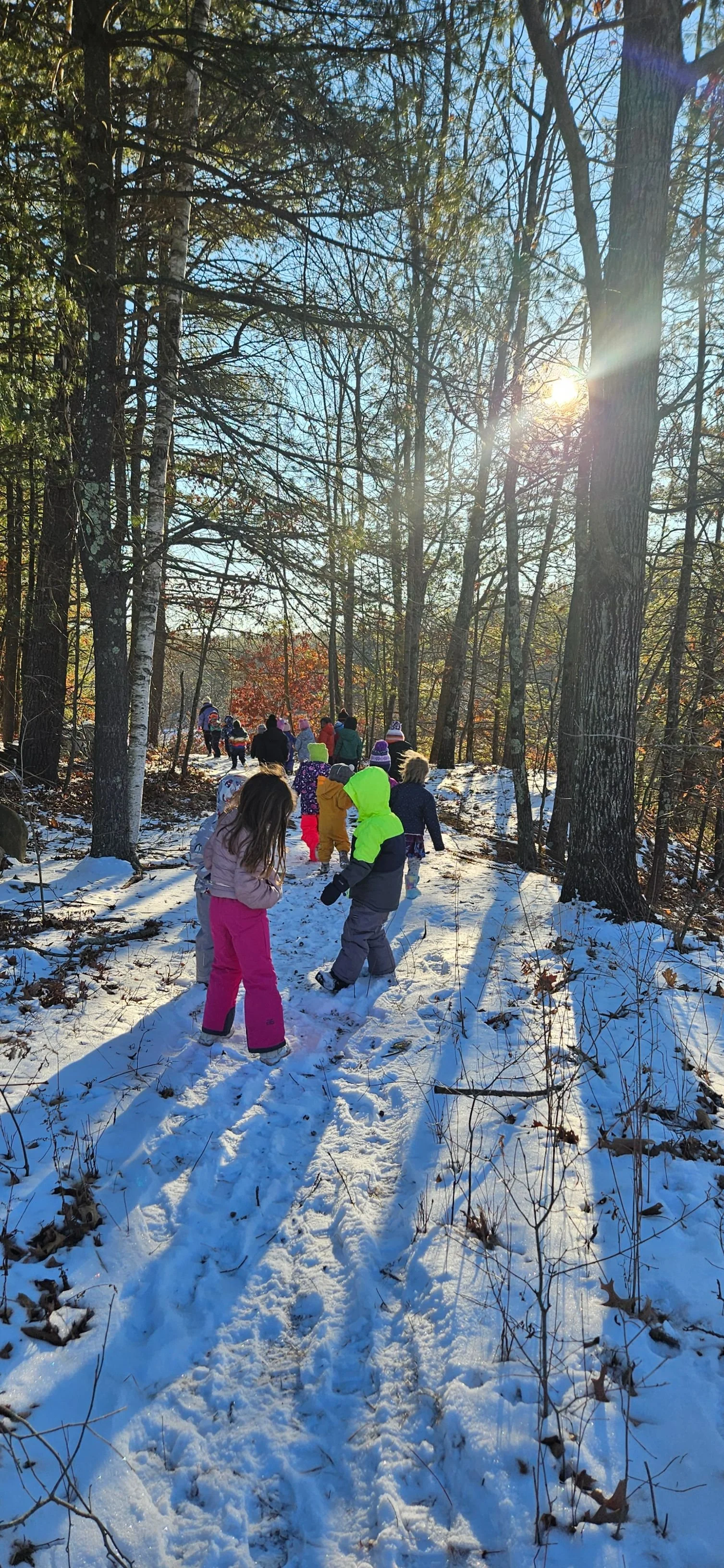
Venture Into the Woods

It doesn’t actually have to be the woods. It can be the desert, the coast, or any other natural space. Our bodies and our brains crave time in the outdoors; adding an element of adventure creates another layer of benefit.

Many cities and towns have trails marked for public use, yet many of these spaces tend to be sorely underutilized. Search online or ask some local friends for advice if you’re not already aware of your options. You may be surprised to discover how much is actually available.

Aside from building a sense of adventure, spending time in nature is a perfect opportunity to teach your child how to be a steward of the earth. We are advocates for following Leave No Trace principles. When our children learn these guidelines at a young age they will feel reverence for the planet long into adulthood.

Find Ways to Test Physical Boundaries

If you have a backyard, this tip makes for a fun project. If you don’t, there are still plenty of ways to use what’s available in your community to achieve the same goals.

Children are active creatures. They tend to be especially active around 3:00 in the afternoon when we adults are starting to experience an energy slump. This is the perfect time to get them up and moving in a controlled environment that allows them to safely test their physical boundaries.

Kids should learn to climb trees. Balancing on fences or jumping from rock to rock builds not only balance, strength, and spacial awareness, but allows children to nurture their self- confidence. Motions like spinning and swinging are also important for young children who are in the midst of developing their vestibular system or refining their sense of balance and spatial orientation. This development, in conjunction with the development of proprioception (related to the neurons in our muscles, joints, and tendons) are easily supported yet often overlooked.

As parents, we have an instinct to protect our children. This is a good thing, obviously, but it can be easy to forget that children need to take risks, too. Find ways to create an environment in which they can do so or take them to a park or playground that has existing structures and equipment they can play on.

Celebrate Adventure

Adventure is exciting. If each and every one of us never lost our sense of adventure, can you imagine what an amazing world this would be? When your child takes a risk or feels good about a new exploration, celebrate that feeling with them. If they don’t seem to recognize an accomplishment, feel free to point it out. This can be as simple as: “Wow. I know you were a bit afraid to jump down from that rock, but you found the courage and you did it.” Recognize your child’s efforts and accomplishments, not through a lens of judgement (we want to avoid phrases like nice work or good job because then children learn to perform for our approval), but through honest observation.

Adventure can make life a bit more exciting and rewarding for us all.

Enjoy the path ahead!

Considering Montessori? Here’s What to Look For

mformontessori.jpg

If you find yourself considering Montessori education as an option for your family, you undoubtedly have plenty of questions. If you take one thought away from this article let it be this: anyone can call their school “Montessori”. There is no regulation on use of the name. If you have read articles and heard stories from other families about the incredible benefits of this method of education, they are absolutely the result of a high fidelity Montessori program. Read on to learn more about what to look for. 

What’s in a name?

Throughout her life, Dr. Maria Montessori strove to retain a certain level of control over the course the Montessori movement took. It was, after all, her life’s work and bore her name. She wanted to be sure that guides were trained correctly, methods were applied as she intended, and a complete set of authentic materials graced the shelves of classrooms. Today, there are two major organizations that carry on her work and are generally regarded as the standard for Montessori education. They are AMI (Association Montessori International), which was created by Dr. Montessori herself, and AMS (American Montessori Society), which branched off from AMI in 1960. Today the two organizations maintain a positive working relationship and mutual respect for the work they both do, which is to carry on the legacy of Dr. Montessori and ensure visionary, high-quality education for children.

Recognition, Affiliation, and Accreditation

If you are looking for a high fidelity Montessori program (which is critical if you want your child to reap the benefits!), it’s important to find a school that is connected to either AMI or AMS. There are different levels of connection, depending on how closely a school aligns their work with what is considered ideal. Hollis Montessori School is recognized by AMI.

To obtain Recognition Status through AMI, a school must undertake a rigorous multi-year process that begins with a self-study and culminates with an in-person visit by an AMI consultant. A specific set of criteria must be met, including having 100% of lead teachers being trained through an AMI sponsored teacher training program. If a school meets all criteria, but has a lower percentage of AMI trained teachers, the school may be considered AMI Affiliated or AMI Associated. Schools must reapply for recognition status on an annual basis with an AMI consultant visit every three years.

To become accredited through AMS a school must undertake a similar self-study process with a three day in-person site visit by AMS representatives. Schools must go through the accreditation process at least once every seven years.

Specifically Trained Educators

Montessori guides (the term we often use for our teachers) are specially trained. In addition to college degrees they have obtained, they have also earned special Montessori credentials from recognized training programs. Many of these programs run for several years, include many hours of lectures and reading, practical examinations, written papers, material making assignments, and multiple observations in classroom settings. Many people consider the level of work required for obtaining such a credential to be similar to that required for earning a master’s degree.

Multi-Age Groupings

One of the most important elements of a Montessori school is that the classes are organized not by single chronological year classes, but into multi-age mixed groups. This approach is intentional and critical to higher levels of learning. Children ages three to five (preschool and kindergarten) are grouped together, as are elementary-aged children. Some schools break the elementary years up into lower (grades 1-3) and upper (grades 4-6) while others keep them all together. Infants, toddlers, and adolescents are also placed into similarly mixed groups.

Why do we do this? There are many reasons. For one, younger children have no shortage of models to surround themselves with. They can see what is expected of them as they grow, both socially and academically, and they work to emulate what they see older children doing. As for the older children, they are given the unique opportunity to practice leadership skills and cultivate empathy for younger children. In addition, they often help teach, which reinforces their own mastery of subjects.

The Classroom Environment

There is much to be said for the Montessori classroom environment - more than we could possibly summarize in a paragraph or two here. That said, we can certainly highlight the most critical features you should look for in a well-run program.

  • Classrooms will feature ample natural light and children will have access to the outdoors.

  • Furniture will be sized for the children who are meant to use it, and there will be a variety of different furniture options. This means in lieu of desks in rows, you should see group  work areas, independent work areas, and space to work comfortably on the floor.

  • Natural materials like wood, glass, and woven baskets should take the place of plastics.

  • Specialized Montessori materials should be well organized and adorn shelves at the children’s height.

  • The room may be decorated with living plants and carefully hung works of art. You should not see walls covered with posters or busy color schemes.

  • It should be apparent that the guide is not the center of the room, but rather serves as an element of support for the children who work there.

  • Children should have free access to take care of their own personal needs, such as using the restroom, serving themselves snacks, having drinks of water, and retrieving all materials necessary to explore and work.

We hope this article has been a helpful guide as you embark on your journey into Montessori education. If you have any questions or would like any guidance, please feel free to contact us.

5 Ways to Live a Montessori Life

livemontessori.jpg

The more we learn about Montessori, the more it tends to seep its way into all aspects of our lives. We find ourselves seeing the world just a little bit differently, and the changes are so positive! This week we thought we would share five simple ways to live a life guided by Montessori values. (You may be surprised to find how closely this aligns to what you already do!)

The quotes throughout this article are those of Dr. Montessori herself.

1. Prepare Yourself

"The real preparation for education is the study of one's self. The training of the teacher is something far more than the learning of ideas. It includes the training of character; it is a preparation of the spirit."

Montessori believed that before a teacher could be effective, they needed to rid themselves of preconceived ideas, take a genuine interest in studying the world and the universe, and look inward to ignite change. Since the parents are a child’s first and most influential teachers, this idea extends beyond the classroom. Some helpful questions we might all revisit from time to time:

  • Do we let our children see us as readers? Do they know we read not just out of necessity, but for pleasure as well?

  • Do we approach elements of parenting and learning in certain ways because it’s the way we experienced them when we were younger, or do we take the time to consider other methods and ideas?

  • Have we taken the time to put on our figurative airplane oxygen mask? Are we physically, mentally, and emotionally prepared to show up for others (including our children)?

  • Do we live with a sense of curiosity and wonder? It can be easy to fall into ruts with work and life, but are we remembering to stop and really appreciate the world around us?

2. Prepare the Environment

“The environment must be rich in motives which lend interest to activity and invite the child to conduct his own experiences.”

“Plainly, the environment must be a living one, directed by a higher intelligence, arranged by an adult who is prepared for his mission.”

You already know that Montessori guides put great effort into creating beautiful, functional learning environments that foster growth and independence. You have likely already tried to implement little tweaks to your home environment. It may not come as a surprise to learn that this is an ever-evolving process.

Your home should function to serve the needs of everyone who shares it. Whether your home is any combination of infants, toddlers, children, teenagers, adults, and seniors, everyone has different interests and needs. Our advice? Start to notice how your family interacts with the home environment and what can be done to ensure everyone can be as independent as it is possible for them to be. Make changes as the people change. Consider:

  • Access to food and drink

  • Access to personal hygiene items

  • Furniture that is suited to various individuals

  • Lighting that allows for different activities

  • Organization, minimalism, and aesthetic

3. Understand Human Development

“Education should not limit itself to seeking new methods for a mostly arid transmission of knowledge: its aim must be to give the necessary aid to human development.... If ‘the formation of man’ becomes the basis of education, then the coordination of all schools from infancy to maturity, from nursery to university, arises as a first necessity: for man is a unity, an individuality that passes through interdependent phases of development. Each preceding phase prepares the one that follows, forms its base, nurtures the energies that urge towards the succeeding period of life.”

Okay, so this is a tall order. What we can say is empathy goes a long way. Sometimes we stop and remind ourselves that every child is exactly the way they are for a reason. This applies to pretty much every situation and goes for adults as well. Our biology and life experiences shape our behavior, and each stage of life builds a foundation for the next. Every skill learned helps prepare us for another. Every relationship we form develops our social understanding of the world.

Want to learn more about children’s development? Read about Montessori’s Planes of Development.

4. Consider a Global Perspective

“This is education, understood as a help to life; an education from birth, which feeds a peaceful revolution and unites all in a common aim, attracting them as to a single centre. Mothers, fathers, politicians: all must combine in their respect and help for this delicate work of formation, which the little child carries on in the depth of a profound psychological mystery, under the tutelage of an inner guide. This is the bright new hope for mankind.”

 “The land is where our roots are. The children must be taught to feel and live in harmony with the Earth.”

As Montessorians, our teaching is based on the idea that we are all interconnected. And by we all, we mean not just humans, but all living things across the planet, as well as the environment itself. If we consider this perspective it’s easy to see how critical it is for us to all be united. To raise ourselves up as a species we must join together to work toward common goals, and we believe that children are the best inspiration to do so.

Each human being is unique, but we are so much more when we think about our connections to each other and to the Earth.

5. Truly Embrace Individuality

“Free choice is one of the highest of all the mental processes.”

“No adult can bear a child’s burden or grow up in his stead.”

“It is not in human nature for all men to tread the same path of development, as animals do of a single species.”

When our children are born they rely so heavily on us for every aspect of their care. Our instincts to protect them are fiercely powerful, and we all want them to have every possible advantage in life. This is a good thing; children need people who are always in their corner, ready to support them no matter what.

But…

We must learn to master the delicate balance of slowly guiding them toward independence. We want our children to be able to do things for themselves, and they are capable of so much. We must also remember to let them be who they are meant to be, not who we imagine them to be. The only person who can determine the path of one’s life is that person themselves. As parents and teachers, our most important task is to support the journey.

As we often tell our students, it all boils down to three simple guiding principles: care for yourself, care for the environment, and care for others. Here’s to a lifetime of Montessori!

Book List: Birthday Books!

We know there isn’t a perfect month to share this book list, but if it’s not your child’s birth month, just bookmark this article for later!

We are always looking for excuses to read new books with our children, and there are plenty of beautifully-crafted birthday books out there. It can be fun to add a new one to your collection each year, or even make a trip to the library together to check out a few. Here are some of our favorites:


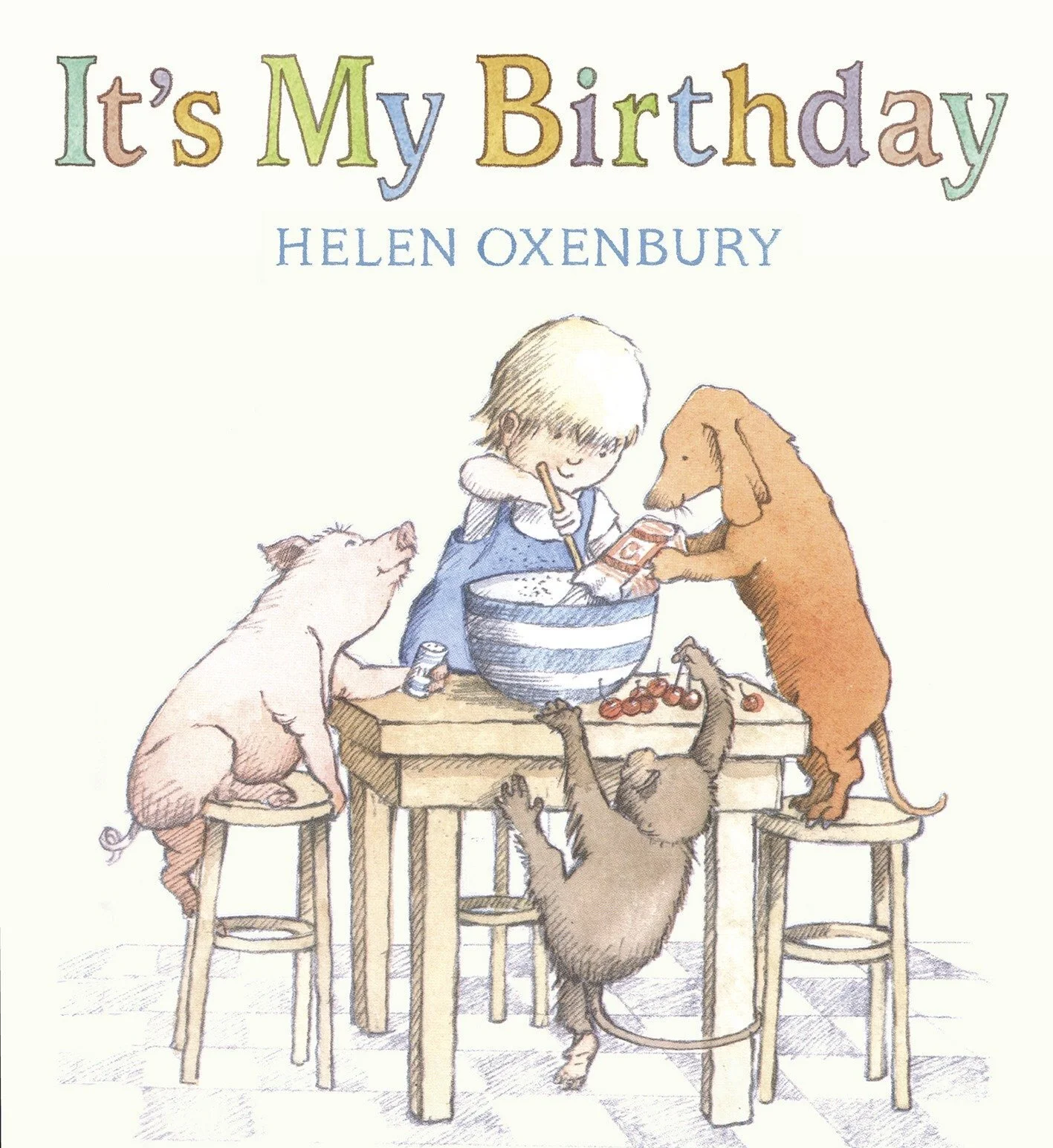
It’s My Birthday by Helen Oxenbury

From the author of We’re Going on a Bear Hunt, this birthday book will be especially appealing to younger children. A child decides to make a cake for their birthday and enlists the help of friends. A chicken shares some eggs, a bear gets the flour, the cat finds some butter and milk, a pig finds a pinch of salt, and a dog buys some sugar. After a monkey picks some cherries out of a tree, the child has everything they need to bake - and share - the birthday cake.


Birthday Monsters! by Sandra Boynton

Boynton is known for her silly and lovable characters. This book is no exception! Children are delighted by the tale of boisterous monsters whose enthusiasm seems to undermine every fun element of Hippo’s birthday. Just as they leave and it seems everything is ruined, they right zip back in and share a special surprise.


On the Night You Were Born by Nancy Tillman

We all cherish our children, and Tillman’s book has a way of whimsically and visually showing them how we feel. It begins with: “On the night you were born, the moon smiled with such wonder that the stars peeked in to see you and the night wind whispered, ‘Life will never be the same.’” The name travels on the wind around the world in celebration of the birth of the special child (yours!).


Happy Birthday Moon by Frank Asch

Young bear decides it would be nice to get the moon a birthday present. After a (one-sided) conversation echoing from a mountain top, Bear happily returns home, believing that the moon has the same birthday as he does and happens to want the same thing - a hat. The delightful misunderstandings continue, and children will love watching Bear give (and receive) the gift.


The Secret Birthday Message by Eric Carle

Tim wakes up on his birthday to find an envelope beneath his pillow. A coded message leads him on a treasure hunt for his gift. The pages of this book contain not only Carle’s beautiful signature style of artwork, but there are shaped and cut out pages that make the story a bit more interactive.


Clever Jack Takes the Cake by Candance Fleming, illustrated by G. Brian Karas

Jack lives in a cottage with his mother, and while they don’t have much, his resilience and generosity are enough to get him through. When he receives an invitation to the princess’ birthday party, he struggles with what he might bring as a gift. Ever-resourceful, he bakes a perfect strawberry cake for her. The journey to the castle is quite an adventure, and while the cake doesn’t arrive quite as planned, Jack learns that sometimes the best gifts aren’t things at all.


Lyle and the Birthday Party by Bernard Waber

Loveable Lyle has entertained generations of children. He lives with the Primm family on East 88th Street, and life is generally pretty perfect. When young Joshua’s birthday arrives, however, events take a turn for the worse. Lyle breaks a gift and then wonders if it was actually an accident. This story includes some ridiculous mix-ups, characters dealing with negative emotions, the love of a family, and the discovery that giving is perhaps more satisfying than receiving.


If a T. Rex Crashes Your Birthday Party by Jill Esbaum, illustrated by Dasha Tolstikova

Having a T. Rex come to your birthday party might sound like a dream-come-true to many young children, but as the child in this book discovers, it’s not all it’s cracked up to be. The T. Rex is huge, has sharp nails and teeth, and gets pretty grumpy when things don’t go his way. Underneath the tough exterior, however, there’s a gentle heart that will win readers over.


Ling and Ting Share a Birthday by Grace Lin

The second book in a series about a pair of loveable twins, Ling and Ting Share a Birthday is a book about sharing. These girls are sweet and silly, and they realize that they are lucky to have each other. They share a gift they receive, they shop for one another, they read together...and they celebrate together. This is a perfect book for early readers; it is broken into chapters that are actually short stories in their own right.


Some Birthday! by Patricia Polacco

Patricia and her brother live with their mother, but they spend summers with their father and grandmother. One morning, on the day of her birthday, Patricia helps her father get ready for work. He dashes out the door without mentioning it at all. Even when he returns home in the evening, he settles in to read the paper and watch television. Then, out of the blue, he tells the children it would be the perfect night to try and spot the monster at the bottom of the clay pit down the street. He creates a memorable night, ending in the children seeing the “monster”, running home screaming, and realizing he hadn’t forgotten Patricia’s birthday at all! They all celebrate with cake, gifts, and more laughs.

New Research: Music in Montessori Classrooms

music2.jpg

Montessori-based research is a fairly new field of study, but interest is increasing. The following is a summary of a recent published study that addressed concerns in the area of Montessori music education in primary classrooms. We found it fascinating, and we thought you might, too!

The Research Study

Click here to read the full published article.

Diana R. Dansereau of Boston University and Brooke M. Wyman of Bristol, Rhode Island published their article entitled: A Child-Directed Music Curriculum in the Montessori Classroom this past spring. They wanted to address a perceived disparity in the types of sensory materials offered to children in Montessori primary classrooms. More specifically, they gathered data suggesting that over time, modern Montessori classrooms have come to rely more heavily on visual sensory materials than materials that teach children to refine their other senses (including discrimination for sound).

Numerous studies, along with the work of Dr. Montessori herself, have indicated that early childhood exposure to music education and auditory sensory discrimination education have overwhelmingly positive and powerful impacts on children. Just as with other areas of study and skills that must be mastered, it appears that there is a sensitive period for learning music that ends prior to age 7. This means that while of course children have an ability to learn music after that age, they are in a prime position to master those skills earlier.

The researchers noted that Dr. Montessori herself had concerns about the application of her music materials in the classroom. For example, only one set of sound-based materials could be used at a time, and to identify variations in sound one would need to work in relative silence. This was certainly challenging during her time, and seemingly impossible now. Dansereau and Wyman set out to create and test a solution.

“...we sought to answer the question “How is a curriculum of music- and sound-based works developed, implemented, and received in a Montessori classroom?”
— Dansereau and Wyman

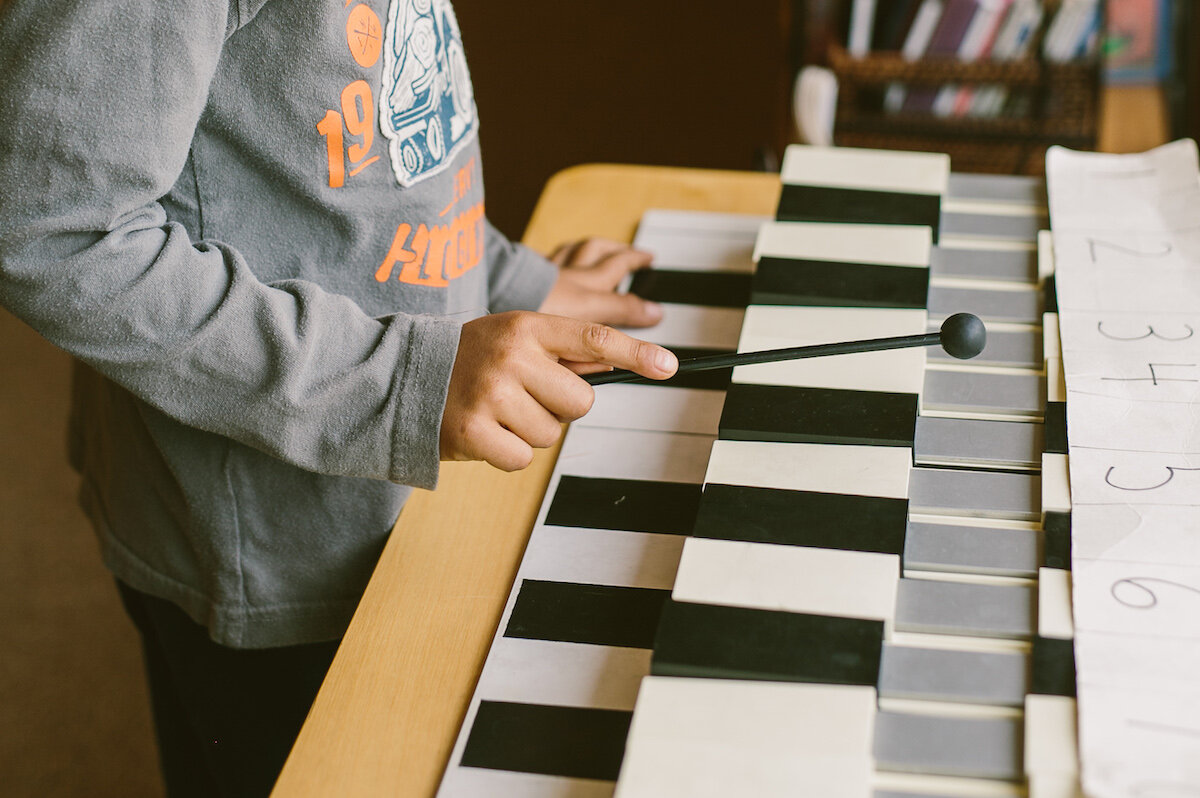
Dansereau, being a music teacher, early childhood music education researcher, and Montessori parent, and Wyman, being a Montessori primary guide, were in a perfect position to conduct the study. Their initial conversations included Wyman’s students, other primary teachers, and the head of school. Six shelf works were designed and tested. They included the use of a small plastic box with a battery, power switch, headphone jack, and a series of visually identical plastic discs. A child wears the headphones and replaces the discs one at a time to hear different sounds. The materials are briefly described below:

  1. For working memory and audiation (sound memory) - A wooden tree with spaces for removable discs. Children would listen to the sounds on each disc, then place them in order according to pitch. The material contained a built-in control of error so that children could independently check for accuracy.

  2. For pitch direction - Children listened to discs that played sliding pitches, then matched what they heard to visual pictures with lines drawn accordingly.

  3. For pitch direction - Similar to the second work, children replaced the two-dimensional pictures with a three-dimensional manipulative.

  4. For melodic direction - While listening to a recording of a piano, children used a small toy kangaroo to travel across a three-dimensional path along with the music.

  5. For melodic direction - Similar to the previous work, children listened to trombone music instead.

Wyman presented each material to the group using traditional Montessori methods, after which they were placed on the shelves for independent use. Students were observed and data was collected in six cycles over a period of two years.

During the course of the work Wyman noted: “What I have witnessed so far with the two materials we have piloted is an overwhelming need for more of this type of work. The children in my current class have demonstrated a deeper level of concentration with this work. In part, I am sure [it is] because of the use of their auditory sense: if they are distracted by others in the classroom, listening to their friends, or carrying on a conversation, they will miss the very essence of the work. What I find fascinating is that this work must be fulfilling an essential need, because even my most social children go to the material and tune everything else out.”

Overall, the researchers noted their data indicated positive findings. The children became more engaged with music education, they interacted positively with the materials, their confidence increased, and there were obvious signs of deep concentration. They did note some limitations, such as the inability to record all interactions with the materials due to the nature of a Montessori classroom environment, as well as the children’s understanding that the materials were somewhat novel in nature. They felt that some of the materials were more beneficial than others, or that adjustments may need to be made with one or two of the materials.

Dansereau and Wyman felt the study was a positive initial step in addressing the disparity in sensory materials in the Montessori primary classroom. They were encouraged by the results and believe more research should be done in this area, including with classrooms that serve children of varied demographics. 

We are curious to hear your thoughts on this topic. What might next steps be in individual Montessori classrooms? Could the materials be replicated? Could others be introduced? How might we, as educators, ensure we are providing more balanced sensory instruction?

What Does Montessori Look Like for Adolescents?

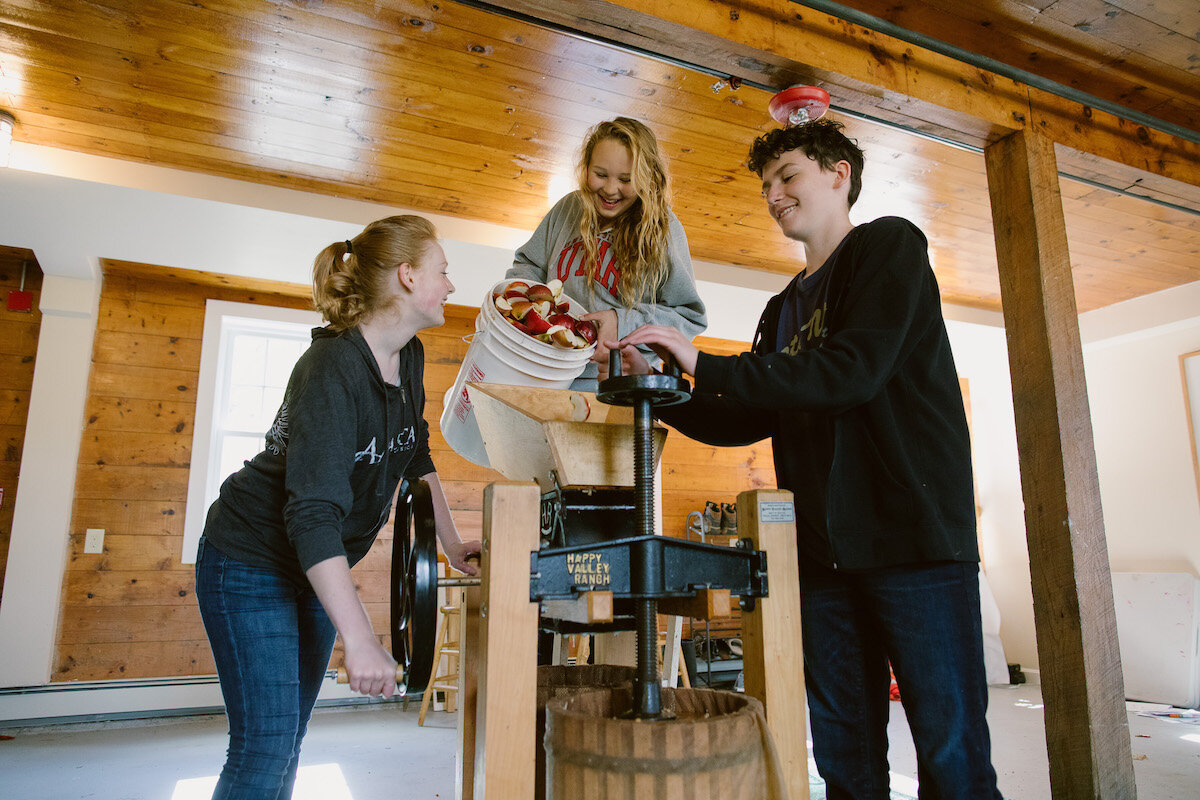
HMS Upper School students make apple cider for their microeconomy business.

HMS Upper School students make apple cider for their microeconomy business.

“My vision of the future is no longer of people taking exams and proceeding on that certification from the secondary school to the university, but of individuals from one stage of independence to a higher, by means of their own activity, through their own effort of will, which constitutes the inner evolution of the individual.”
— Dr. Maria Montessori

Montessori is perhaps best known for its educational offerings from children aged 3-6. Though other programs for infants, toddlers, and elementary-aged children are also fairly popular and easy to find in many areas, programs for adolescents remain relatively scarce. Many Montessori families approaching the final years of local elementary offerings find themselves asking, “What’s next?” While Montessori-educated children have overwhelmingly positive transitions when they graduate to other conventional schools, it’s only natural to wonder how we might extend the experience for our children.

What did Dr. Montessori have envisioned for adolescents, and what options are available for them today?

Dr. Montessori’s Ideas

Montessori clearly laid out her plans for children from birth through age 12, but beyond that her writings are incomplete. She wrote appendices at the end of her book From Childhood to Adolescence, in which she outlined her basic ideas for an adolescent program. She referred to children of this age as Erdkinder, which in German means children of the earth. The following are some of her thoughts (please note that these are direct quotes and do not reflect today’s gender-inclusive language standards):

"If puberty is on the physical side a transition from an infantile to an adult state, there is also, on the psychological side, a transition from the child who has to live in a family, to the man who has to live in society . These two needs of the adolescent: for protection during the time of the difficult physical transition, and for an understanding of the society which he is about to enter to play his part as a man.”

"…derive great personal benefit from being initiated in economic independence . For this would result in a "valorization" of his personality, in making him feel himself capable of succeeding in life by his own efforts and on his own merits, and at the same time it would put him in direct contact with the supreme reality of social life . We speak therefore of letting him earn money by his own work.”

"Therefore work on the land is an introduction both to nature and to civilization and gives a limitless field for scientific and historic studies. If the produce can be used commercially this brings in the fundamental mechanism of society, that of production and exchange, on which economic life is based. This means that there is an opportunity to learn both academically and through actual experience what are the elements of social life. We have called these children the "Erdkinder" because they are learning about civilization through its origin in agriculture. They are the "land-children."" 

For more select quotes from her writing, visit this helpful AMI page. Alternately, copies of From Childhood to Adolescence can be purchased here.

Considering Adolescent Development

Much information can be found about Montessori’s concept of the planes of development. Children from ages 12-18 are considered to be in the third plane. Montessori education is based largely on consideration of developmental markers for various age groups, so the ideals of the Erdkinder arose from the following characteristics Montessori observed to be standard during this stage in life.

  • Great changes in the physical body as the child experiences puberty

  • A need for independence from the family unit, while also requiring support

  • Strong and varied emotional experiences

  • A need for experiential learning

  • Refining of moral perspective

  • Drive to discover their future occupation

Elements of a 12-18 Program

There are a number of Montessori adolescent programs across the United States and internationally. Many of them cater to middle school students aged 12-15, though there are a small number that include older adolescents and the high school years as well.

Dr. Montessori’s original concept involved having students live on a working farm. This would allow them the following opportunities:

  • A level of independence from their families while receiving support from adults

  • Opportunity to engage in physical work that would support their developmental growth while teaching worthwhile skills

  • Gardening, animal husbandry, and handcraft skills

  • Engagement in a microeconomy: students work to earn money via the farm and budget for common purchases

  • Community connection by way of selling their goods to the public

  • Authentic combining of traditional academic learning with personal interests

  • Access to growth and experimentation in the arts

  • Support while refining their senses of independence and purpose within society

Erdkinder in Practice Today

As mentioned above, it is much easier to find a Montessori middle school program than it is to find one for high school students. They do exist, however, and both types of programs have found creative ways to achieve the same goals as Montessori’s original ideas. It’s not always possible to create the original farm model (although they do exist, such as at this well-respected school in Ohio). Schools have included modified farming programs on an existing campus or created alternate business models, such as a coffee shop.

Hopefully, as interest and understanding continues to grow in the coming years, Montessori adolescent programs will expand. Curious about Montessori? Want to learn more? Contact us today to schedule a tour or discuss whether Montessori is right for your family.

Bringing Food Prep Into Your Kitchen

foodprep.jpg

One of the many joyful aspects of a Montessori environment is food preparation. Learning how to prepare one’s own food is a critical life skill, and it has always been a part of Montessori learning. While toddlers learn to sit together and gracefully serve and share food, at age three our primary students begin to prepare it for themselves. Even in classrooms for older students, guides find ways to work in this important practice for children. There are plenty of ways you can support your child’s developing skills at home.

Start Small: Give Mini-Lessons

We treat food prep the same as we would any other subject. We teach small skills in isolation and with intention. Parents can work the same approach into their kitchens at home. Simply demonstrate what to do, then give your child a chance to try it for themselves. The following are some ideas to get you started:

  1. Cutting and Slicing: We don’t recommend giving your four-year-old your sharpest knife, but there are lots of good options to teach this skill safely. Whether you choose to use a butter knife or try a kid-friendly wavy chopper, learning to cut and slice are good first skills to teach. Think cucumbers, celery, boiled eggs, bananas...whatever they like to eat is a great place to start!

  2. Spreading: This one is pretty self-explanatory. Utilize a variety of spreads and surfaces, like cream cheese on bagels, nut butter on celery, butter on toast, or hummus on a cracker.

  3. Mixing: Stirring and blending are natural next steps. Children can learn to whisk eggs, make instant pudding, or help combine ingredients for a meal you're putting together.

  4. Using Various Tools: Once they’ve mastered the above mentioned skills, your child is ready to learn how to use other tools, including a melon baller, vegetable peeler, cheese grater, rubber spatula, potato masher, juicer, tongs, or an ice cream scoop. Introducing a wide variety of tools will keep them engaged and interested.

  5. Using Heat: Once you feel your child is ready you can begin to introduce recipes that require heat. Start simple: teach them how to make their own toast. You can then move on to whatever works for your family. They may enjoy making pancakes, rice, tea, or popcorn. 

  6. Measuring: While measuring is critical to following recipes and learning to cook, it’s also an excellent way to bring math into the kitchen. They sky’s the limit on this one. You could teach your child to follow family recipes or discover new ones together!

Provide Opportunities For Practice

Food preparation shouldn’t be a one-time experience. The long term goal is to encourage children to gain skills independently while building up their interest and confidence. To do this, we must give kids ongoing opportunities to get into the kitchen and make food for themselves and for others.

Find ways to make this work for you. Once your child has a few skills mastered, perhaps they can be in charge of preparing their own daily snacks. As they get a bit older, they can take on the responsibility of making their own lunch, or even someday preparing dinner for their family!

Encourage Independence and Exploration

It can be tempting to come up with a plan and force our children to stick to it. It is helpful to remember, however, that “follow the child” is our motto, and for good reason. Perhaps you planned to have your child learn to chop carrots while helping you prepare dinner, but they are suddenly really into apples. Take cues from their interests and the experience will be far more rewarding for them (and for you, too!).

Whenever possible, step back and let them take over. The key is teaching them a skill so that they may master it themselves. As children get older, let them explore cookbooks and even begin to create recipes of their own.

Teach About Nutrition

While there’s certainly nothing wrong with teaching your child how to whip up a batch of cookies, food prep at home is a great way to teach your child about healthy eating. As you work with various ingredients it can be nice to talk about their benefits. We all enjoy the pleasure derived from eating delicious food, but knowing on a scientific level how different foods are beneficial to our bodies adds an extra layer of interest.

This is a great article if you’re looking for more tips on how to teach your child about nutrition.

Give Trust...and Make Room For Errors

Within reasonable safety parameters, try to step back and let your child make mistakes. Mistakes are a critical part of learning, and we need to let them happen (even if that means a little more work). There will be spills. There will be smudgy faces. There will be burnt baked goods. There may even be a splatter or two on the wall. Let it happen.

This is a nice time for us to recognize that food prep is part of the Montessori practical life curriculum. Another important part of practical life is cleaning. They may need help at first, but you can teach them to wipe up those messes!

We hope this post will inspire you to get your child into the kitchen more, and we know they will love it! Enjoy the successes, embrace the messes, and have fun eating together.

Book List: Books About Trees

It’s hard to imagine our world without trees. Silent and towering, they give us far more than we give them. Our children have a natural fascination with trees, from the time they are very young. This week we celebrate these magnificent plants with a list of books that we hope will inspire and cultivate awe and the desire to give trees the care and love they deserve.


Trees by Carme Lemniscates

Lemniscates’ stunning illustrations are the star of this book for young children. Infants, toddlers, and preschool-aged children will enjoy the simple text and the basic plot of trees changing during different seasons. 


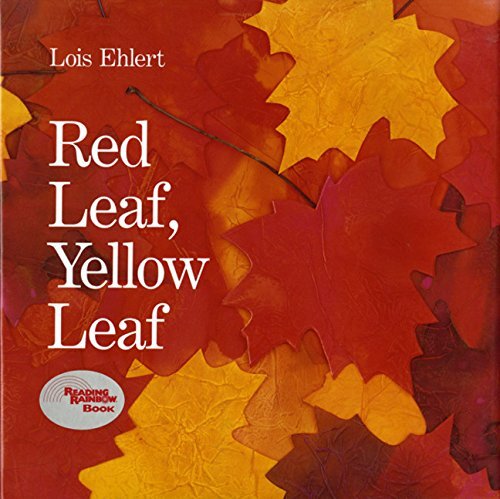
Red Leaf, Yellow Leaf by Lois Ehlert

This book has been loved by generations of children. In lieu of more typical illustrations, Ehlert utilizes interesting materials to create collage on each page. Children will learn important factual information about the lives of trees, specifically within the context of the narrator’s beloved sugar maple. 


Maple by Lori Nichols

Maple is the name of a young girl, but it is also the type of tree her parents planted in celebration when she was born. Maple and her tree grow up together, and as an only child, her tree often serves as a trusted companion. Maple does not remain an only child forever, and her trusty tree helps ease her into sisterhood (with baby Willow).


Who Will Plant a Tree? by Jerry Pallotta, illustrated by Tom Leonard

Renowned children’s author Jerry Pallotta created this book to teach young children how many living things unknowingly help plant seeds. Tom Leonard’s illustrations help convey the various ways seeds might hitch a ride: stuck to fur or feathers, buried, dropped, pushed along in the water, and (much to children’s delight) pooped out. 


The Lumberjack’s Beard by Duncan Beedie

This adorable book will have readers giggling for sure, but it also conveys an important message. A lumberjack inadvertently displaces several animals from their homes, and after inviting them to live in his beard for a while, he experiences a change of heart and goes about righting his wrongs.


The Great Kapok Tree: A Tale of the Amazon Rain Forest by Lynne Cherry 

A young man enters the rain forest intent on cutting down a kapok tree. Lulled to sleep by the heat of the jungle, he rests against the tree’s trunk for a nap. While he sleeps, various animals whisper their pleading requests that he reconsider. When he awakes, finding himself surrounded by those he dreamed about, he decides to leave the tree (and all those who rely on it) alone. 


Wangari’s Trees of Peace: A True Story From Africa by Jeannette Winter

Wangari grew up “...under an umbrella of green trees in the shadow of Mount Kenya in Africa.” She was fortunate enough to have an excellent education, eventually traveling to the United States to earn degrees in biology and science (as well as advanced degrees in Germany and Kenya). Upon returning home to Kenya, she was shocked to find the trees she once loved had vanished. Ignoring the naysayers, she taught the women of Kenya to plant one tree at a time, creating economic independence for families and restoring the natural state of her beloved nation.


The Tree Lady: The True Story of How One Tree-Loving Woman Changed a City Forever by H. Joseph Hopkins, illustrated by Jill McElmurry

Born in the mid-nineteenth century, Kate Sessions adored trees. She grew up surrounded and inspired by them. She attended UC Berkeley, where she was the first woman to receive a degree in science. A move to San Diego, which was mostly barren in terms of trees at the time, inspired her life’s work. With the cooperation of city officials she began planting a wide variety of trees, some of which remain to this day. Sessions transformed both the landscape of the city and the perspectives of its people.


Ultimate Explorer Field Guide: Trees by Patricia Daniels

Created specifically for children, this field guide is filled with enticing illustrations, diagrams, photographs, and helpful information. Beginning with some important general information about trees, the book covers a wide variety of the more popular trees one might encounter. Created by Daniels for National Geographic Kids, this book is an excellent option for kindergarten and early lower elementary children.


Peterson Field Guides to Eastern Trees and Western Trees

Peterson’s field guides are, in our opinion, some of the best available. If your child is interested in trees, or if you would like to try identifying some near you, these books will prove to be invaluable. Montessori children are accustomed to classifying and identifying various organisms due to their in-depth study of biology; field guides are an excellent resource to support curious learnings and those who love nature.


Why Choose Montessori?

whymontessori.jpeg

We know parents have choices when it comes to their children’s education. We know these choices are not easy. There are many factors to weigh, but we hope this article will help you make an informed decision at least as far as Montessori is concerned. Montessori education has been successfully serving children and families around the world for over a century. The basics remain - and for good reason. Our methods are consistently backed by current research in education and human development. As we move forward into a new future, we believe Montessori has what it takes to prepare children.

Montessori Meets Children Where They Are, Without Judgement

Conventional methods of education were developed specifically to prepare large numbers of children to enter the workforce. Traditionally, little thought has been given to differentiating instruction or catering to the needs of individual children. That has been changing in recent years, but many schools are still in the early years of personalizing education.

Montessori schools are specifically designed to allow each child to move at their own pace. We know that learning is not linear, and that children are not ready to learn specific skills according to an adult-prepared timeline, or in perfect harmony with their peers. Kids who need more support with certain skills get that support, and those who are ready to move ahead are able to find the challenges they crave. We do not teach a whole class of children the same skill at the same time; that may seem more efficient from the perspective of an adult tasked with teaching, but it’s not necessarily what serves the children the best. No two people should be expected to grow at the same rate, and it’s our job as educators to meet children where they are and give them the support they need to get where they want to be.

Montessori Emphasizes More Than Just Academics

Lots of people use the phrase ‘teaching to the whole child’ but in Montessori schools we mean that on a very deep level. We do not teach just to convey academic information. In fact, academics share equal emphasis with our efforts to develop other aspects of the child, including emotional, social, sensorial, and practical life development. We integrate the arts and movement into everything our children do, rather than isolating these areas of study into a separate class. We intentionally teach children how to navigate and resolve conflict and how to adhere to grace and courtesy social norms. 

Our greatest task is, we believe, to give children a global view of the world. We want them to understand the interconnectedness of all things so that they may be fully integrated members of their greater community as they grow and mature.

...But The Academics Are a Huge Strength 

The above mentioned being said, Montessori academics are often hailed as some of the highest standards there are. It is not uncommon to see four-year-olds in our schools reading, six-year-olds completing long division problems, and nine-year-olds classifying botanical specimens. These tasks are completed joyfully, in part because we present information in such a way that children discover it for themselves rather than passively taking in facts given by an adult.

Another reason Montessori students seem to work at an advanced academic level is because of what we call sensitive periods. Through years of observation, Dr. Maria Montessori noticed that young children seemed primed and particularly interested and ready to develop certain skills during very specific time periods. While, of course, there is variation between individual children, she noticed some general patterns that have helped us develop our curriculum. One interesting example is that of the study of geometry. Many of us were first exposed to the subject during our high school years, when it turns out that primary- and elementary-aged children are not only interested in geometry, but have a great capacity to learn far more than we typically give them credit for. This is why you may hear your five-year-old talking about rectangular prisms, or your seven-year-old discussing the differences between isosceles, right, and scalene triangles.

Our Schools Cultivate Community

A Montessori school is more than just a school. First and foremost we are there for our students, but we believe schools have the capacity to be so much more. We aim to make meaningful connections between everyone involved. Some of the ways we do this include:

  • Giving our guides opportunities to connect with one another for development

  • Encouraging our guides to form connections within the larger Montessori network

  • Making sure parents and guides have ample time to discuss the child’s growth and needs

  • Providing opportunities for parents to form relationships with one another

  • Supporting families via parent education offerings

  • Gathering as a whole school periodically

  • Forming bonds between children at different levels

  • Reaching out to make connections with the local community

  • Giving our educators and families a voice in school decision making

We also believe that it is our job to take the guesswork out of making these types of connections. We aim to build in structures that make it simple for everyone to find commonalities and open streams of communication seamlessly.

Montessori Aims to Lift Up Humanity

We know. This is quite the lofty goal. From the very beginning, Dr. Montessori saw it as her mission to improve the world through education. She believed that by giving children the honor and respect they deserved, the benefits would trickle through to families, the community, and society in general. She believed in equality of all people, and saw that education has the potential to be a great leveler. 

Montessori schools aim for peace. This starts between individuals, and teaching our youngest students how to be kind and gracious toward one another. A great respect for the environment and other living beings is another important aspect of our work, as is a reverence for the wide diversity of cultures around the globe. Combined, these elements are meant to cultivate within the child a respect for themselves and others, as well as a desire to ensure connection and fairness for all.

We hope this article has been helpful. To continue the conversation, connect with us for a chat or to schedule a tour. We look forward to meeting you.

Summer Learning: Finding a Balance

summerlearning.jpeg

Families typically undergo a period of transition between the end of the school year and summer vacation. This year’s transition will certainly look very different than most, but it’s still there. We are here to support you as you figure out a balance between learning and relaxing. This will look different for every family, but finding ways to meet the needs of both children and parents doesn’t need to feel impossible.

In what areas does your child need support?

After spending a bit of time this spring working with your child at home, you likely have a pretty good idea about what their strengths and weaknesses are. While summer is a great time to ease up on academics, it’s perfectly fine to spend a little time focusing on skills that your child could use a little extra support with.

Some tips to keep work light, fun, and effective:

  • Identify reasonable goals. Your child’s teacher is a helpful person to consult with on this.

  • Decide how much time to spend each week. Fifteen minutes each day? Ten minutes three days a week? A bit longer for an older child? Keep it brief but consistent.

  • Make it fun. If your child is dreading the work, they’re not going to get a whole lot out of it. Find ways to integrate skill building into other activities, or again, consult your child’s teacher for ideas.

  • In lieu of traditional praise, reframe your observations. Instead of saying, “Good job!” say, “I notice you worked really hard on that. How do you feel?” This practice will cultivate internal motivation rather than a desire to work to please others.

What are some simple things you can do for maintenance?

Let’s say your child is a strong reader. If they don’t spend much time reading all summer long, that strength is likely to fade somewhat. It’s important to find stress-free ways to keep skills sharp over the next several months. Again, keep it light, fun, and brief. Pay attention to your child and let their enthusiasm be your guide. If they love to read, make sure to carve out a bit of time each day for them to do that. If math is fun for them, make up word problems that have to do with your daily life or ask them to help you figure out real-life problems. Is science and nature more their thing? What better time than summer to explore and learn!

How might you enrich daily life?

Before we jump into the possibilities for enrichment, we would like to remind you to keep your expectations manageable. If you have your own work to attend to, or are dealing with family or health issues, coming up with creative fun for your child may have to wait, and that’s okay. When you have a few spare moments, make sure there are plenty of independent options for your child around the house: dishes and snacks within reach, high-interest games and toys available, art supplies, puzzles, and books are all great ways to encourage your child to enjoy their time independently when your attention has to be elsewhere.

That being said, if you do have some more time to spend together as a family, consider how you might want to spend it.

Should the routine be different?

Yes... and no. Summer is a great time to loosen up and relax the rules a little bit. Children still need basic schedules to help them feel grounded and safe, but that doesn’t mean they can’t stay up late one Tuesday night to do some stargazing. You may have specific screen time rules as a family, but it’s okay if you wake up one rainy morning and all decide to stay in your pajamas and watch tv. While it might sound completely counterintuitive, remember two things:

  1. Your child needs structure and routine. Don’t throw that away completely just because it’s summer.

  2. It’s summer. It’s okay to make some adjustments and flex those rules once in a while.

What do children really need right now?

We have all been through a lot in recent months. We know you already know this, but what your child needs most is to have you be there for them. They need to know you love them and will support them. You are the certainty during uncertain times.

As we all move forward defining our new normal, kids are still kids. They help us remember to have fun and enjoy the small things in each moment. They need us to slow down and do that with them. They need us to step away from chores and work on a puzzle with them. They need us to turn off the computer and help them dig a hole in the yard.

We all need to revel in our own little moments of joy. Let this be a summer to make a few memories together.