Montessori or Conventional: What’s Best for Your Family?

FB Cover.jpg

You already know that Montessori is different from conventional education methods. You may have heard some folks rave about the benefits while others share their doubts. The truth is, there are a lot of differences. Montessori education is nothing like the type of schooling that most children experience - including us adults when we were children.

Understanding the differences can help you decide whether Montessori might be a good fit for your family. We invite you to read the comparison below, then come see for yourself. Visiting our classroom environments in person is the very best way to understand our approach.

When viewing this chart please keep two important points in mind:

  1. All schools are different. There is no one standard for conventional or Montessori educational settings. The statements below are generalizations, thought widely considered accurate.

  2. You may see similar charts like this floating around the internet. Ours is different in that we aim to provide factual, observational comparisons. The intention is not to convince you that Montessori is somehow better, but to assist you in your decision making process. We do, of course, believe in the validity of our methods, but we fully acknowledge that Montessori is not the best fit for every family.


Montessori

Conventional

Mixed Age Groupings

Montessori classrooms utilize a multi-age model. Ranges are typically 3-6, 6-9, and 9-12.

Single Year Chronological Grade Levels

In conventional schools, children generally move to a new grade and class each year.


Individualized Instruction

Teachers are trained to guide children through a set curriculum, however each child sets their own pace and is able to more deeply explore areas of interest.

Group Paced Instruction with Elements of Differentiation

Teachers often teach skills to the whole class at once and pacing does not allow for extra support or challenge. In recent years efforts are being made in some settings to find ways to provide elements of differentiated instruction.


Focus on Intrinsic Motivation

Montessori educators believe that children have an innate desire to learn and that the learning itself is a reward. Progress reports typically include teacher narratives and information on skills that have been presented, practiced, and mastered.

Use of Rewards and Punishments

Conventional schooling typically takes the approach that external rewards are motivators. Children receive grades on their report cards, stickers or stamps on papers deemed “good”, and class celebrations for positive behavior.


Physical Autonomy

Montessori environments are set up so that children may safely and independently use the toilet, eat a snack, and get a drink of water when their bodies signal the need and without the permission of an adult.

Adult Permission Required to Fulfill Certain Needs

In order to maintain order within a class that largely does the same activities at the same time, children have scheduled snack/restroom use times, or they may ask an adult for permission.


One Teacher for Three Years

As a result of multi-age class groupings, children remain with the same teacher for three years.

New Teacher Each Year

In typical conventional schools, children move on to a new classroom with a new teacher each school year.


Variety of Seating Options

Children may choose to sit and work alone or with others, at a table or on a carpeted floor. They may move throughout the day to seek out different seating options.

Desks with Chairs

Most conventional classrooms utilize individual desks with chairs. There are many configurations; some teachers rely on the traditional row formation, while others use desks to form small groups, a horseshoe shape, or other setups.


Select Art on Walls

Framed prints or artwork are hung on classroom walls. Select, specific curriculum materials (such as timelines) may be seen in elementary and adolescent environments.

Environmental Text

Many conventional educators hang reference materials on the walls of their classrooms, as well as motivational and/or decorative posters.


Natural Materials

Montessori classrooms emphasize use of wood, glass, and natural fibers. Plastic is avoided whenever possible

Variety of Materials

A variety of materials can be found in conventional classrooms, with an emphasis on paper and plastic.


Hands-On Materials

Specially designed hands-on materials are used in Montessori classrooms. As children get older (throughout the elementary years), they rely increasingly on pencil and paper, typically using notebooks. There are generally no textbooks, workbooks, or worksheets.

Textbooks, Worksheets, and Manipulatives

A variety of teaching tools are used, including textbooks, workbooks, and photocopied worksheets. In the last two decades, conventional schools are finding ways to include the use of manipulative materials, especially in math and science.


Formative Assessment

Montessori teachers rely heavily on formative assessment, which entails observing a child as they work. During lessons this often means staying flexible enough to change course depending on the child’s understanding of the skill.

Summative Assessment

Teachers in conventional schools rely on a variety of assessment methods, but tend to lean heavily on summative assessment. Examples include tests, quizzes, and graded assignments. Summative assessments place a value on student understanding at a particular point in time.

150 Years: A Legacy to Celebrate

Dr. Maria Montessori

Dr. Maria Montessori

This article is part of a series that we will share throughout the 2020-2021 school year to celebrate the 150th birthday of Dr. Maria Montessori. Check back often for more posts that reflect on the past, present, and future of Montessori education.

August 31 marks the 150th birthday of Dr. Maria Montessori. Throughout the upcoming school year we will be bringing you articles in celebration of this milestone, kicking it off with a month full of articles this September.

First off, we would like to share a little bit about the woman herself, the course this remarkable educational movement has taken, and where we are today.

Education, Service, and Drive, From the Start

In a seaside town in Italy, Maria Montessori was born in August of 1870. At the time, education was not always readily available for girls and women, and was certainly not emphasized. Her father Alessandro was a man with fairly conservative views, but Montessori’s mother Renilde was rather well educated herself. Well into her young adulthood, Maria’s father often disapproved of her life decisions, while her mother encouraged them. (He did, fortunately, seem to have a change of heart later on.)

Even as a child, a deep sense of service was instilled in Maria by her parents. She knitted for and spent time with those in her community that were less fortunate. She was tasked with cleaning the floor of her family home, a chore which she likely took great pride in. 

Maria’s family moved when she was young due to her father’s work, and they eventually ended up in Rome, where she began the first grade. Schools in Rome at the time were far superior to those elsewhere in Italy, so her educational advantages began early.

At a certain point, school and learning became much more important to Maria. It is said (and referenced in a biography by Rita Kramer) that she once took a math book with her to the theater so she could study during the performance. One thing she was certain of: she would never become a teacher.

For a while, young Maria aspired to be an engineer, but later decided she would rather attend medical school. At the time (unfortunately but perhaps unsurprisingly) women were not permitted in the university program. Not to be dissuaded but an initial rejection, Montessori took and passed the entrance exams and continued to ask for admittance until she received ‘yes’ for an answer.

During her years at the university, Montessori faced constant discrimination due to her gender. She was not permitted to enter lecture halls at the same time as her male counterparts or study cadavers alongside the other medical students. (They felt it improper to be in the presence of a dead, naked body with a woman.) She wasn’t even allowed to walk to school without a male chaperone, who was, of course, her disapproving father.

Despite it all, Maria Montessori did become Dr. Montessori. Over the years she gained the respect of many of her university peers, faculty, and family members.

A Winding Path to a Visionary Model

Early in her career, Montessori was assigned to work in a psychiatric hospital. Children were treated there alongside adults, and Montessori was struck by the sheer lack of stimulation available to the children. She began working with the children and soon realized their cognitive capabilities far exceeded what they were assumed to be able to accomplish.

Not long after, Montessori was asked to start a school in an impoverished neighborhood in Rome. In an apartment complex, the parents were forced to go to work each day and leave behind their children who were too young to be in school yet themselves. This led to a natural progression of unruly behavior, thus leading the apartment manager to seek a solution. 

Montessori opened her school on the first floor of one of the apartment buildings. It was called Casa dei Bambini (Children’s House) and provided a place for the little ones to use their time productively, while also allowing Dr. Montessori an opportunity to develop her now infamous materials and methods. She believed that young children learned first through the senses, and her materials were created specifically to allow children independence in the journey to refining them.

Not only were the children of this first Casa privy to the materials; they also were the first to experience Montessori practical life lessons. They helped to prepare and serve their own meals. They polished the silver and cut and arranged the flowers. They learned polite social norms through intentional modeling and lessons in grace and courtesy. They began to take pride in their work, their community, and their home. Montessori recruited a woman who was a resident of the complex to become the teacher, and the children’s mothers met with her regularly to discuss progress.

The results were astounding. This work done with the children slowly trickled outward so that it positively affected the entire neighborhood. Visitors came to the school and were amazed at how focused and engaged the children were with their work. No one had ever seen anything quite like it before.

Observing, Refining, and Sharing

Montessori’s work and ideas spread quickly as more and more people visited Casa dei Bambini. Requests were made to open new schools elsewhere, and Montessori soon found herself training teachers, producing copies of her materials, and giving lectures around the world.

Throughout her life, Dr. Montessori’s work never ended. Though she began with a focus on children aged 3-6, during different times in her life she focused on developing methods and materials for elementary aged children, infants and toddlers, and adolescents. She was a fierce advocate for the preservation of the methods she had worked tirelessly to create. She was, after all, a woman of science. Each material, each lesson, each approach - they were all a result of many hours of careful testing, observation, analyzation, and refining. It was understandably important to her that the movement that bore her name moved forward in a way that honored her high standards.

Montessori Education: Where It Stands Today

Today, there are tens of thousands of Montessori schools across the globe. In the United States alone, there are more than 2,000 private and more than 500 public Montessori schools.

Efforts are being made to advance Montessori into mainstream education while retaining high fidelity methods. Current scientific research in areas of learning, brain development, and human development are repeatedly confirming what has already been known by over a century of Montessori education.

What might the next decade bring? Shifts in our common goals for education and what developing children need just may be the push our society needs to fully embrace what’s been working for so many families for such a long time.

We’re glad to have you on this journey with us.

Book List: Series to Get Hooked On

When was the last time you read a book that was so good you hated to see it end? Perhaps it was part of a series and you quickly got your hands on the next book, or perhaps it was an author’s style that you loved so you began reading everything you could find that they’d written.

New readers can experience the same feeling. All it takes is one truly positive reading experience to send them searching for more. In this article we share some series of various levels that may just be your child’s new (amazing) obsession.

 
IMG_1395.jpg

Miss Rhonda’s Readers

Written by a Montessori guide, these books are perfect for the very earliest readers. While animals feature heavily as the main characters in most of the books, there is some much needed diversity among children characters that is lacking in many early readers. There are now several sets to choose from, but the first set boasts delightful plotlines including a swimming dog who ends up getting children wet, a pair of robins defending their nest from a cat, children catching and releasing a crab at the beach, a very muddy pig, and a clever plan to retrieve an escaped hamster.

 
136802131X-1024x965.jpg

Elephant and Piggie Books

Officially, there are 25 books in this series, and there’s no need to read them in any particular order. Gerald the Elephant and his friend Piggie share many adventures, learn about life, and make children and their adults laugh. It’s likely their relatability that makes these books so appealing; the characters’ personalities are quite different yet compliment each other, and they experience emotions and events that kids face in real life. These books are so popular, that several more have been written by other authors as spin-offs, with the original characters featuring briefly. Children will enjoy them from the preschool years into early lower elementary.

 
box-of-treats-1.jpg

Kevin Henkes’ Mouse Books

These books are so sweet it’s almost impossible not to love them. There are more than 20 books and each features mice characters that are personified and navigating the same life experiences as young children. These are likely best utilized as read alouds during the primary years, and as independent reads during lower elementary. Children will learn what to do when a guest behaves less than stellar, how to handle worries, why it’s important to love oneself in the face of teasing, dealing with the complicated emotions of having a new baby sibling, and so much more.

 
box1-3d.png

The Princess in Black Series

Princess Magnolia is a proper princess. She hosts polite tea parties, rides a beautiful horse, and dresses as one might imagine a princess typically does. The twist is, she leads a double life. Occasionally she must politely excuse herself to the broom closet to change into her superhero clothing, leap onto her valiant steed, and rush off to stave off monsters. The princess makes some unlikely friends and allies throughout the series, and her one-person mission to defend and protect soon expands to include a merry band of do-gooders. Perfect for kindergarten through lower elementary.


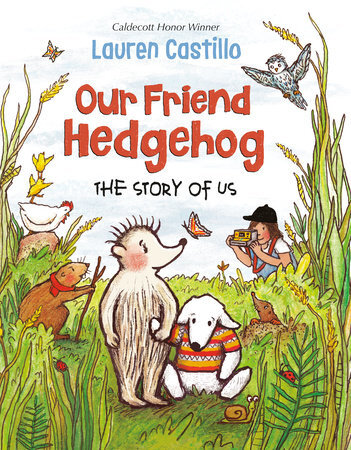
Our Friend Hedgehog, The Story of Us

Author and illustrator Lauren Castillo released the first installment of a new series this past May. Young Hedgehog and her friend Mutty live an idyllic life on a tiny island in the center of a river. When a fierce storm blows Mutty away, Hedgehog is forced to leave home and search for her friend. Along the way she makes new friends who join in the search, each contributing their own unique talents and abilities. This book might be described as whimsical, enchanting, and full of the hope friendship gives us. Great for lower elementary.

 
51iHCx-APNL.jpg

The Ramona Series

Beverly Cleary’s books about Ramona Quimby and her family are undoubtedly classics. The series begins as Ramona enters kindergarten and follows her through the fourth grade; children of these ages (and perhaps even a bit older) will love reading these books. Cleary wrote them to be relatable, and the main character stumbles her way through childhood just like any other. Ramona admires her older sister Beezus, at least some of the time. She loves school and her teachers, except when it comes to spelling. She navigates friendships, changes in her family, and stays true to herself.

 
9780448488639.jpg

Who Was? Books

For the nonfiction lovers out there, this popular series highlights the biographical tales of influential historical figures. Ideal for children in later lower elementary and into upper elementary, each book is well organized and features informative chapters and illustrations. There are more than 250 books total - below are just a small sampling of people the series covers:

  • Frida Kahlo

  • Jane Austen

  • Andrew Jackson

  • Pope Francis

  • Charlie Chaplin

  • George Washington Carver

  • Gloria Steinem

  • Jesse Owens

 
81QCprMu5YL.jpg

Where the Mountain Meets the Moon, Starry River of the Sky, and When the Sea Turned to Silver

Newbury Honor author Grace Lin has created this stunning trilogy of books. They need not be read in order, or even together, but they do serve as companions to one another. Lin carefully researches traditional storytelling in Chinese culture and weaves the tales into her books. Utilizing a story-within-a-story format, she takes readers on epic adventures alongside carefully crafted characters that we can’t help but become attached to. Geared for children ages 8-12, the books could be enjoyed as a read aloud for slightly younger children.

 
51MyR7RPDIL.jpg

The Chronicles of Narnia

C.S. Lewis’ seven-book series has been loved by children for generations. Although the second book - The Lion, the Witch and the Wardrobe - is perhaps the most well-known, the series as a whole is captivating. Start with The Magician’s Nephew and work your way through the magical world of Narnia, book by book.

Montessori Basics: Geography

google ad 2.jpeg

Geography: a science that deals with the description, distribution, and interaction of the diverse physical, biological, and cultural features of the earth's surface

Geography is a commonly taught subject in most schools, with children learning about maps, the globe, and various countries and land features. Montessori schools do this as well, but as with most subjects, we tend to take things a bit deeper (even for our younger students). This article highlights the scope of our geography curriculum.

One point to note: Montessori teaches children beginning with a ‘big picture’ view, while slowly narrowing in on details. We believe this makes information more developmentally appropriate as well as giving children a sense of the interconnectedness of all things. This approach also leads to some overlap with other subject areas, which is a good thing!

Globes, Maps, and Physical Features of the Earth

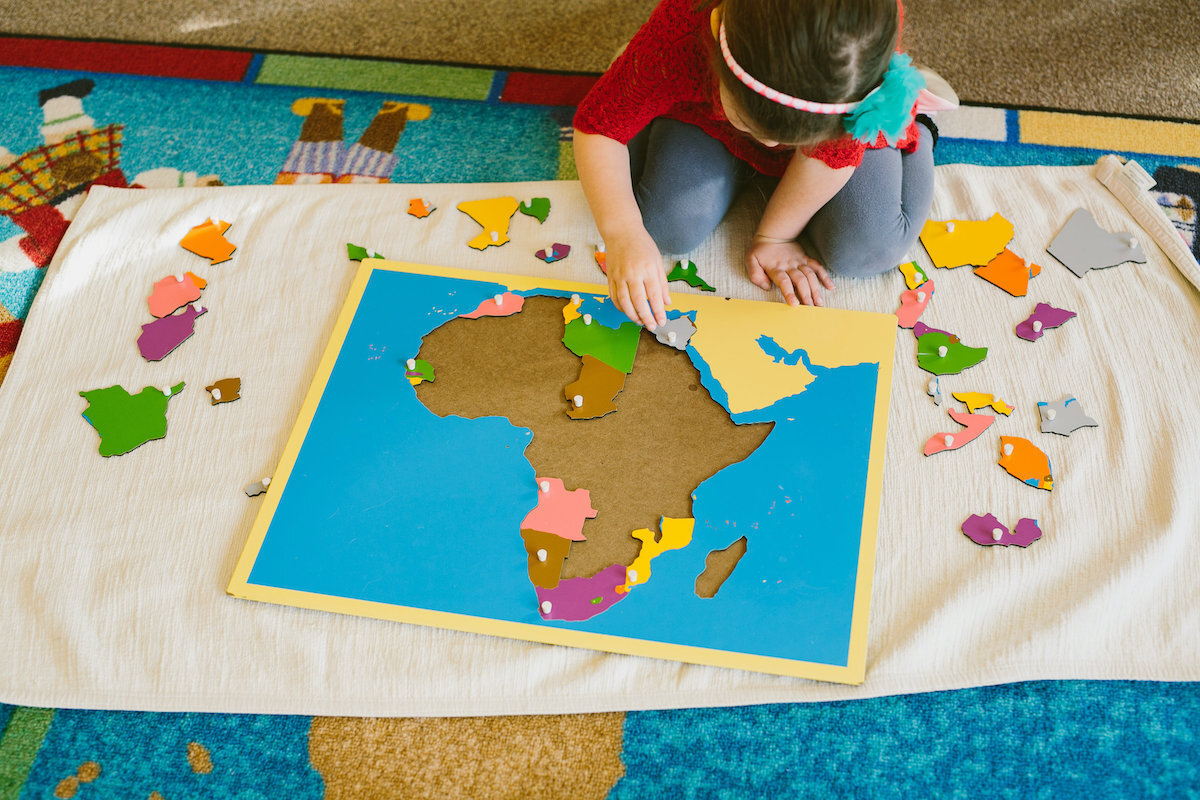
Geography work starts early in our primary classes. Children begin with an introduction to three different globes; one is blue with sandpaper continents, the next is blue with smooth white continents, and the third is blue with colorful continents. Montessori materials have specific colors designated for each continent: Africa is green, Asia is yellow, Australia is brown, Antarctica is white, South America is pink, North America is orange, and Europe is red. These early globe experiences help give children a sense of the roundness of Earth and the differences between major areas of land and water.

Children then move on to using the puzzle maps; a classic Montessori material. They begin with a map of the continents that utilizes the same colors they learned on the early globe, and then explore puzzles for each continent of the world. There are also more specialized puzzles available, including one of the fifty states, the provinces of Canada, etc. These are first used in the primary class but continue through lower elementary.

The last set of specifically created maps - the pin maps - are used in elementary, and children are encouraged to use an atlas as a control of error while they work. This material incorporates wooden maps with predrilled holes in each country. Children use small label flags that are meant to be inserted into the correct spot.

Also beginning during the primary years and continuing through the early elementary years, children learn about land and water forms. This includes the parts of a mountain, the parts of a river, and the names of a wide variety of land and water formations.

Creation Stories

As part of the science and history curriculum, elementary children are told the creation of the universe story once per year. This important lesson is based on today’s scientific evidence, but we feel it’s important to honor the many other creation stories throughout history. That’s why we also take the time to read tales that span a wide variety of cultures. There are many learning extensions that can be applied, such as discussing the similarities and differences between cultures, having children create artwork to represent the stories, or even having small groups of children act them out.

Laws of Attraction and States of Matter

When we tell children the story of the creation of the universe, we do it with a series of props laid out before them. When we talk about the behavior of particles, we show them a visual example. When we talk about the formation of the planets, we touch upon the three states of matter on Earth. We teach them how temperature and force affect these states, and how ultimately this has an impact on the formation and continuous changing of our planet.

This introduction segues into a series of experiments that children are able to complete independently (after an introduction and safety rules, of course!). Materials for the experiments are set upon the shelves, along with instructions. While most people would consider this science - as it is - we consider it part of our geography curriculum even though this is one of the most obvious points of overlap.

The Sun and the Earth

The elementary geography curriculum is complimented by a series of charts that visually illustrate important information. Some are diagrams while others are impressionistic drawings. These charts are particularly helpful when teaching about the sun and the earth.

We start simply, by teaching children about Earth’s orbit around the sun as well as its rotation on its own axis. This leads into many lessons about concepts like day and night, the seasons, the zones of the earth, and even time zones.

A good deal of time is spent teaching children about the composition of the earth. This includes the different layers, but also the formation of mountains, faults, and volcanoes.

The Work of Wind

Wind is a powerful force. We think it’s important to teach children about the behavior of air in our atmosphere and the effects it has on the planet. We cover how temperature affects the movement of air, air pressure, the relationships between winds, seasons and weather, and ocean currents.

The Work of Water

Water, as liquid water or solid ice, has a tremendous impact on our planet. We discuss concepts such as erosion, sediments, the effects of rain, and the effects of ice on the landscape. We also cover water vapor when teaching children about the water cycle on our planet.

Vegetation, People, and Economy

After some basic botany lessons, it can be fascinating for children to learn about the variety of vegetation found in different biomes of the world. This leads into the study of the people in various biomes and how climate can change the way we live. Lastly, we teach children about economic geography; our economies have always been tied, in part, to the variations in resources available in different regions. We encourage children to analyze and question concepts like production and consumption. 

Interested in learning more? We hope you’ll consider reaching out for a tour. This gives families - new and current - an opportunity to learn more about what we do and how we strive to provide children with an education that will guide them for the rest of their lives.


5 Tips For Cultivating an Adventurous Spirit

adventure.jpg

There are times in our lives when caution and hesitation serve us well. After all, self-preservation is critical to living a long and happy life. But finding ways to incorporate adventure into even the most mundane of routines sparks something special in the human spirit. Adventure shows us the magic of our world and gives us a peek at what might be possible. Cultivating adventure in our children gives them a chance to see what they are really made of while delighting in new places and experiences.

As a bonus, novel experiences are neurologically healthy. Modern theories about brain development focus on neuroplasticity, which is connected to repetition and neural pathways. The more we do something, the more those particular pathways are strengthened, so the more we share adventure with our children, the more that will become a part of who they are.

Be Spontaneous

Routine and structure are really important for children, but so is a sense of flexibility. Plus, spontaneity can be just plain fun! There are hundreds of ways to go about this one, but here are just a handful of ideas to get your started:

  • Stay up late to watch a movie together.

  • Cook or bake something no one in the family has ever tried.

  • Jump in the car to go for an aimless drive.

  • Instigate a surprise game of tag or hide-and-seek.

  • Rearrange the furniture.

  • Have a dance party.

  • Go out for ice cream. BEFORE dinner!

Try Something New Together

Hobbies are important for everyone, and creating new, common interests helps build bonds and pass the time.

You’ve probably heard the Montessori phrase “Follow the Child”. This is especially helpful advice when choosing a new hobby to embark on together. Take a little time to observe your child or consider their interests. Are they into vehicles? Keep an eye out for classic car shows or model train expositions. Do they love art? Pick up a new medium (like oil pastels or sculpting clay) and explore together. Is your child musically inclined? Learn to play an instrument together or look for live performances to attend.

Keep two more important points in mind: make sure you are exploring something you are likely to enjoy, too, and make sure you engage with the topic on a fairly regular basis. This will keep it fun and exciting for everyone.

Venture Into the Woods

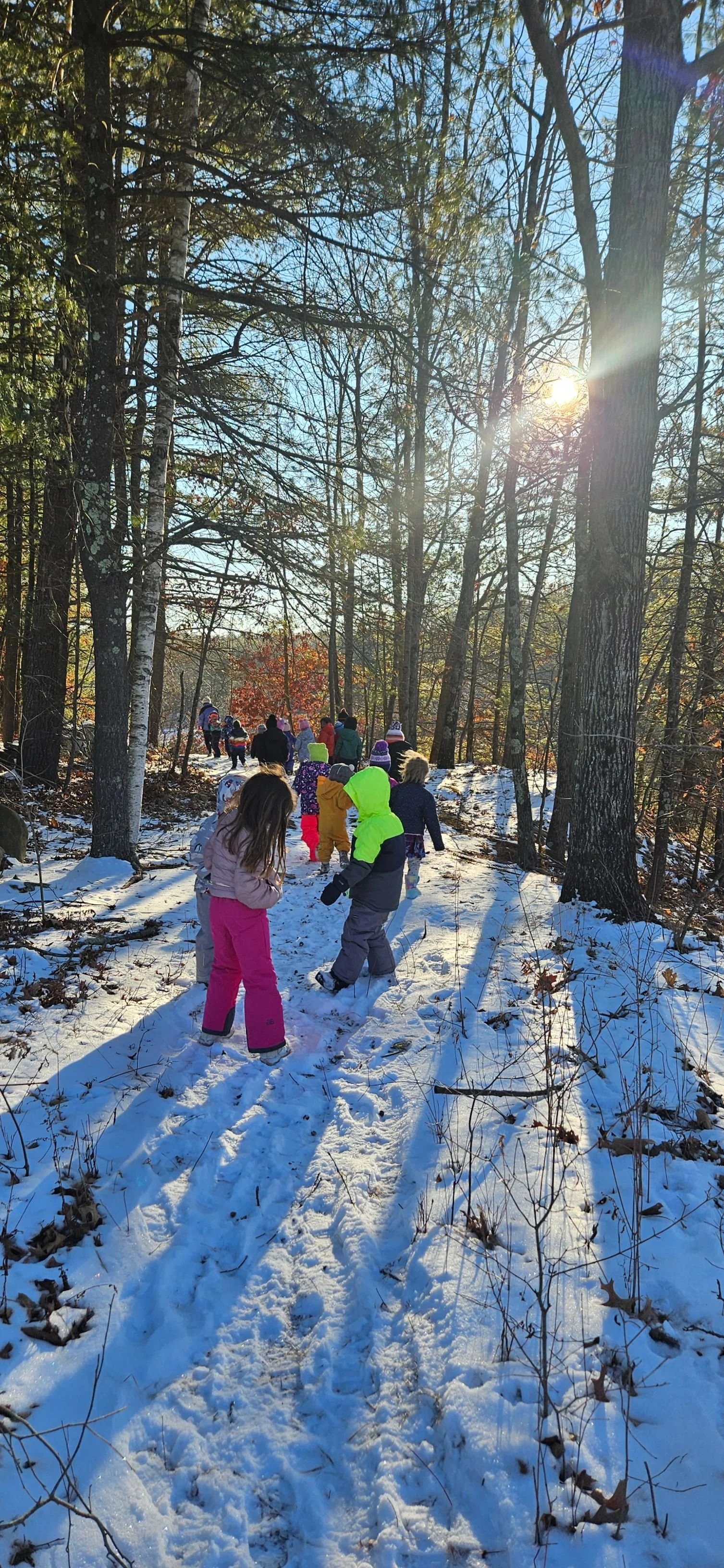
It doesn’t actually have to be the woods. It can be the desert, the coast, or any other natural space. Our bodies and our brains crave time in the outdoors; adding an element of adventure creates another layer of benefit.

Many cities and towns have trails marked for public use, yet many of these spaces tend to be sorely underutilized. Search online or ask some local friends for advice if you’re not already aware of your options. You may be surprised to discover how much is actually available.

Aside from building a sense of adventure, spending time in nature is a perfect opportunity to teach your child how to be a steward of the earth. We are advocates for following Leave No Trace principles. When our children learn these guidelines at a young age they will feel reverence for the planet long into adulthood.

Find Ways to Test Physical Boundaries

If you have a backyard, this tip makes for a fun project. If you don’t, there are still plenty of ways to use what’s available in your community to achieve the same goals.

Children are active creatures. They tend to be especially active around 3:00 in the afternoon when we adults are starting to experience an energy slump. This is the perfect time to get them up and moving in a controlled environment that allows them to safely test their physical boundaries.

Kids should learn to climb trees. Balancing on fences or jumping from rock to rock builds not only balance, strength, and spacial awareness, but allows children to nurture their self- confidence. Motions like spinning and swinging are also important for young children who are in the midst of developing their vestibular system or refining their sense of balance and spatial orientation. This development, in conjunction with the development of proprioception (related to the neurons in our muscles, joints, and tendons) are easily supported yet often overlooked.

As parents, we have an instinct to protect our children. This is a good thing, obviously, but it can be easy to forget that children need to take risks, too. Find ways to create an environment in which they can do so or take them to a park or playground that has existing structures and equipment they can play on.

Celebrate Adventure

Adventure is exciting. If each and every one of us never lost our sense of adventure, can you imagine what an amazing world this would be? When your child takes a risk or feels good about a new exploration, celebrate that feeling with them. If they don’t seem to recognize an accomplishment, feel free to point it out. This can be as simple as: “Wow. I know you were a bit afraid to jump down from that rock, but you found the courage and you did it.” Recognize your child’s efforts and accomplishments, not through a lens of judgement (we want to avoid phrases like nice work or good job because then children learn to perform for our approval), but through honest observation.

Adventure can make life a bit more exciting and rewarding for us all.

Enjoy the path ahead!

Considering Montessori? Here’s What to Look For

mformontessori.jpg

If you find yourself considering Montessori education as an option for your family, you undoubtedly have plenty of questions. If you take one thought away from this article let it be this: anyone can call their school “Montessori”. There is no regulation on use of the name. If you have read articles and heard stories from other families about the incredible benefits of this method of education, they are absolutely the result of a high fidelity Montessori program. Read on to learn more about what to look for. 

What’s in a name?

Throughout her life, Dr. Maria Montessori strove to retain a certain level of control over the course the Montessori movement took. It was, after all, her life’s work and bore her name. She wanted to be sure that guides were trained correctly, methods were applied as she intended, and a complete set of authentic materials graced the shelves of classrooms. Today, there are two major organizations that carry on her work and are generally regarded as the standard for Montessori education. They are AMI (Association Montessori International), which was created by Dr. Montessori herself, and AMS (American Montessori Society), which branched off from AMI in 1960. Today the two organizations maintain a positive working relationship and mutual respect for the work they both do, which is to carry on the legacy of Dr. Montessori and ensure visionary, high-quality education for children.

Recognition, Affiliation, and Accreditation

If you are looking for a high fidelity Montessori program (which is critical if you want your child to reap the benefits!), it’s important to find a school that is connected to either AMI or AMS. There are different levels of connection, depending on how closely a school aligns their work with what is considered ideal. Hollis Montessori School is recognized by AMI.

To obtain Recognition Status through AMI, a school must undertake a rigorous multi-year process that begins with a self-study and culminates with an in-person visit by an AMI consultant. A specific set of criteria must be met, including having 100% of lead teachers being trained through an AMI sponsored teacher training program. If a school meets all criteria, but has a lower percentage of AMI trained teachers, the school may be considered AMI Affiliated or AMI Associated. Schools must reapply for recognition status on an annual basis with an AMI consultant visit every three years.

To become accredited through AMS a school must undertake a similar self-study process with a three day in-person site visit by AMS representatives. Schools must go through the accreditation process at least once every seven years.

Specifically Trained Educators

Montessori guides (the term we often use for our teachers) are specially trained. In addition to college degrees they have obtained, they have also earned special Montessori credentials from recognized training programs. Many of these programs run for several years, include many hours of lectures and reading, practical examinations, written papers, material making assignments, and multiple observations in classroom settings. Many people consider the level of work required for obtaining such a credential to be similar to that required for earning a master’s degree.

Multi-Age Groupings

One of the most important elements of a Montessori school is that the classes are organized not by single chronological year classes, but into multi-age mixed groups. This approach is intentional and critical to higher levels of learning. Children ages three to five (preschool and kindergarten) are grouped together, as are elementary-aged children. Some schools break the elementary years up into lower (grades 1-3) and upper (grades 4-6) while others keep them all together. Infants, toddlers, and adolescents are also placed into similarly mixed groups.

Why do we do this? There are many reasons. For one, younger children have no shortage of models to surround themselves with. They can see what is expected of them as they grow, both socially and academically, and they work to emulate what they see older children doing. As for the older children, they are given the unique opportunity to practice leadership skills and cultivate empathy for younger children. In addition, they often help teach, which reinforces their own mastery of subjects.

The Classroom Environment

There is much to be said for the Montessori classroom environment - more than we could possibly summarize in a paragraph or two here. That said, we can certainly highlight the most critical features you should look for in a well-run program.

  • Classrooms will feature ample natural light and children will have access to the outdoors.

  • Furniture will be sized for the children who are meant to use it, and there will be a variety of different furniture options. This means in lieu of desks in rows, you should see group  work areas, independent work areas, and space to work comfortably on the floor.

  • Natural materials like wood, glass, and woven baskets should take the place of plastics.

  • Specialized Montessori materials should be well organized and adorn shelves at the children’s height.

  • The room may be decorated with living plants and carefully hung works of art. You should not see walls covered with posters or busy color schemes.

  • It should be apparent that the guide is not the center of the room, but rather serves as an element of support for the children who work there.

  • Children should have free access to take care of their own personal needs, such as using the restroom, serving themselves snacks, having drinks of water, and retrieving all materials necessary to explore and work.

We hope this article has been a helpful guide as you embark on your journey into Montessori education. If you have any questions or would like any guidance, please feel free to contact us.

5 Ways to Live a Montessori Life

livemontessori.jpg

The more we learn about Montessori, the more it tends to seep its way into all aspects of our lives. We find ourselves seeing the world just a little bit differently, and the changes are so positive! This week we thought we would share five simple ways to live a life guided by Montessori values. (You may be surprised to find how closely this aligns to what you already do!)

The quotes throughout this article are those of Dr. Montessori herself.

1. Prepare Yourself

"The real preparation for education is the study of one's self. The training of the teacher is something far more than the learning of ideas. It includes the training of character; it is a preparation of the spirit."

Montessori believed that before a teacher could be effective, they needed to rid themselves of preconceived ideas, take a genuine interest in studying the world and the universe, and look inward to ignite change. Since the parents are a child’s first and most influential teachers, this idea extends beyond the classroom. Some helpful questions we might all revisit from time to time:

  • Do we let our children see us as readers? Do they know we read not just out of necessity, but for pleasure as well?

  • Do we approach elements of parenting and learning in certain ways because it’s the way we experienced them when we were younger, or do we take the time to consider other methods and ideas?

  • Have we taken the time to put on our figurative airplane oxygen mask? Are we physically, mentally, and emotionally prepared to show up for others (including our children)?

  • Do we live with a sense of curiosity and wonder? It can be easy to fall into ruts with work and life, but are we remembering to stop and really appreciate the world around us?

2. Prepare the Environment

“The environment must be rich in motives which lend interest to activity and invite the child to conduct his own experiences.”

“Plainly, the environment must be a living one, directed by a higher intelligence, arranged by an adult who is prepared for his mission.”

You already know that Montessori guides put great effort into creating beautiful, functional learning environments that foster growth and independence. You have likely already tried to implement little tweaks to your home environment. It may not come as a surprise to learn that this is an ever-evolving process.

Your home should function to serve the needs of everyone who shares it. Whether your home is any combination of infants, toddlers, children, teenagers, adults, and seniors, everyone has different interests and needs. Our advice? Start to notice how your family interacts with the home environment and what can be done to ensure everyone can be as independent as it is possible for them to be. Make changes as the people change. Consider:

  • Access to food and drink

  • Access to personal hygiene items

  • Furniture that is suited to various individuals

  • Lighting that allows for different activities

  • Organization, minimalism, and aesthetic

3. Understand Human Development

“Education should not limit itself to seeking new methods for a mostly arid transmission of knowledge: its aim must be to give the necessary aid to human development.... If ‘the formation of man’ becomes the basis of education, then the coordination of all schools from infancy to maturity, from nursery to university, arises as a first necessity: for man is a unity, an individuality that passes through interdependent phases of development. Each preceding phase prepares the one that follows, forms its base, nurtures the energies that urge towards the succeeding period of life.”

Okay, so this is a tall order. What we can say is empathy goes a long way. Sometimes we stop and remind ourselves that every child is exactly the way they are for a reason. This applies to pretty much every situation and goes for adults as well. Our biology and life experiences shape our behavior, and each stage of life builds a foundation for the next. Every skill learned helps prepare us for another. Every relationship we form develops our social understanding of the world.

Want to learn more about children’s development? Read about Montessori’s Planes of Development.

4. Consider a Global Perspective

“This is education, understood as a help to life; an education from birth, which feeds a peaceful revolution and unites all in a common aim, attracting them as to a single centre. Mothers, fathers, politicians: all must combine in their respect and help for this delicate work of formation, which the little child carries on in the depth of a profound psychological mystery, under the tutelage of an inner guide. This is the bright new hope for mankind.”

 “The land is where our roots are. The children must be taught to feel and live in harmony with the Earth.”

As Montessorians, our teaching is based on the idea that we are all interconnected. And by we all, we mean not just humans, but all living things across the planet, as well as the environment itself. If we consider this perspective it’s easy to see how critical it is for us to all be united. To raise ourselves up as a species we must join together to work toward common goals, and we believe that children are the best inspiration to do so.

Each human being is unique, but we are so much more when we think about our connections to each other and to the Earth.

5. Truly Embrace Individuality

“Free choice is one of the highest of all the mental processes.”

“No adult can bear a child’s burden or grow up in his stead.”

“It is not in human nature for all men to tread the same path of development, as animals do of a single species.”

When our children are born they rely so heavily on us for every aspect of their care. Our instincts to protect them are fiercely powerful, and we all want them to have every possible advantage in life. This is a good thing; children need people who are always in their corner, ready to support them no matter what.

But…

We must learn to master the delicate balance of slowly guiding them toward independence. We want our children to be able to do things for themselves, and they are capable of so much. We must also remember to let them be who they are meant to be, not who we imagine them to be. The only person who can determine the path of one’s life is that person themselves. As parents and teachers, our most important task is to support the journey.

As we often tell our students, it all boils down to three simple guiding principles: care for yourself, care for the environment, and care for others. Here’s to a lifetime of Montessori!

Book List: Birthday Books!

We know there isn’t a perfect month to share this book list, but if it’s not your child’s birth month, just bookmark this article for later!

We are always looking for excuses to read new books with our children, and there are plenty of beautifully-crafted birthday books out there. It can be fun to add a new one to your collection each year, or even make a trip to the library together to check out a few. Here are some of our favorites:


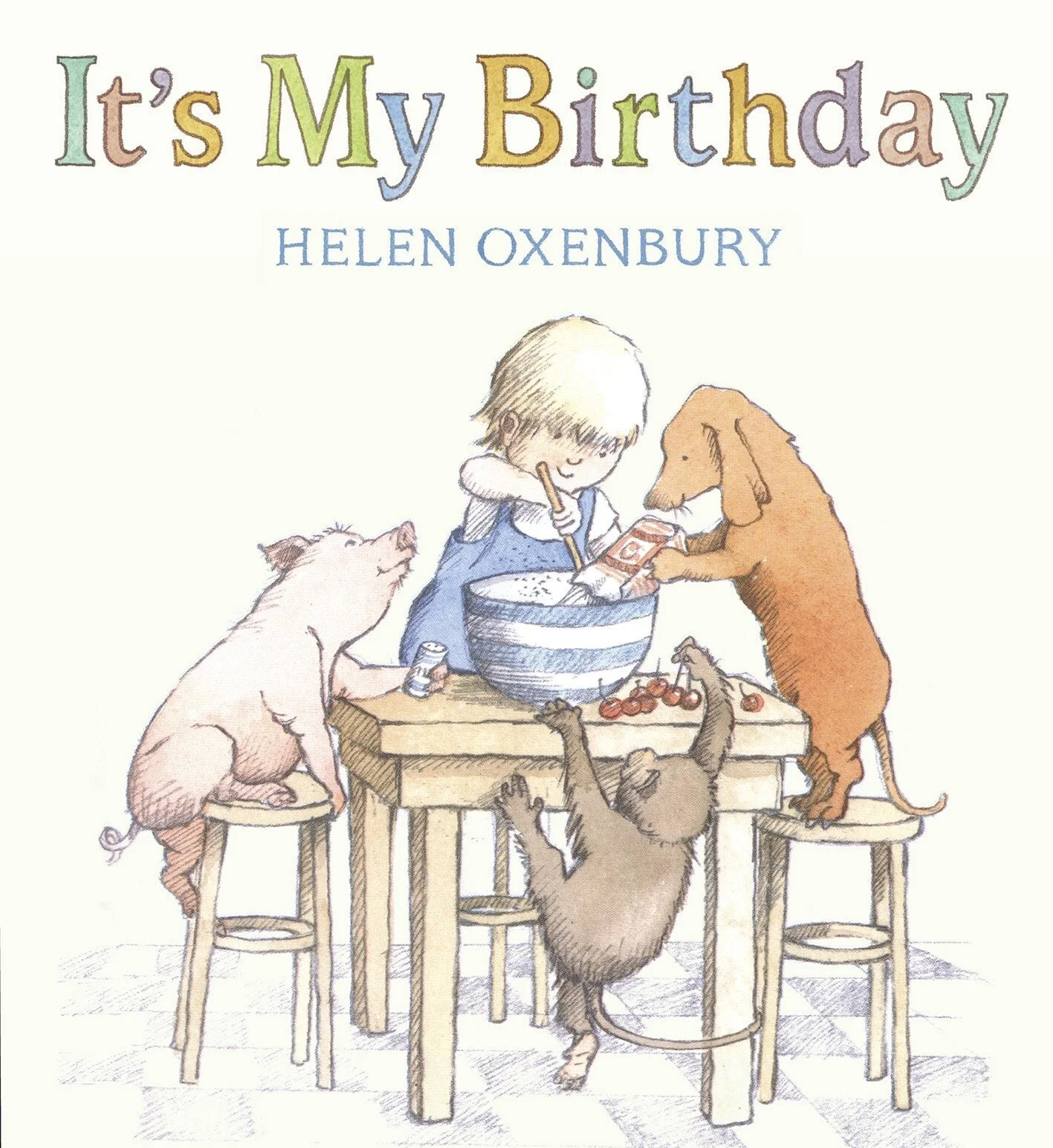
It’s My Birthday by Helen Oxenbury

From the author of We’re Going on a Bear Hunt, this birthday book will be especially appealing to younger children. A child decides to make a cake for their birthday and enlists the help of friends. A chicken shares some eggs, a bear gets the flour, the cat finds some butter and milk, a pig finds a pinch of salt, and a dog buys some sugar. After a monkey picks some cherries out of a tree, the child has everything they need to bake - and share - the birthday cake.


Birthday Monsters! by Sandra Boynton

Boynton is known for her silly and lovable characters. This book is no exception! Children are delighted by the tale of boisterous monsters whose enthusiasm seems to undermine every fun element of Hippo’s birthday. Just as they leave and it seems everything is ruined, they right zip back in and share a special surprise.


On the Night You Were Born by Nancy Tillman

We all cherish our children, and Tillman’s book has a way of whimsically and visually showing them how we feel. It begins with: “On the night you were born, the moon smiled with such wonder that the stars peeked in to see you and the night wind whispered, ‘Life will never be the same.’” The name travels on the wind around the world in celebration of the birth of the special child (yours!).


Happy Birthday Moon by Frank Asch

Young bear decides it would be nice to get the moon a birthday present. After a (one-sided) conversation echoing from a mountain top, Bear happily returns home, believing that the moon has the same birthday as he does and happens to want the same thing - a hat. The delightful misunderstandings continue, and children will love watching Bear give (and receive) the gift.


The Secret Birthday Message by Eric Carle

Tim wakes up on his birthday to find an envelope beneath his pillow. A coded message leads him on a treasure hunt for his gift. The pages of this book contain not only Carle’s beautiful signature style of artwork, but there are shaped and cut out pages that make the story a bit more interactive.


Clever Jack Takes the Cake by Candance Fleming, illustrated by G. Brian Karas

Jack lives in a cottage with his mother, and while they don’t have much, his resilience and generosity are enough to get him through. When he receives an invitation to the princess’ birthday party, he struggles with what he might bring as a gift. Ever-resourceful, he bakes a perfect strawberry cake for her. The journey to the castle is quite an adventure, and while the cake doesn’t arrive quite as planned, Jack learns that sometimes the best gifts aren’t things at all.


Lyle and the Birthday Party by Bernard Waber

Loveable Lyle has entertained generations of children. He lives with the Primm family on East 88th Street, and life is generally pretty perfect. When young Joshua’s birthday arrives, however, events take a turn for the worse. Lyle breaks a gift and then wonders if it was actually an accident. This story includes some ridiculous mix-ups, characters dealing with negative emotions, the love of a family, and the discovery that giving is perhaps more satisfying than receiving.


If a T. Rex Crashes Your Birthday Party by Jill Esbaum, illustrated by Dasha Tolstikova

Having a T. Rex come to your birthday party might sound like a dream-come-true to many young children, but as the child in this book discovers, it’s not all it’s cracked up to be. The T. Rex is huge, has sharp nails and teeth, and gets pretty grumpy when things don’t go his way. Underneath the tough exterior, however, there’s a gentle heart that will win readers over.


Ling and Ting Share a Birthday by Grace Lin

The second book in a series about a pair of loveable twins, Ling and Ting Share a Birthday is a book about sharing. These girls are sweet and silly, and they realize that they are lucky to have each other. They share a gift they receive, they shop for one another, they read together...and they celebrate together. This is a perfect book for early readers; it is broken into chapters that are actually short stories in their own right.


Some Birthday! by Patricia Polacco

Patricia and her brother live with their mother, but they spend summers with their father and grandmother. One morning, on the day of her birthday, Patricia helps her father get ready for work. He dashes out the door without mentioning it at all. Even when he returns home in the evening, he settles in to read the paper and watch television. Then, out of the blue, he tells the children it would be the perfect night to try and spot the monster at the bottom of the clay pit down the street. He creates a memorable night, ending in the children seeing the “monster”, running home screaming, and realizing he hadn’t forgotten Patricia’s birthday at all! They all celebrate with cake, gifts, and more laughs.

New Research: Music in Montessori Classrooms

music2.jpg

Montessori-based research is a fairly new field of study, but interest is increasing. The following is a summary of a recent published study that addressed concerns in the area of Montessori music education in primary classrooms. We found it fascinating, and we thought you might, too!

The Research Study

Click here to read the full published article.

Diana R. Dansereau of Boston University and Brooke M. Wyman of Bristol, Rhode Island published their article entitled: A Child-Directed Music Curriculum in the Montessori Classroom this past spring. They wanted to address a perceived disparity in the types of sensory materials offered to children in Montessori primary classrooms. More specifically, they gathered data suggesting that over time, modern Montessori classrooms have come to rely more heavily on visual sensory materials than materials that teach children to refine their other senses (including discrimination for sound).

Numerous studies, along with the work of Dr. Montessori herself, have indicated that early childhood exposure to music education and auditory sensory discrimination education have overwhelmingly positive and powerful impacts on children. Just as with other areas of study and skills that must be mastered, it appears that there is a sensitive period for learning music that ends prior to age 7. This means that while of course children have an ability to learn music after that age, they are in a prime position to master those skills earlier.

The researchers noted that Dr. Montessori herself had concerns about the application of her music materials in the classroom. For example, only one set of sound-based materials could be used at a time, and to identify variations in sound one would need to work in relative silence. This was certainly challenging during her time, and seemingly impossible now. Dansereau and Wyman set out to create and test a solution.

“...we sought to answer the question “How is a curriculum of music- and sound-based works developed, implemented, and received in a Montessori classroom?”
— Dansereau and Wyman

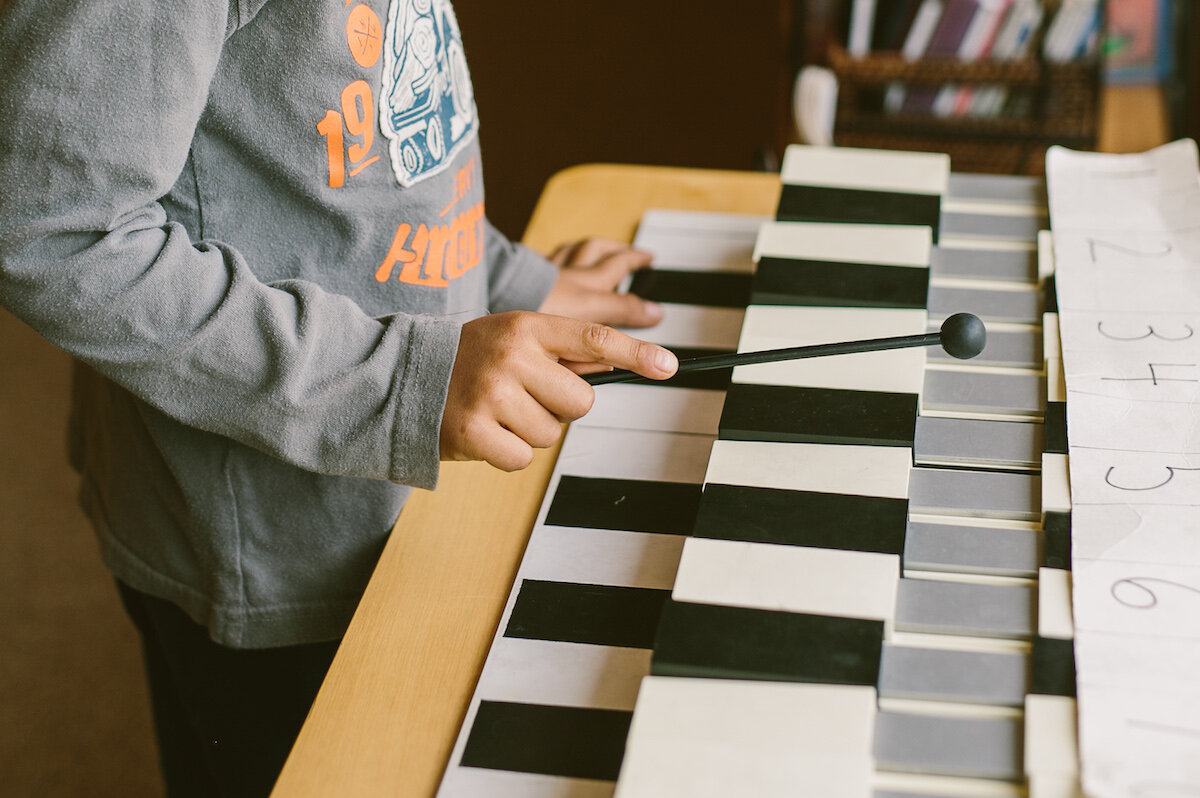
Dansereau, being a music teacher, early childhood music education researcher, and Montessori parent, and Wyman, being a Montessori primary guide, were in a perfect position to conduct the study. Their initial conversations included Wyman’s students, other primary teachers, and the head of school. Six shelf works were designed and tested. They included the use of a small plastic box with a battery, power switch, headphone jack, and a series of visually identical plastic discs. A child wears the headphones and replaces the discs one at a time to hear different sounds. The materials are briefly described below:

  1. For working memory and audiation (sound memory) - A wooden tree with spaces for removable discs. Children would listen to the sounds on each disc, then place them in order according to pitch. The material contained a built-in control of error so that children could independently check for accuracy.

  2. For pitch direction - Children listened to discs that played sliding pitches, then matched what they heard to visual pictures with lines drawn accordingly.

  3. For pitch direction - Similar to the second work, children replaced the two-dimensional pictures with a three-dimensional manipulative.

  4. For melodic direction - While listening to a recording of a piano, children used a small toy kangaroo to travel across a three-dimensional path along with the music.

  5. For melodic direction - Similar to the previous work, children listened to trombone music instead.

Wyman presented each material to the group using traditional Montessori methods, after which they were placed on the shelves for independent use. Students were observed and data was collected in six cycles over a period of two years.

During the course of the work Wyman noted: “What I have witnessed so far with the two materials we have piloted is an overwhelming need for more of this type of work. The children in my current class have demonstrated a deeper level of concentration with this work. In part, I am sure [it is] because of the use of their auditory sense: if they are distracted by others in the classroom, listening to their friends, or carrying on a conversation, they will miss the very essence of the work. What I find fascinating is that this work must be fulfilling an essential need, because even my most social children go to the material and tune everything else out.”

Overall, the researchers noted their data indicated positive findings. The children became more engaged with music education, they interacted positively with the materials, their confidence increased, and there were obvious signs of deep concentration. They did note some limitations, such as the inability to record all interactions with the materials due to the nature of a Montessori classroom environment, as well as the children’s understanding that the materials were somewhat novel in nature. They felt that some of the materials were more beneficial than others, or that adjustments may need to be made with one or two of the materials.

Dansereau and Wyman felt the study was a positive initial step in addressing the disparity in sensory materials in the Montessori primary classroom. They were encouraged by the results and believe more research should be done in this area, including with classrooms that serve children of varied demographics. 

We are curious to hear your thoughts on this topic. What might next steps be in individual Montessori classrooms? Could the materials be replicated? Could others be introduced? How might we, as educators, ensure we are providing more balanced sensory instruction?

What Does Montessori Look Like for Adolescents?

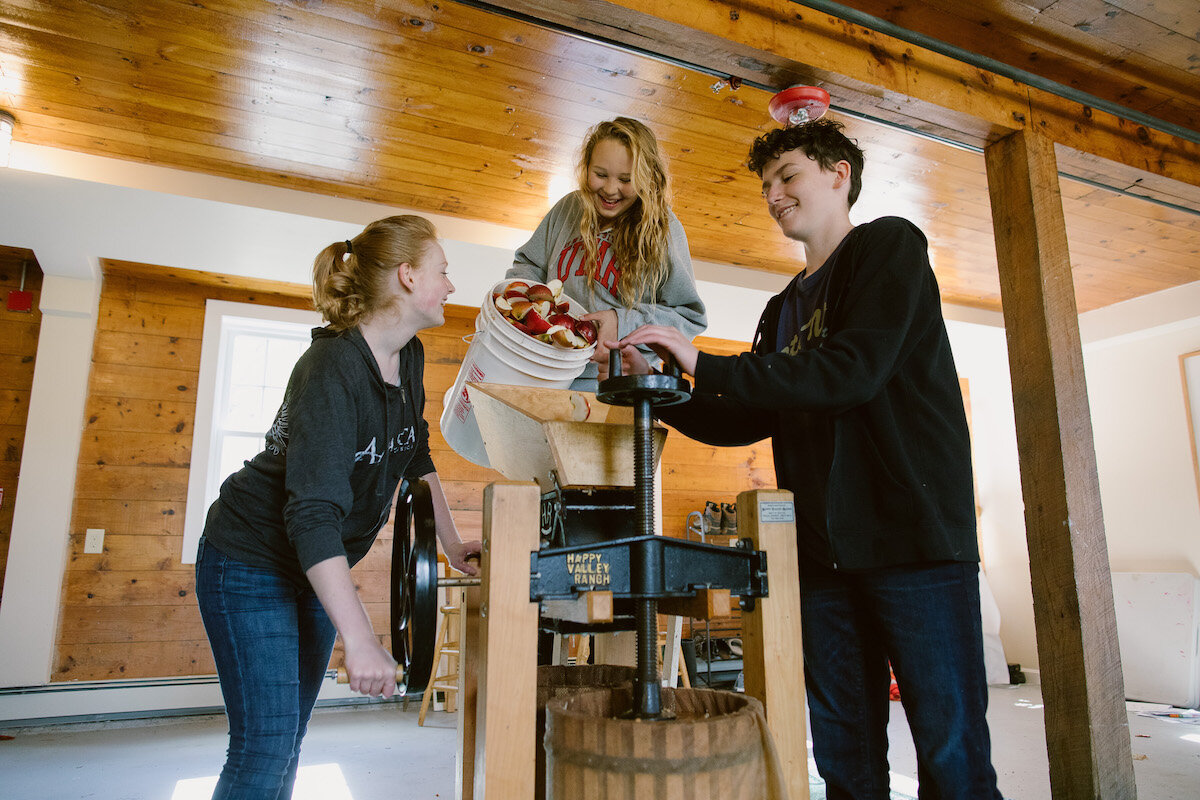
HMS Upper School students make apple cider for their microeconomy business.

HMS Upper School students make apple cider for their microeconomy business.

“My vision of the future is no longer of people taking exams and proceeding on that certification from the secondary school to the university, but of individuals from one stage of independence to a higher, by means of their own activity, through their own effort of will, which constitutes the inner evolution of the individual.”
— Dr. Maria Montessori

Montessori is perhaps best known for its educational offerings from children aged 3-6. Though other programs for infants, toddlers, and elementary-aged children are also fairly popular and easy to find in many areas, programs for adolescents remain relatively scarce. Many Montessori families approaching the final years of local elementary offerings find themselves asking, “What’s next?” While Montessori-educated children have overwhelmingly positive transitions when they graduate to other conventional schools, it’s only natural to wonder how we might extend the experience for our children.

What did Dr. Montessori have envisioned for adolescents, and what options are available for them today?

Dr. Montessori’s Ideas

Montessori clearly laid out her plans for children from birth through age 12, but beyond that her writings are incomplete. She wrote appendices at the end of her book From Childhood to Adolescence, in which she outlined her basic ideas for an adolescent program. She referred to children of this age as Erdkinder, which in German means children of the earth. The following are some of her thoughts (please note that these are direct quotes and do not reflect today’s gender-inclusive language standards):

"If puberty is on the physical side a transition from an infantile to an adult state, there is also, on the psychological side, a transition from the child who has to live in a family, to the man who has to live in society . These two needs of the adolescent: for protection during the time of the difficult physical transition, and for an understanding of the society which he is about to enter to play his part as a man.”

"…derive great personal benefit from being initiated in economic independence . For this would result in a "valorization" of his personality, in making him feel himself capable of succeeding in life by his own efforts and on his own merits, and at the same time it would put him in direct contact with the supreme reality of social life . We speak therefore of letting him earn money by his own work.”

"Therefore work on the land is an introduction both to nature and to civilization and gives a limitless field for scientific and historic studies. If the produce can be used commercially this brings in the fundamental mechanism of society, that of production and exchange, on which economic life is based. This means that there is an opportunity to learn both academically and through actual experience what are the elements of social life. We have called these children the "Erdkinder" because they are learning about civilization through its origin in agriculture. They are the "land-children."" 

For more select quotes from her writing, visit this helpful AMI page. Alternately, copies of From Childhood to Adolescence can be purchased here.

Considering Adolescent Development

Much information can be found about Montessori’s concept of the planes of development. Children from ages 12-18 are considered to be in the third plane. Montessori education is based largely on consideration of developmental markers for various age groups, so the ideals of the Erdkinder arose from the following characteristics Montessori observed to be standard during this stage in life.

  • Great changes in the physical body as the child experiences puberty

  • A need for independence from the family unit, while also requiring support

  • Strong and varied emotional experiences

  • A need for experiential learning

  • Refining of moral perspective

  • Drive to discover their future occupation

Elements of a 12-18 Program

There are a number of Montessori adolescent programs across the United States and internationally. Many of them cater to middle school students aged 12-15, though there are a small number that include older adolescents and the high school years as well.

Dr. Montessori’s original concept involved having students live on a working farm. This would allow them the following opportunities:

  • A level of independence from their families while receiving support from adults

  • Opportunity to engage in physical work that would support their developmental growth while teaching worthwhile skills

  • Gardening, animal husbandry, and handcraft skills

  • Engagement in a microeconomy: students work to earn money via the farm and budget for common purchases

  • Community connection by way of selling their goods to the public

  • Authentic combining of traditional academic learning with personal interests

  • Access to growth and experimentation in the arts

  • Support while refining their senses of independence and purpose within society

Erdkinder in Practice Today

As mentioned above, it is much easier to find a Montessori middle school program than it is to find one for high school students. They do exist, however, and both types of programs have found creative ways to achieve the same goals as Montessori’s original ideas. It’s not always possible to create the original farm model (although they do exist, such as at this well-respected school in Ohio). Schools have included modified farming programs on an existing campus or created alternate business models, such as a coffee shop.

Hopefully, as interest and understanding continues to grow in the coming years, Montessori adolescent programs will expand. Curious about Montessori? Want to learn more? Contact us today to schedule a tour or discuss whether Montessori is right for your family.