books

Our Montessori Bookshelf: All About Geography!

In Montessori we love to explore how our language shapes our thinking, so we often explore the etymology of words. The word geography comes from the Greek geo, which means earth, and graphein, which means to write. So, geography can be understood as a description of the earth and all that occurs physically upon it. 

Although we name geography as a distinct subject, in Montessori geography is really woven throughout children’s learning experiences. These are some of our favorite books that support what children are experiencing in their geography explorations and that also encourage their natural curiosity about the world.

Click on the titles to link to the book on Goodreads.

Land and Water

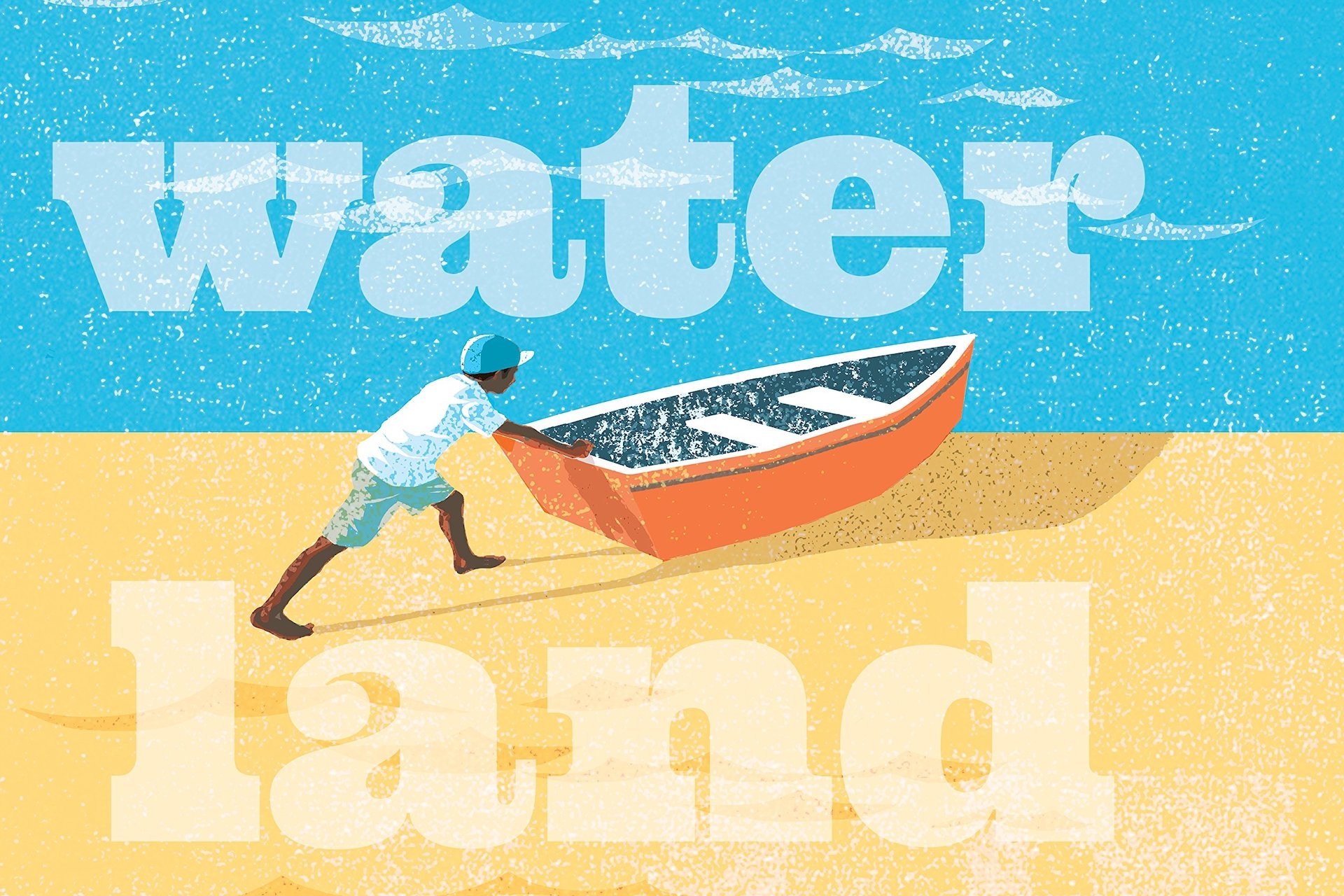
Water Land: Land and Water Forms Around the World
by Christy Hale

This picture book shows the visual relationship between land and water forms by using cut-out portions of the page. Turn the page and a lake becomes an island! The simple yet lovely illustrations of humans interacting with the water and the land are accompanied by one word on each page that states the vocabulary: lake, island, bay, cape, strait, isthmus, etc. This is a perfect book for young children beginning their journey in geography!

Political and Physical Geography

Maps
by Aleksandra Mizielinska and Daniel Mizielinska

This is the perfect tome for children beginning to learn about continents and countries. The sturdy pages give the book a sense of weighty importance, and each page reveals treasures upon treasures. The book offers an overview of the world, then focuses in on each continent and key countries within the continents. Presented in map form, the pages also illustrate animal and plant life, as well as cultural traditions and interesting facts. Both an amazing reference guide and a key to further exploration, this book is rich in visual appeal as well as in content.

Maps of the World's Oceans: An Illustrated Children's Atlas to the Seas and all the Creatures and Plants that Live There
By Enrico Lavagno and Angelo Mojetta

This illustrated atlas combines an enticing visual overview of the world's oceans with easily digestible bits of information about what is found there. Easily a jumping-off point for a slew of research, this book is a must-have resource for any child interested in history, marine biology, or really just cool facts in general.  

Cultural Explorations

This Is How We Do It: One Day in the Lives of Seven Kids from around the World
by Matt Lamothe

Based on seven real children around the world, this book depicts a day in each of their lives. The illustrations and short text of the children’s lives are shown side-by-side, so it’s easy to explore the similarities and differences in how they live: their families, what they wear, their school, what they eat, how they enjoy their evenings, where they sleep, and more. Designed to appeal to a range of ages the book provides large, simple text for each part of the day, as well as short descriptions for more confident readers. Younger children are also fascinated by the pictures of young people engaged in a variety of activities. Best of all, the book offers a delightful reminder of what unites us. 

The Earth

How to Dig a Hole to the Other Side of the World
by Faith McNulty, Illustrated by Marc Simont

Elementary children love this book! The simple illustrations are just enough to spark their imagination as the text takes them on a “what if” journey that starts with finding a soft place to start shoveling. The adventure continues with finding fossils, drilling, perhaps finding oil or a geyser, using a jet-propelled submarine, and eventually resurfacing on the other side of the earth. The best part is that the story perfectly dove-tails with the elementary geography lesson that introduces the layers of the earth. Despite the imaginative aspects of How to Dig a Hole to the Other Side of the World, the book is firmly grounded (pun intended!) in fascinating scientific information presented in just the right way to appeal to elementary-aged children. 

Life Story: The Story of Life on Our Earth from Its Beginning Up to Now
By Virginia Lee Burton

Set as a play, complete with a program detailing the cast and characters, Life Story progresses through scenes from the earth’s beginnings, through the prehistoric eras, to the seasons of human life. This book perfectly illustrates the passage of time and appeals to the elementary-aged child imagining the emergence of the universe and their own place in the story.

Earthshake: Poems from the Ground Up
By Lisa Westberg Peters, Illustrated by Cathie Felstead

These 22 poems offer whimsical yet scientific scenes all about planet earth: from wind to quartz to lava to water. Reading these poems reminds us that we can revel in the love of language while also learning about our world. As a bonus, the endnotes provide a bit more context and information about each of the 22 topics. 

Other Books to Explore

If you and your children are super excited about these titles, here are some other geography books we recommend!

Land and Water: Landforms & Bodies of Water
By Eve Heidi Bine-Stock

Wake Up, World!: A Day in the Life of Children Around the World
By Beatrice Hollyer

Let’s Eat!: What Children Eat Around the World
By Beatrice Hollyer

The Shortest Day: Celebrating the Winter Solstice
By Wendy Pfeffer, Illustrated by Jesse Reisch

Solving the Puzzle Under the Sea: Marie Tharp Maps the Ocean Floor
By Robert Burleigh, Illustrated by Raúl Colón

Book List: To Read Before Family Movie Night

There are SO many incredible pieces of children’s literature that have eventually been made into movies. In this article, we’d like to share just a few of our favorites. With a bit of extra time at home together, you might enjoy reading one of these books together, then watching the movie. Children love noticing the similarities and differences, plus doing so is great for building reading comprehension skills.

Enjoy! 

A1Ee+Yjn92L.jpg

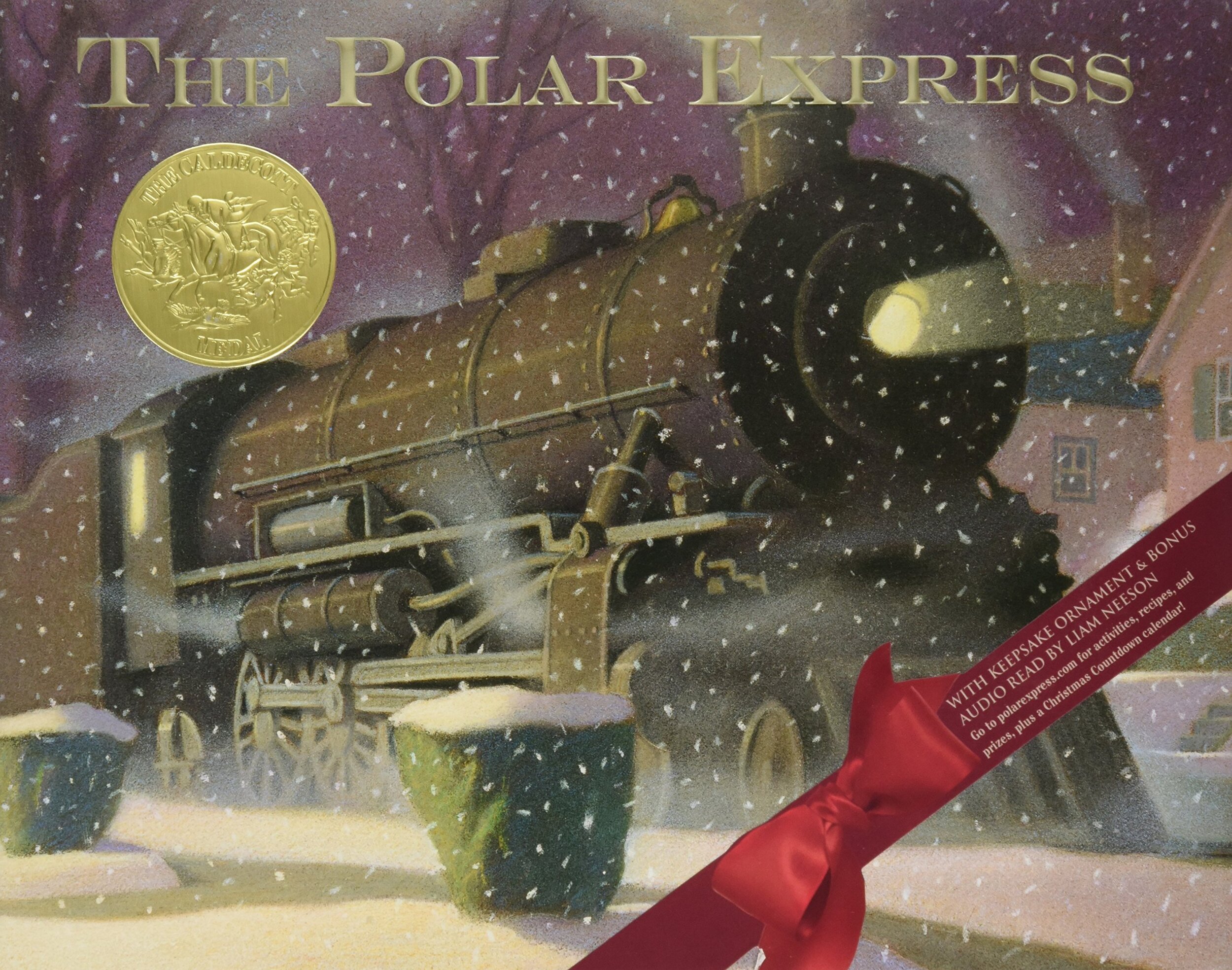
The Polar Express by Chris Van Allsburg

The classic Christmas tale is appealing to both children and adults. It’s hard to tell which is more magical - the story of a boy’s journey to the North Pole or the stunningly gorgeous illustrations. So many movies stray noticeably far from their original book inspiration, but this one does not. The movie evokes the same feel of the book’s plot and artwork.

Shrek! by William Steig

Many of us are familiar with the animated classic, but did you know that Shrek! originated as a hilariously disgusting children’s book? Shrek reaches an age at which his parents decide to kick him out of their swamp and out on his own. Shrek prides himself on his repulsiveness, and after meeting a fortune-telling witch on his journey, he sets out on a mission to find his princess.

Where the Wild Things Are by Maurice Sendak

Max, like most children, is replete with mischief. Unfortunately, one evening, his mother has had enough of his antics and sends him to bed with no supper. Whether Max slips into a dream or sets out on a journey is left for readers to wonder, but his travels take him across vast oceans to a land of mysterious beasts, of which he becomes the leader.

The BFG by Roald Dahl, illustrated by Quentin Blake

One evening Sophie peeks out her bedroom window, only to see a large creature. When the creature sees her, he packs her up with his things and takes her away to his distant home. Luckily, for Sophie, the creature is the BFG, or the Big Friendly Giant. They become fast friends on a mission to save the world from the other giants, who are even bigger and not the least bit friendly.

The Ramona series by Beverly Cleary

Children have loved this relatable series for generations. Romana and her big sister Beezus, their cat Picky-Picky, and their parents live on Klickitat Street. The books explore all sorts of phases and situations children understand, including sibling relationships, friendships, starting at a new school, negotiating with parents, having to spend time with a babysitter, mischief caused by pets, preparing for a new baby, and so much more.  

Because of Winn Dixie by Kate DiCamillo

Young Opal is new in town, and she and her father the preacher are all alone. Opal thinks about her mother, who left when she was three years old, and wishes she knew more about her. One day, while Opal was in the Winn Dixie grocery store, a stray dog snuck in and began running around the produce aisle. It was on that day Opal claimed him as her own, named him Winn Dixie, brought him home for a bath, and her life began to change.

Charlotte’s Web by E.B. White

Fern, a precocious child, begs and pleads with her father in an attempt to save the life of a young runt pig. Her father capitulates, and Fern cares for the growing pig (Wilbur) until he is too large and is sent to live at her uncle’s nearby farm. It is here that Wilbur meets a new friend - a spider named Charlotte. After learning about Wilbur’s unfortunate probable fate, he and Charlotte work together in an attempt to save him, securing his safety and cementing their friendship.

The Witches by Roald Dahl, illustrated by Quentin Blake

A young boy and his grandmother take a vacation together, during which they find themselves inadvertently amongst a convention of witches. Witches, in Dahl’s tale, look very much like ordinary women, but after a childhood mishap, the grandmother knows exactly how to spot one. She teaches her grandson all she knows, and the two work together in hopes of protecting children everywhere.

Bridge to Terabithia by Katherine Paterson

Be warned: this book is beautifully written, but terribly sad.  Jesse and Leslie are both in need of a friend. They’re neighbors, the same age, and seem to have a lot in common - even when they don’t. Near the creek by their homes they create an imaginary world that they both retreat to as often as possible. Their friendship grows, and Jesse’s life changes for the better. One day when Jesse is away, he returns to discover a horrible tragedy.

The Hobbit by J.R.R. Tolkien

Bilbo Baggins is a hobbit; and imaginary creature of Tolkien’s creation. This is a story of an epic journey which Baggins takes in hopes of winning a share of a treasure guarded by a dragon. Throughout his journey, he grows as a character in various ways. Another well-known book and sequel to The Hobbit is The Lord of the Rings.
Ten Fabulous Fall Titles

Each month we like to provide you with a timely booklist to inspire daily reading at home.  This month we focus on fun fall books.  Between falling leaves and ripening pumpkins, what’s not to love about autumn?  Visit your local library or click the book images below to find these titles that your children are sure to love.


Red Leaf, Yellow Leaf, by Lois Ehlert

This book by Ehlert is simple but provides gorgeous illustrations and informational text for our youngest children.  Perfect for toddlers and primary students, Red Leaf, Yellow Leaf details the life of a tree.


The Pumpkin Book, by Gail Gibbons 

Gibbons is known for creating books that draw children in with beautiful illustrations and clear, factual information.  The pumpkin book does not disappoint!  It covers such information as types of pumpkins, the process of planting, growing, and harvesting pumpkins, the parts of a pumpkins seed, history of this amazing squash, and so much more.


The Reasons for Seasons, by Gail Gibbons 

Once again Gibbons delivers a perfect book for Montessori (and all) children.  She uses clear, bright diagrams and short but accurate paragraphs to explain why certain regions of the earth experience four seasons.  


Yellow Time, by Lauren Stringer 

“Yellow time comes before white time.  Every time.”  Stringer uses words and images alike to paint a picture of the final days of fall.  The variety of color among the leaves has gone, along with many of the animals.  The ones that are left are so busy preparing for winter that they don’t notice the beautiful yellow that remains.  That is, except for the crows.


Apple Cider-Making Days, by Ann Purmell, illustrated by Joanne Friar 

This wholesome tale follows two children as they pick apples to be made into cider on the family farm.  Readers learn about the process via this charming realistic fiction, and several pages of interesting cider facts follow the story.


Autumn is Here!, by Heidi Pross Gray

Young children will enjoy chiming in with the alternate pages of predictable text.  Between exclamations of “Autumn is here!” Gray inserts classic hallmarks of the season, such as the potential futures of acorns and the busy work of squirrels.  Her whimsical watercolor paintings that illustrate the pages are a perfect fit.


Goodbye Summer, Hello Autumn, by Kenard Pak 

In this charming book a young girls is taking a walk through her town and nearby woods on a crisp fall day.  She greets the plants and creatures she passes; they, in return, return her greeting and explain the changes they are undergoing during autumn.  


Autumnblings, by Douglas Florian

Florian writes poetry that is silly, surprising, and teaches us new things.  While he has books (with really cool collage and paint illustrations) on a variety of subjects, Autumnblings is all about fall.  This book would be best enjoyed by children in kindergarten and lower elementary, and covers a wide range of topics from apple picking to trick-or-treating to baseball.
 

Fall Walk, by Virginia Brimhall Snow 

This book is a unique two-in-one.  The story takes readers on a walk through the woods with a grandmother and her grandchildren.  On each page a different tree is introduced, along with a detailed picture displaying the shape of the tree’s leafs.  This compliments the Montessori botany work beautifully.


Squirrels Leap, Squirrels Sleep, by April Pulley Sayre, illustrated by Steve Jenkins

Few things delight children in quite the same way as squirrels.  They always seem to be having fun scampering around or furiously preparing for winter.  This book lets children in on all the action as it describes the many tasks of this familiar neighborhood mammal.


We hope you enjoy our fall book suggestions.  Let us know if you have any favorites that were not included on this list, and happy reading!

Author Spotlight: Grace Lin

So it’s halfway through the summer and you’ve been enjoying lots of reading time with your kids.  You’ve been through all their favorites in the bookcase - many, many times.  Looking for some new ideas?

Grace Lin is a Newbery-winning author whose work appeals to children of all ages.  Read on for a partial list of her books that will pull your family out of a book rut and provide hours of reading enjoyment!

(Click on the book image to go to the book's page on Amazon)

Picture Books

The Ugly Vegetables

A child admires the flowers in her neighbors’ gardens, while wondering why her mother insists on growing veggies that look so different than everyone else’s.  When harvest time rolls around she realizes the beauty in diversity and how a delicious pot of soup can bring people together.


Dim Sum for Everyone!

The bright illustrations and minimal text in this story will appeal to preschoolers and new readers.  A child describes the magic of going out to eat dim sum, and how special it is to share a meal with family.


Kite Flying

A family works together to make and fly a kite.  While the story honors the Chinese tradition, it is relatable for any family who likes to fly kites.  Much like Dim Sum for Everyone!, the pictures and short text make this book ideal for preschoolers and early readers.


Lissy’s Friends

Being the new girl at school can be pretty lonely.  Lissy decides to solve her problem by creating a tiny friend using origami.  Her collection grows quickly and brings her much needed joy.  Eventually, she is able to share her love of origami with her new human friends.


Early Readers

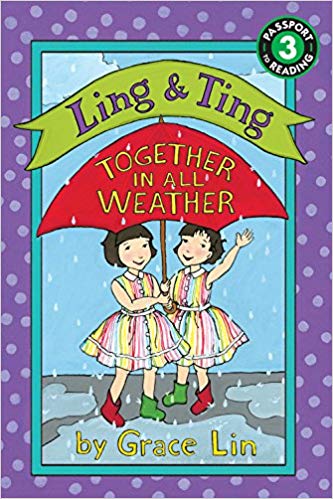
Ling and Ting: Together in All Weather

Ling and Ting are twin sisters who take readers through their fun, silly, and relatable lives in this early reader series.  From thunderstorms to rainbows to selling lemonade, the girls have fun together in all seasons.


Ling and Ting: Twice as Silly

Ling and Ting take readers through six ridiculously silly stories, including high hopes for planting jelly beans and devising intricate plans to pick the apples from the top of a tree.


Ling and Ting: Share a Birthday

Of course the twins share a birthday, but they love sharing lots of other things, too!  This book begins with a tale of two pairs of shoes and takes readers through the fun of birthday cake, shopping, gifts, wishes, and a special story at the end.


Ling and Ting: Not Exactly the Same

While Ling and Ting are alike in almost every way, they are not exactly the same.  This book takes readers on yet another series of silly adventures.


Chapter Books

Year of the Dog

This is Grace Lin’s first book featuring a character named Pacy and her family and friends.  The book begins with Pacy and her family working to prepare for their Chinese New year celebration.  It is the year of the dog which Pacy’s mom describes as a good time to find oneself.  Throughout the rest of the story readers follow along as Pacy does just that.  As with many of her other books, Lin manages to blend cultural traditions with modern family lives.


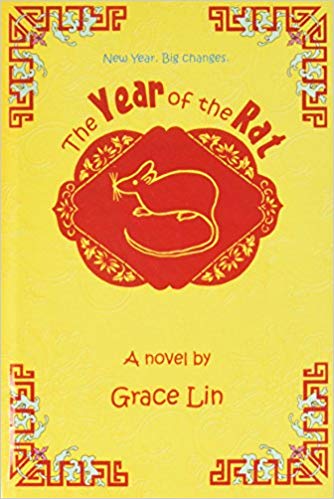
Year of the Rat

The Pacy series continues as Lin crafts books based on her own childhood experiences.  Pacy is not feeling as lucky as she did in Year of the Dog, as she deals with her best friend moving and struggles to work toward her goals to be a writer and illustrator.  As with many of her books, Grace Lin tells many stories within this story, layering traditional tales within modern realistic fiction.


Dumpling Days

This third installment in the Pacy series has readers traveling to Taiwan as Pacy and her family prepare for her grandmother’s birthday.  Pacy continues to navigate her way through new cultural traditions and life experiences.  As with the other books in the series, nurturing relationships is an underlying theme.


Novel

Where the Mountain Meets the Moon

This novel will transport older readers to a world of fantasy.  Min Li embarks on a journey to meet the old man of the moon in hopes of asking him how she might change her family's’ fortune.  Throughout her journey she meets an array of fascinating characters - including forming a friendship with an unconventional dragon - and learns more about herself than she ever dreamed she might.


Grace Lin has written and illustrated many other books.  We hope this list will help you and your family discover a new author for everyone to enjoy!


Summer Reading List

Summer is here!

This may mean the end of school for the year but that shouldn’t mean a break from reading.  Reading, and being read to, is critically important for children’s language development.  Reading to infants and toddlers gives parents a chance to model our spoken language.  Preschoolers and kindergarteners are learning about sounds and words; your reading aloud to them will help them delight in the magic of the written word, eventually leading them to begin decoding for themselves.  As children get older, it is important for them to spend time reading independently, but reading together can continue on into the preteen years (and perhaps beyond!)  Children appreciate spending time with their parents, and there’s something special about slowing down and enjoying a book together.  

Read on for some fun summer suggestions. (Click on the book images to go to that book's page on Amazon)


Should I Share My Ice Cream? By Mo Willems

Really, anything by Willems is sure to be a hit.  While he is best known for his series of books about keeping a mischievous pigeon out of trouble, his Elephant and Piggie series is very popular with early readers.  In this delightful tale, elephant Gerald contemplates the pros and cons of sharing his ice cream with his best friend, Piggie.  The twist ending is a sweet surprise.


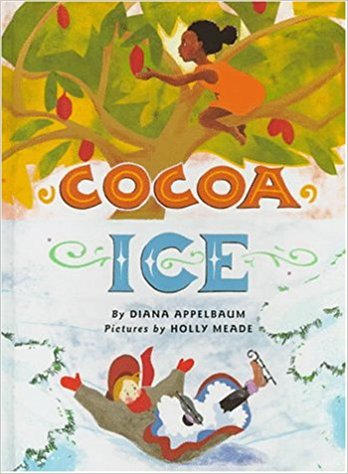
Cocoa Ice by Diana Karter Appelbaum, illustrated by Holly Meade

Cocoa Ice is the story of two young girls who live in very different climates.  One child helps her family harvest and prepare cocoa beans to eat, sell, and trade.  The other child watches as ice is cut into large blocks and loaded onto a schooner that heads to the tropics.  While the children never meet, they are connected by their curiosity about each other as well as their love of the sweet treat, cocoa ice.


The Relatives Came, by Cynthia Rylant, illustrated by Stephen Gammell

This book will be loved by anyone who has ever had a house full of relatives.  The character’s family comes to visit from out of town, and while life may feel a little cramped, the time spent together in the hot summer sun makes it more than worth it.  The illustrations are wonderful, but even the words themselves create a vivid visual.


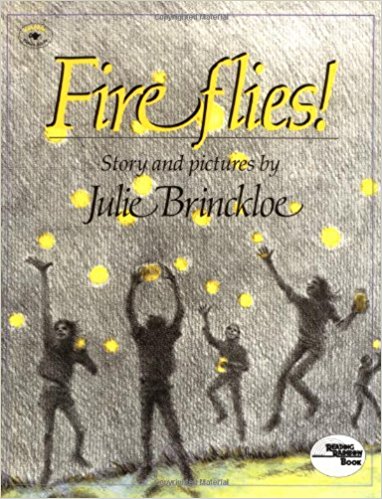
Fireflies! by Julie Brinckloe

At first glance this book tells a story that so many of us have experienced as a child: the joy of running outside on a warm summer night to catch fireflies in a jar.  While that simple theme is the main plot, the character’s internal experiences offer great opportunities for discussion with children.  Parents may want to note that on one page the child misuses a pair of scissors without his mother’s permission to cut holes in the lid of the jar.  At the end of the book, he is also confronted with the challenging decision about what to do with the fireflies as their blinking light begins to fade within the jar.  (Spoiler: he makes the right choice and releases them!)


Bailey Goes Camping by Kevin Henkes

This book will be especially appealing to younger siblings.  Bailey’s older brother and sister are gearing up for a camping trip, but Bailey doesn’t get to go because he’s too young.  Luckily his parents have some ideas to help him have his own camping experience.


Watermelon Day by Kathi Appelt, illustrated by Dale Gottlieb

Jesse can hardly wait to take a bite of sweet, cool, refreshing watermelon.  All summer long she watches as the melon grows larger in the garden.  When her father finally decides it’s ripe enough to cut off the vine, she must wait all day while the melon cools in the chilly water.  Her family gathers for a summer celebration, capped off, off course, with a delicious treat.


Blueberries for Sal by Robert McCloskey

Sal and her mother head out to pick wild blueberries one warm summer day.  On the other side of the hill a mother bear and her cub are doing the same.  The two youngsters wander off, meet up with the wrong mothers (much to the mothers’ surprise!), and eventually find their way back.  This book will charm parents and make little ones giggle.


One Morning in Maine by Robert McCloskey

Sal (from Blueberries for Sal) is a little older in this story, but she brings readers on a journey that many children (and their parents) will be able to relate to.  Sal wakes up with her first loose tooth one morning, and while she initially upset she quickly becomes excited at this sign that she is growing up.  Sadly, she very literally loses her tooth, and spends the day learning


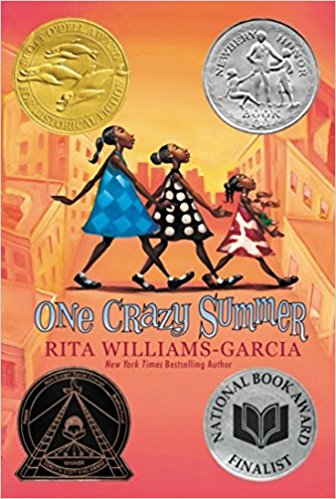
One Crazy Summer by Rita Williams-Garcia

This award-winning title is definitely for older kids (10 and up).  It is lyrically written and follows three sisters through their experiences during the summer of 1968 when they leave Brooklyn to visit their estranged mother in Oakland, California.  Williams-Garcia’s historical fiction delves into difficult subject matter such as reconnecting with an absent parent and the racial struggles during that time period.


National Geographic Kids National Parks Guide USA Centennial Edition

Planning a family trip to one (or more!) national parks this summer?  Pick up this guide for your kids and they can help plan, as well as get excited to learn about and visit these amazing resources!

A Book List for Parents

Each month we share a book list.  Typically it aims to give parents a list of books to share with their children based on a particular theme.  This month we take a short break from children’s books to provide parents with a list of their own.

Whether you are looking for original titles written by Montessori herself, modern parent-friendly guides, or other books that may be of interest to Montessori parents, this list is for you. (Click on the book's image for purchasing information.)

The Montessori Toddler by Simone Davies

This new and very popular title was recently published via a Kickstarter fund.  Written by an experienced and certified Montessori teacher, it details ways parents can support the unique (and constant!) needs of toddlers.  It shares how Montessori’s ideas can be applied by parents with children ages 1-3 in the home.


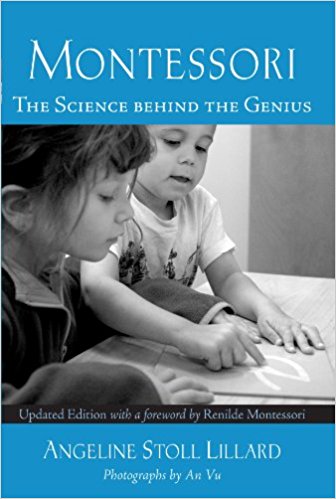
Montessori: The Science Behind the Genius by Angeline Stoll Lillard

This book is the ultimate guide for anyone who is discovering Montessori or is interested in gaining a modern scientific perspective of the approach.  Lillard, a professor of psychology at the University of Virginia, was awarded the Cognitive Development Society’s book award for this title.  In an easy-to-read format, she aligns Montessori’s original ideas with current research findings.    


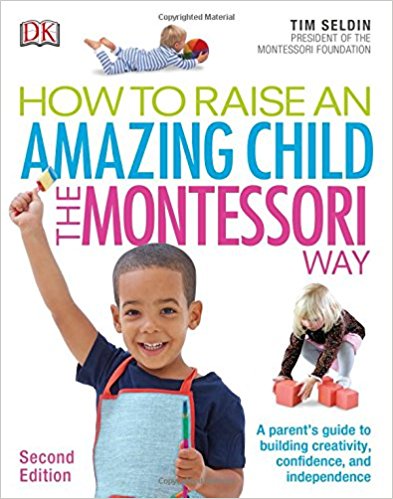
How to Raise an Amazing Child the Montessori Way by Tim Seldin

This book was written for parents of children from birth to six years of age.  Now on its second edition, How to Raise an Amazing Child the Montessori Way has helped many families by describing Montessori’s basic ideas and giving clear, helpful examples of what you can do at home to support your child’s development.  Readers will gain information about a wide range of topics like brain development, gentle discipline strategies, and how to foster independence - with plenty of specific strategies.
 

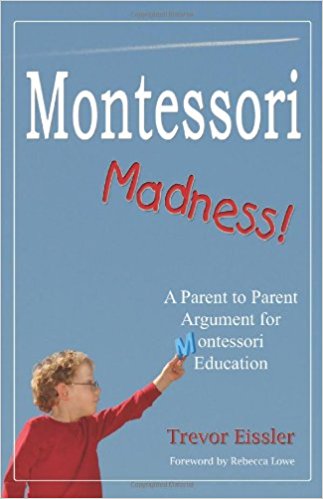
Montessori Madness! A Parent to Parent Argument for Montessori Education by Trevor Eissler

This much-loved and easy to read book is another great introduction to Montessori.  Written by the parent of Montessori children it weaves the stories of one family’s journey into the teaching of Montessori’s hallmarks, including the sensitive periods, the prepared environment, and freedom of choice.
 

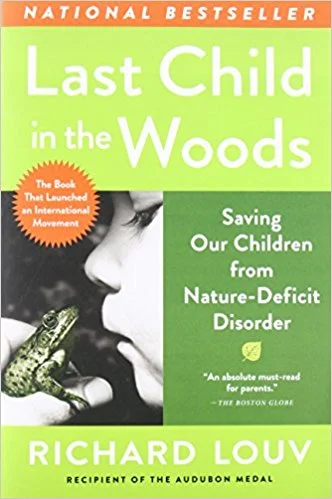
Last Child in the Woods: Saving Our Children From Nature-Deficit Disorder by Richard Louv

This is not a Montessori book, but will appeal to Montessori parents nonetheless.  Louv writes about how time spent in nature directly relates to child development.  He argues that many of the physical and emotional issues faced by children today are a direct result of our decreased contact with the outdoors.  Louv was the 2008 recipient of the Audubon Medal; you can learn more about his work at http://richardlouv.com/. 


Interested in reading some of Montessori’s original works?  Check out these titles:

What You Should Know About Your Child by Maria Montessori

Writing directly to parents, Dr. Maria Montessori published this book in an effort to teach parents what she had learned about both physical and mental development of young children.  Many of Montessori’s works in their original form can be hard to find on sites like Amazon; NAMTA (the North American Montessori Teachers’ Association) has a website that is a great resource for parents and educators.


The Absorbent Mind by Maria Montessori

Montessori considered the period of birth to six years of age to be the most significant developmental period in a child’s life.  This book illustrates those developments and how we might prepare an environment conducive to aiding the child on this journey.  


The Secret of Childhood by Maria Montessori

This book is another great summary of Montessori’s work and ideas.  It is based on the concept that children desire to learn, that as adults our role is to recognize their potential, and what we can do do facilitate their growth.  While traditional education encourages teachers to be the center of a classroom, Montessori education focuses on the child.  Children are given the freedom to make their own work choices, while the adults are there to serve as support and guides.


To Educate the Human Potential by Maria Montessori 

This book was written to explain how the Montessori method applies to children older than six years.  The elementary curriculum is very different from the primary curriculum.  This is intentional and out of respect for the child’s development.  Children at the elementary level are very social, have wonderful imaginations, and experience a deep craving to learn about the world and universe.  In this book Montessori outlines how we might prepare an environment that serves older children and their unique developmental needs.

Book List: April is National Poetry Month

We work hard to give kids a chance to read both fiction and nonfiction, but let’s not forget about poetry!  April is a great month to celebrate.  Check out this month’s book list for ideas.

(Click on the book image to go to the book's page on Amazon)


Where the Sidewalk Ends by Shel Silverstein

Silverstein’s poems are mostly silly, often inspiring, and always delightful.  Combine that with his simple line drawings and your child will love every page.  If you enjoy Where the Sidewalk Ends, check out Silverstein’s many other titles, including A Light in the Attic.


Jabberwocky: A BabyLit Nonsense Primer by Jennifer Adams, illustrated by Alison Oliver

In this great board book option for the youngest poetry lovers, Adams cleverly adapts Lewis Carrol’s classic from Through the Looking Glass, and What Alice Found There.  The bright, whimsical illustrations transform a not-so-scary beast into a fun and triumphant poem. 


The Crown on Your Head by Nancy Tillman

This sweet poem/story tells children what we already know about them: there is something special and magical about their individuality.  While the illustrations show children with literal glowing crowns resting on their heads, the message is more figurative.  Nonetheless, the qualities that make us unique follow us throughout our lives, and that each one of us carries our own.


Poetry for Young People: Emily Dickinson edited by Frances Schoonmaker Bolin, illustrated by Chi Chung

If your child loves nature or shares a fascination with the world around them, this introduction to some of Dickinson’s work may be an excellent foray into poetry.  Included are poems like “Bee, I’m expecting you!” and “The moon was but a chin of gold”.


When We Were Very Young by A. A. Milne, illustrated by Ernest H. Shepard

This classic collection has been enjoyed for generation.  One of a series that introduces readers to Winnie-the-Pooh and friends, it’s the type of book that children cherish enough to want to read to their own children.


The Reason for a Flower: A Book About Flowers, Pollen, and Seeds by Ruth Heller

Heller has a magical way of blending poetry and science in a way that captivates children’s imaginations while teaching them real-life information.  The Reason for a Flower is no different, and children will love the different ways in which plants use flowers for reproduction.


Many Luscious Lollipops: A Book About Adjectives by Ruth Heller

Ruth Heller’s work is so amazing it deserves two spots on this list.  Many Luscious Lollipops is just one in her series that teaches grammar skills.  Some books even go into specific parts of speech, which is great for older children (she has written one all about collective nouns!).  And who doesn’t love a book about lollipops?


Inside Out and Back Again by Thanhha Lai

This book is appropriate for children in third grade through middle school.  Inside Out and Back Again has been widely recognized: it’s received a Newbury Honor and won the National Book Award.  As a child, Lai was a refugee who fled Vietnam with her family.  This story is based on her experiences as an immigrant.


Everybody Needs a Rock by Byrd Baylor, illustrated by Peter Parnall

Baylor has written many books, using a unique style of free verse.  In Everybody Needs a Rock, the main character describes the importance of having one’s very own rock, and the important characteristics to look out for.  If you and your family enjoy this one, check out I’m in Charge of Celebrations.


A Child’s Garden of Verses by Robert Louis Stevenson, illustrated by Gyo Fujikawa

This classic compilation includes favorites such as this:

“Bed in Summer”

By Robert Louis Stevenson


In winter I get up at night 

And dress by yellow candle-light. 

In summer, quite the other way, 

I have to go to bed by day. 


I have to go to bed and see 

The birds still hopping on the tree, 

Or hear the grown-up people's feet 

Still going past me in the street. 


And does it not seem hard to you, 

When all the sky is clear and blue, 

And I should like so much to play, 

To have to go to bed by day?


Happy reading!

March is Women’s History Month

This month we bring you a book list that will help families celebrate women’s history.  These are powerful times for women, and many people are turning to literature to celebrate their strength and accomplishments.  Children’s literature has played a large role in this movement as well.

Did you enjoy last month’s book about Wangari Maathai and want to learn more about the Nobel Peace Prize winner?  Do you love the lyrical writing and unique illustrations the Pinkneys bring to their books?  Just looking for a diverse collection of biographies to educate our littlest feminists?  We’ve got you covered...

(Click on the book image to go to the book's page on Amazon)


Amelia and Eleanor Go For a Ride by Pam Munoz Ryan, illustrated by Brian Selznick

Amelia Earhart and Eleanor Roosevelt were good friends.  They shared common traits of independence and fearlessness.  This story takes readers through an evening in which they snuck out of a fancy dinner and into a plane.  They flew off on a spontaneous adventure together, unaffected by what people thought they should be doing.


Seeds of Change: Wangari’s Gift to the World by Jen Cullerton Johnson, illustrated by Sonia Lynn Sadler

Not only was Wangari a powerful woman herself, but she was a champion for women’s rights.  Upon returning to her native Kenya and seeing the land destroyed by deforestation (ultimately negatively impacting the lives of many women and families), she worked hard to make change.  She taught the women to plant new trees, how to repair their land, and how to rebuild their lives.


Two Friends: Susan B. Anthony and Frederick Douglass by Dean Robbins, illustrated by Selina Alko

This book is a wonderful introduction to civil rights for younger children.  Based on the real, supportive friendship between Anthony and Douglass, readers will explore the history of the fight for equality in our nation.  At the time, women and African Americans found themselves fighting for many of the same rights, and this book explores the quiet, peaceful moments in between the hard work. 


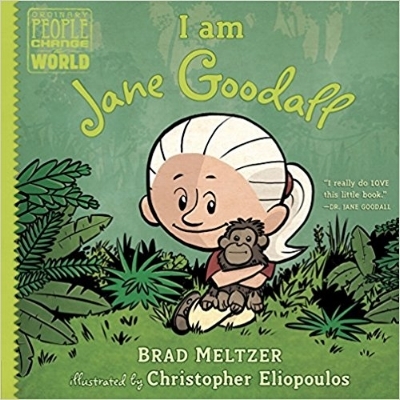
I Am Jane Goodall by Brad Meltzer illustrated by Christopher Eliopoulos

Meltzer’s series of biographies are written and illustrated in the style of a graphic novel.  Readers will learn about Goodall’s fascination with animals as a child, following her on her journey toward her famed work with chimpanzees.  This book is perfect for children who love animals, adventure, and following their heart!


Georgia’s Bones by Jen Bryant

Even as a child, Georgia noticed things about her world that others didn’t.  She looked not only at the shapes of things, but the spaces between them.  She was always picturing what might lie beneath the obvious, and honed in on details that others missed.  It was this unique perspective of the world that led her to be one of the most celebrated artists in history.


Ella Fitzgerald: The Tale of a Vocal Virtuosa by Andrea Davis Pinkney, illustrated by Brian Pinkney

This story is narrated by fictional “Scat Cat Monroe”, a music appreciating feline that takes readers through the story of Ella Fitzgerald’s rise to jazz stardom.  The writing itself is organized into tracks on an album, rather than into chapters, and the illustrations are gorgeous.


Sonia Sotomayor: A Judge Grows in the Bronx/La juez que creció en el Bronx by Jonah Winter, illustrated by Edel Rodriguez

This book narrates Sotomayor’s childhood in the Bronx and her path toward becoming the first Latin American Supreme Court justice.  Readers learn how hard work and dedication can ultimately lead us to great things.  As a bonus, each page is written in both english and spanish.


The Librarian of Basra: A True Story From Iraq by Jeanette Winter

Alia Muhammad Baker was a librarian in Iraq.  The onset of war led her to seek any means possible to protect the valuable resource that was her community’s collection of library books.  With Baker’s determination, courage, and the support of some friends and neighbors, she was able to do just that.


Celia Cruz, Queen of Salsa by Veronica Chambers illustrated by Julie Maren

“She looked like a girl and talked like a girl, but everyone who met her agreed, she sang like a bird.”  This lovely book tells the story of Cruz’s childhood in Havana, and how she became one of the most recognized salsa singers of all time.  


The Girl Who Ran: Bobbi Gibb, The First Woman to Run the Boston Marathon by Kristina Yee and Frances Poletti, illustrated by Susanna Chapman

Sometimes, for the sake of progress, rules must be broken.  Sometimes listening to our hearts is more valuable than listening to the expectations of others.  This tale reminds readers to question why we have rules that hold back some people, and how the bravery of one can change the rules for all.


May this month’s reading be filled with bravery, adventure, and a healthy dose of reverence for women who have paved the way!

Embracing Diversity from a Young Age

034-IMG_4465.jpg

We all want our children to be be peaceful and accepting of others.  It is never too early to start teaching them to embrace diversity.  Too often, we falsely imagine that young children do not notice what makes them different from each other.  They do notice, and instead of waiting for them to ask questions or gather information on their own, we can be proactive about diversity education.  We can teach them that while there are so many ways humans can be different from each other, those differences (and our similarities) should be celebrated.

Setting an Example

Our children constantly look to us as models for their own behavior.  We can take the lead by embracing the values we hope to see in our children.  This starts by educating ourselves.  We can learn about different cultures and groups of people.  We can confront our biases and consider how they might be coloring our view of the world.  We can read about current issues in social justice and decide what responsibilities we have to make the world a more equitable place for all people.   

Read Together

There are many quality books written for children about this very topic.  Here are just a few... (click on the book images to go to the book's page on Amazon)

Last Stop on Market Street, by Matt de la Peña & illustrated by Christian Robinson

This book was the 2016 Newbury Medal Winner, and also received a Coretta Scott King Illustrator Honor and a Caldecott Honor.  A little boy rides the bus with his grandmother after church each Sunday.  His grandmother’s laugh guides him through the journey as they meet a wide variety of people.

The Ugly Vegetables, by Grace Lin

Award-winning author Grace Lin wrote this charming book for young children.  A daughter helps her mother in their garden, but becomes dismayed when she sees it is fully of “ugly vegetables” while the neighbors are all growing flowers.  The soup her mother makes and the gathering of neighbors teaches the value of differences.

The Sandwich Swap, by Queen Rania al Abdullah & Kelly DiPucchio, illlustrated by Tricia Tusa

Salma and Lily are best friends.  One day, a conflict arises over their sandwiches at lunchtime (pita with hummus, and peanut butter with jelly).  The food that threatens to end their friendship ultimately binds them together again.

The Family Book, by Todd Parr

Parr’s books are simple, but his bright illustrations and straightforward story are perfect for young children.  The Family Book highlights many different types of families, and ends by saying, “There are lots of different ways to be a family.  Your family is special no matter what kind it is.”

You Hold Me Up, by Monique Gray Smith & illustrated by Danielle Daniel

Smith’s website states that she “wrote You Hold Me Up to prompt a dialogue among young people, their care providers and educators about reconciliation and the importance of the connections children make with their friends, classmates and families.” (link: http://moniquegraysmith.com/writing/ )

Experience Together

There are so many ways a family can have fun together while encouraging curiosity, understanding, and empathy with different groups of people.  Think about the activities your family already enjoys, and find ways to make those activities learning experiences.

Do you and your family enjoy cooking?  Try whipping up new recipes from different cultures around the world.  Preparing and sharing a meal is one way we all bond, so why not explore other cuisines?  

Many cities and towns hold festivals celebrating the cultures of the various people who live there.  Music, food, traditional crafts, and performances can be a fun way to learn about another culture.

Does your family love music?  Visit your library to borrow CDs or find some audio clips online.  Music from around the world can inspire your child to sing and dance.  Grab any instruments you may have on hand (or make your own!) to join in on the fun.

Share Your Own Experience

Each family has its own unique history, heritage, and traditions.  Teach your child about their ancestors, where your family originated, and what makes your family special.  Offer to share these traditions at your child’s school.  Teachers love to have parents come in for special presentations.  Whether you teach the children to prepare a snack, sing a song, or read them a traditional story, every new bit of cultural learning gives them a broader view of their world.  

Let’s open up the world for them, so that they may share it peacefully with each other.