5 Ways to Support Independence as They Grow

montessori-independence.jpg
The child’s development follows a path of successive stages of independence, and our knowledge of this must guide us in our behaviour towards him. We have to help the child to act, will and think for himself. This is the art of serving the spirit, an art which can be practised to perfection only when working among children.
— Dr. Maria Montessori

It’s nothing new to hear us advocating for children’s independence. After all, it’s a cornerstone of our Montessori practice, and we believe one of the most important keys to fully educating a child.

It’s also no surprise to consider that independence looks vastly different depending on your child’s developmental stage. When we meet a child where they are and offer them opportunities to do things for themselves, it’s simply amazing to encounter what they are capable of.

Here are a few ideas that parents can consider when aiming to support their child’s independence.

Infants: Freedom of Movement

Our sweet newborn babies don’t ever stay little for long. Before long they are working to roll over, scoot, sit, crawl, stand, and even walk. These milestones are so exciting as they happen, but in hindsight, they seem to zip by in a flash.

Figuring out how to move independently is one of your baby’s most important tasks. They are driven to do so instinctually, and as adults we can be there to support this work. 

One choice that some parents make (please know we understand it’s not a perfect choice for every family) is to give their infant a floor bed. Rather than being confined to a crib, this allows your growing baby an opportunity to independently explore their environment when they wake in the morning. Using a floor bed means creating a bedroom environment that is completely safe and developmentally appropriate for your baby to explore independently; consider laying soft carpet on the floor and having a low shelf with simple toys they can access. Many parents find that rather than awaiting their child’s cries to be lifted from a crib in the morning, the child instead spends quite a bit of time moving and playing quietly.

Another big tip we have for parents of infants: when your child is learning to walk, they’re not very good at it. The only way for them to get better is to practice, and they have a strong drive to do so as much as possible. Although it may force us as parents to slow down and plan extra time into our schedules, consider relying a little less on carrying and strollers (although they certainly have their place in our routines) and a little more on giving your child time to use their own developing skills.

Toddlers: Dressing

This section is perhaps the most fun in this entire article. Toddlers learning to dress themselves is not only an important skill, but it is, frankly, adorable.

Start simple and give limited choice. Let your child choose between two different shirts, then show them how to go about putting it on. In the beginning, they will need lots of help, but as time goes on resist the urge to insert their tiny hands into the sleeves and give them a chance to figure it out. They will. It will take some time and many unsuccessful attempts, but each time they try they will get closer to being able to do it themselves.

As time goes on, your child might select their whole outfit. Another practical tip is to choose (or have them help you choose) a week’s worth of outfits ahead of time. Hang enough low hooks on your child’s bedroom wall and allow them to choose their clothing and get dressed each day. As with everything, this will be slow going in the beginning, but in the long run the independence gained will not only save time but instill critical feelings of confidence.

After taking the above mentioned steps, all that’s left to do is sit back and enjoy the interestingly paired items of clothing and the smile on your child’s face.

Primary-aged: Helping Tasks

Shocking but true: between the ages of 3 and 6, kids LOVE chores. By helping them learn and engage in important daily tasks while they are young, you are instilling habits that will last a lifetime.

Our children watch us go about our daily lives and they want to be a part of what we do. They want to be like us, so when they see you sweeping the floor, they want to help. From dusting, to laundry, from cooking to caring for pets and plants, your child wants in on the fun. Let them!

There are countless tasks that young children are fully capable of completing (or at the very least, assisting with). Rather than list them here, we share some general guidelines to help the process along. 

  • Follow your child’s interests. They will let you know, whether by actions or words, what they want to try.

  • Carve out time to slow down and let this work happen. Will it take them ten times longer to sweep up their own spill than if you did it for them? Absolutely. But putting the time in now is well worth it in the long run.

  • Embrace mistakes. Teach them to embrace mistakes. Mistakes are how we learn.

  • Learn to view chores as contributions we all make to our families. By working together (children included), everyone is part of a team. With this mindset, your child will take great pride in their work.

Elementary-aged: Trust Moments

This step varies significantly from child to child and in each family. Your family’s values and comfort level, combined with your child’s individual development and abilities should be carefully considered.

During the elementary years, your child is ready to start setting off on their own in tiny ways. Letting them do so can feel thrilling for them, yet completely nerve-wracking for us. Take it slow and talk a lot about what each added freedom entails.

Basically, you’re finding small ways you can give your child opportunities to be safe, trustworthy, and independent. Some examples: 

  • Playing alone in the backyard - Discuss clear boundaries and expectations. In the beginning, you may be watching like a hawk from the kitchen window, but in time this will become a great option for your child as well as for you.

  • Retrieving items at the grocery store - Start small by asking them to grab something within your line of sight, but gradually ask them to retrieve an item from one or two aisles over. As a bonus, this will speed up your shopping trip!

  • Walking the dog/getting the mail - Similar to playing alone in the yard, set clear safety rules and talk about “what ifs”. What will your child do if they hear a car coming? What if the dog tries to chase a squirrel? Ask these questions repeatedly until you feel confident they fully understand.

  • Going to a friend’s house - This may not be something new, but as they get older children will want to spend more time with their friends. Again, talk about how they might handle various situations, but also discuss how they might contact you if they need to.

  • Babysitting - In the beginning, this might mean your 8-year-old reads to their 4-year-old sibling while you cook dinner. By the end of the elementary years, however, your child might actually be ready to take on some real babysitting jobs.

Adolescents: Exploring Interests

As your child leaves their younger years behind and inches toward adulthood, they will naturally begin to explore different interests as they figure out who they are and what they like. All they really need from us is to support this exploration. This will range significantly, from hobbies to potential careers.

We spend many years caring for our children when they are young and giving them every advantage possible so that they may grow to become successful and happy adults. Nothing can quite prepare us for this eventuality, though. And what we imagine our child blossoming into can be very different from the future they imagine for themselves. In these moments, we like to remind ourselves that we have worked hard to guide our child’s independence. They are individual human beings capable of making hard decisions. They will make mistakes, but they will also surprise us.

Our children often turn to us for guidance and support throughout adulthood. Perhaps the greatest feeling of all is to step back and appreciate that this unique human being, who steps out to make their mark on the world, let us hold their hand for a few years while they figure out how to do it.

A Note of Gratitude on Montessori’s Birthday

IG image 30August2021.jpg

Dear Dr. Montessori,

Tomorrow, August 31, 2021, marks 151 years since you were born.

The world is a very different place today than it was then. I wonder if you ever contemplated your own early days and how your world shaped you. You once said: “The greatness of the human personality begins at the hour of birth.” Would anyone have guessed that baby Maria would eventually become one of the most influential educators of all time?

Your own life stands as an example of what a person can achieve under the right circumstances. Your work created a foundation on which others have been able to support generations of children finding their own unique paths through life.

So this is a letter of gratitude.

Thank you for having the courage to do what your heart pulled you to, even if it meant being the first and traveling down an uncomfortable and challenging road. During a time when women were largely expected to stay at home, and were certainly not permitted to attend medical school, your persistence changed the system.

Thank you for having the wisdom to blend your scientific perspective with the empathy that all humans deserve. You noticed that children discarded by society had far more potential than they were given credit for, and you worked tirelessly to prove your theories and change yet another system.

Thank you for investing in communities that had high needs. Your very first school was opened in a poor neighborhood in Rome, and your work with the children and families there had amazing ripple effects that no one would have predicted.

Thank you for showing children the respect they so deeply deserve. It was completely novel at the time, and still is in many communities. But your ideas spread quickly and effectively, especially once people saw what life could be like if we just shifted our perspectives a bit.

The sole purpose of the teacher used to be to stand before their students with a definite air of authority, lecturing prescribed information that the students were meant to memorize. You changed all that. Your teachers are not enforcers and information dispensers, they are guides. They stand beside children and lay a path out before them that the child may willfully wander down and gather information for themselves. You created a system of empowerment for children, and a more meaningful (and much more effective) way of learning.

You were not a perfect human being (as none of us are). Your flaws lie in the memories of the people who knew you as well as in the pages of biographies about you. They are a good reminder that even the most positively influential people can make mistakes. We can all make mistakes, and hopefully, we will grow and change with time and experience. This is a lesson we must all share with our children.

You taught us to observe and to stay curious. We encourage children to do this with the world around them, but as adults it’s our responsibility as well. Learning should never end, and we should observe to learn about the children in our lives, but also continue to stay curious about the world ourselves. It takes a lot to unlearn previous assumptions we have gained over a lifetime, but it’s a worthwhile endeavor.

In Education and Peace, you said: “An education capable of saving humanity is no small undertaking; it involves the spiritual development of man, the enhancement of his value as an individual, and the preparation of young people to understand the times in which they live.” The timelessness of this idea is just as applicable today as it was then.

It seems fitting that your birthday happens to fall right around the beginning of a new school year. Right around the time when we all find ourselves reflecting on what we have learned in the past and also on what lies ahead. Just as with the history lessons we teach our elementary students, it’s helpful to honor those who have paved the way for the work we are doing now.

So once again, thank you. Your work continues on, touching the lives of people all around the world, generation after generation. We imagine it will continue to do so long into the future.

With deep gratitude,

The Montessori community

22 Important Montessori Terms

montessori-glossary.jpg

Montessori education can feel like a whole separate world of its own sometimes. The classrooms look different, the methods are definitely different, and even the language is a whole lot different from what you might hear elsewhere.

We decided it might be helpful to highlight some terms that may sound foreign to folks who aren’t very familiar with Montessori. Some of the terms are completely unique to us, and some are just used in unique ways in the context of Montessori. Are there any you think we’ve missed? Let us know!

albums: A series of binders filled with lessons and illustrations that are created by Montessori guides during their training. They are typically organized by subject and contain all of the specifically-prescribed steps and methods for presenting materials and lessons to children. Even the most experienced guide refers back to these, and they are invaluable.

Casa dei Bambini: In Italian, this translates to Children’s House. This was the name of Dr. Maria Montessori’s first school which opened in Rome in 1907. Casa is also the name sometimes used to describe the Montessori program of education for children aged 3-6 years.

concrete (versus abstract): This refers to a type of learning and thinking experienced by younger children. When a child explores a skill by using specially designed materials, they are likely understanding the skill concretely. As they deepen their understanding and are able to comprehend the skill without the use of materials we refer to this as abstract. For example, a six-year-old using the stamp game to add numbers into the thousands is working concretely, but an eight-year-old who completes the same calculation on paper without materials is working abstractly.

control of error: Montessori materials are usually autodidactic, meaning the child is able to teach themselves. Most materials are designed with a control of error, or some type of mechanism that allows the child to recognize on their own whether they have made a mistake. This allows for immediate correction and a sense of empowerment for the child. Your child’s guide can show you many examples of this.

 cosmic education: The Montessori elementary curriculum is based on the concept of cosmic education. Based on the developmental needs of children aged 6-12 years, as well as the Montessori aim to develop citizens that are more deeply connected with the earth, many of the lessons and units of study teach the interconnectedness of all things. This allows children to have a framework in which they may discover themselves and their place in the universe.

cultural subjects: This refers to the studies of science, history, and geography.

Erdkinder: A German word meaning children of the land, Dr. Maria Montessori coined this term as a name for the adolescent program, as she recognized their need to engage in physical work and envisioned the program taking place on a working farm.

false fatigue: While anyone observing a Montessori classroom during the morning work cycle (see work cycle for more) will notice deep engagement by the children, there is often a noticeable shift around 10:30. At this time it appears that the children have lost all focus and the room becomes a bit more noisy. Rather than redirecting the children, if the adults allow this period to occur, the children are usually able to independently re-engage after a short time.

grace and courtesy: A specific area of study during the primary (ages 3-6) years, this aims to teach children how to appropriately interact with others. While they receive formal lessons during these years, the work is continued (although utilizing a more flexible format) throughout their Montessori education.

guide: the term used for a Montessori educator, as it more accurately describes their role.

indirect (versus direct) preparation: Learning activities that lay a foundation for future skills without explicitly teaching them are considered indirect preparation. For example, three- and four-year olds in our programs use a small tool for pin punching (perforating pieces of paper into specific shapes) that allows them to develop their fine motor skills and finger grip in preparation for the physical act of writing.

isolation: Isolation of a skill means that the child is meant to focus solely on one specific goal. If a five-year-old is asked to write a story, the guide’s focus would not be on correcting for conventional spelling, but rather to encourage their expression of ideas in written form.

Nido: In Italian this means nest, and it is the traditional Montessori name given to an infant program.

normalization: Once a child has had time to adjust to a Montessori environment, they begin to joyfully select their own work, stay engaged, and interact peacefully with others. When they achieve this state we refer to the child as normalized.

parallel play: Children under the age of six tend to be more focused on their environment than on their peers (which shifts dramatically during the elementary years). When young children work or play beside one another while actually focusing on their individual pursuits, we call this parallel play.

planes of development: After years of observing children with the perspective of a scientist, Dr. Maria Montessori noticed clear patterns and characteristics. While acknowledging the definite variation between individuals, she organized her findings into four planes of development, and based her educational methods on them.

practical life: This subject is given just as much weight in Montessori schools as we give to traditional academic subjects like math and language. Practical life can include teaching children to care for their environment, others, and themselves. Lessons are wide ranging; our students nurture plants, wash dishes, practice greeting others, sweep spills, and prepare food.

prepared environment: The term we often use in lieu of “classroom”, our guides dedicate hours of careful and intentional adjustments so that the space serves as a teacher for children. In Montessori education, one way independence is achieved is by preparing an environment in which the children are able to care for and learn by themselves, with less direct dictation from adults.

sensitive period: Dr. Montessori noticed and theorized that there are certain periods during a child’s development during which they are primed to engage in specific skills. Once that time has passed, learning such skills is not impossible, but the natural drive to do so declines, making mastery much more challenging.

sensorial: An area of study during the first plane of development (newborn to age six), in which children work to refine a wide variety of senses. There are Montessori materials that have been specifically developed to aid in this process.

work: In Montessori environments, the lines between play and work are blurred. We tend to view a child’s actions through the lens of development and learning, so that even the most seemingly mundane of tasks serves an important purpose and is considered work.

work period/work cycle: This is the term given to a dedicated period of time during which Montessori students work independently and receive individual and/or small group lessons with a guide. Depending upon the school and the age of the children, it can range anywhere from two to three hours. Dr. Montessori believed such a lengthy stretch of time was critical to allowing children to become deeply engaged in their work.

New Class? Here’s What to Expect

montessori-back-to-school.jpeg

Welcome! Whether your family has been part of our community for years or you’re just joining us for the first time, we look forward to spending the school year together. After the past year and a half, everyone is looking forward to a fresh start, with a return to some semblance of normalcy.

Some children will be Montessori students for the very first time. Others are moving up to a new level. Either way, it’s helpful to know what’s coming, and to have a little information regarding what to expect. Scan through the headings below to find which section or sections apply to your child.

If you’re brand-new to Montessori

During the application process and through your own personal research, you’ve probably learned a bit about what makes Montessori schools different from more conventional settings. The journey you find yourself beginning will be awe-inspiring, as many seasoned Montessori parents will tell you.

Montessori education has been around for more than a century, and so much of what we do is grounded in what works and what has worked for generations. Still, as a rule, educators are curious people who never stop learning. We are always seeking out new ways to make the experience more enriching for the children in our care. We observe, we ask questions, and we try out different methods that have worked well for others.

We encourage you to try the same. There is so much to learn about this amazing educational approach, that it can’t possibly be done all at once. This blog is a great place to check-in and read helpful information. Your child’s guide, as well as other Montessori parents, are excellent resources to turn to. As a school, we do our best to facilitate community-building events as well as parent education offerings that will help answer your questions - although this type of learning usually leads to even more curiosity!

Thank you for joining us. We are so glad to have you with us.

New to Children’s House?

Montessori primary environments are magical places. This is, after all, where it all began with the opening of Casa dei Bambini in Rome in 1907. Just how is this setting any different than other preschools or kindergarten classes? 

Right away you will notice the emphasis on personal independence. We encourage even our youngest primary students to walk to their classroom by themselves (once they settle into the routine), remove and hang their coat by themselves, and change their shoes by themselves. You’ll notice the work continues in subtle ways as their teacher meets them at the door, makes eye contact, greets them warmly and intentionally, and guides them to do the same.

In the classroom, your child will be free to explore and learn on their own terms. Many folks are surprised this does not translate into children running wildly around the room. The reason is that the freedom we offer is bound within carefully constructed limits. Yes, a child may choose their preferred work from the shelves, but we only put out work that we want them to be doing. Yes, they may stop to have a snack whenever their body tells them it’s time, but they are taught to clean their own crumbs and wash their own dishes.

Some new-to-Montessori families wonder what we do if a child wants to focus on the same work or area of the classroom over and over again. Short answer: we let them. Our belief, which has been confirmed countless times with experience, is that if a child is repeatedly drawn to something it’s because they have something important to learn from it. Once they have exhausted that need, they will eventually move on. We have learned to remove our own expectations of how long it should take or what trajectory an individual’s learning should follow.

One important Montessori mantra to keep in mind: follow the child. We let this guide so much of what we do, and it leads to amazing results.

New to Lower Elementary?

There is a definite shift in children around age six, which is why Dr. Montessori determined this to be the beginning of the second plane of development. You will notice your child is suddenly more imaginative, social with their peers, physically a bit clumsy, and so very eager to learn everything they can about the world (and universe) around them.

So, we keep all these things in mind in the lower elementary environment. Some highlights:

  • Lessons are more often given in small groups (as opposed to individually when children are younger).

  • Learning and work is based on teaching important basic math and literacy skills as well as a globally-focused foundation in science, geography, and history.

  • The classroom is arranged so that children may work together with their peers.

  • New expectations are established to ensure that children are engaging with academic content in all areas. Teachers meet and converse with students to share tools, strategies, and give suggestions to help them achieve goals.

  • We give children BIG work, which is what they crave. Projects stretch out over days and weeks, and materials stretch across the classroom floor.

New to Upper Elementary?

Sometimes, upper and lower elementary classes are combined, as children aged 6-12 are all within the second plane of development. When schools are able, they do tend to separate this age group into two subgroups, as there are enough differences to make this worthwhile.

Sometime during the upper elementary years, your child will begin to stop using the gorgeous wooden Montessori materials. This is because after years of work, they have made their way to abstract learning. They no longer need concrete items to manipulate with their hands in order to understand concepts. This isn’t to say they never do anything hands-on, it just starts to look a bit different.

Upper elementary children have also had a few years to navigate social structures with their peers. They have had practice forming friendships and working through conflict. They have a better sense of who they are and how to interact with others. This brings a new sense of calm that was not seen when they were younger.

New to Middle and High School?

As with lower and upper elementary, all adolescents (middle and high school) are considered part of the same plane of development but are separated when a school is able or only offers middle school.

During this first half of adolescence, learning is still very much integrated. There are differentiations between subjects of course, but there are a multitude of ways in which the learning overlaps.

At this age, children begin to crave independence while also leaning heavily into peer relationships. They want their parents to be there but they also push them away. They crave new experiences but aren’t always able to make sound decisions due to their developing brain. To allow for all of these tendencies while also supporting growth, adolescents often meet together as a whole group with their teachers to discuss work, social dynamics, and a multitude of other important topics.

Social justice becomes more important to children at this age, and so our curriculum supports growth and learning that allows them to become active and engaged members of their communities.

One last very important element to note is that Dr. Montessori emphasized children at this age needing to work with their hands on something real and of value. This traditionally was working on a farm, but sometimes translates to microeconomy experiences, guiding students through running a business of their own.

Other aspects of Montessori middle and high school programs include:

  • Academics are studied more in-depth, and sometimes without quite as much integration as adolescents delve into more specialized content.

  • Service to the community is emphasized, and students take on powerful roles in this work.

  • Sometimes students are able to explore individual interests and participate in internships or similar programs.

  • Lengthy and complex culminating projects are completed over time, giving students a way to show their learning and a sense of what may lie ahead. This is an opportunity to practice practical life skills that are truly applicable to adult life.


Questions? Comments? We’d love to hear from you. Please feel free to reach out with your thoughts.

Let’s Talk Lunch

Montessori-lunch.jpg

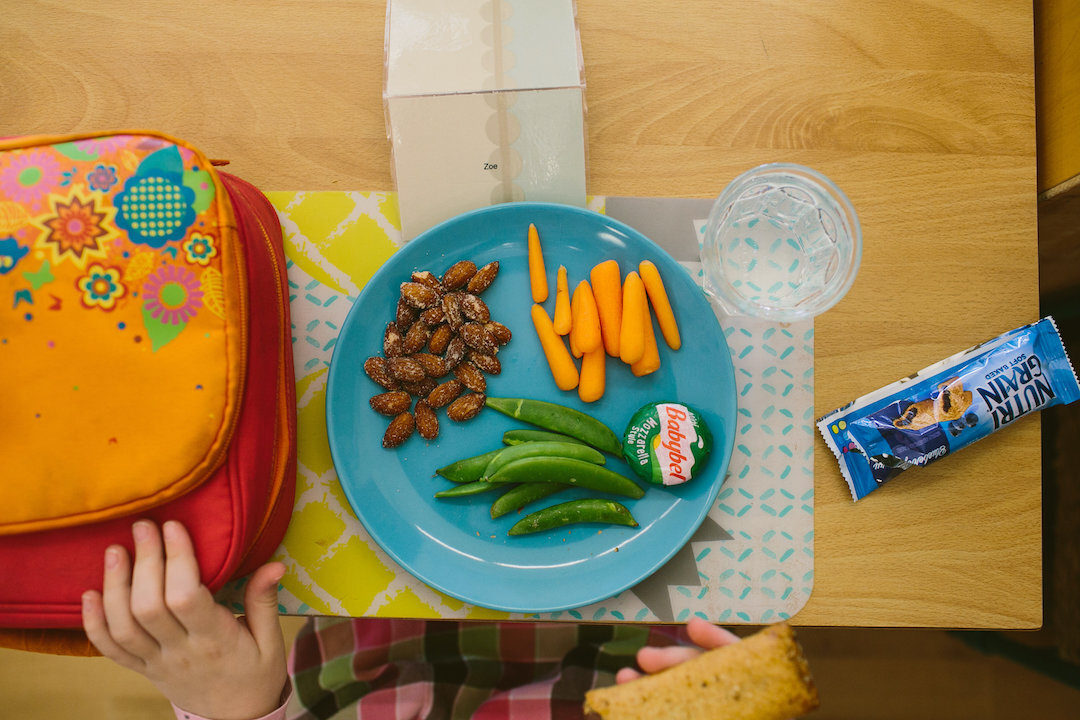
The beginning of a new school year is nearly upon us. For many families, this means packing a daily lunch for your child to take along with them. Whether this is your child’s first year doing so, or you’re just looking for some fresh ideas to keep things simple, healthy, and fun, read on.

What lunch is (and isn’t)

Lunch is an opportunity for your child to refuel and nourish themselves in the middle of the school day. They’re working hard, growing lots, and eating good food will keep them feeling good through the afternoon.

Lunch doesn’t have to be Pinterest-worthy. (Although it absolutely can be if you’re into that.)

We have all stumbled upon those photos of cute bento boxes with flower-shaped cucumber slices. They really are adorable. But are they necessary? Let this serve as your reminder that lunches for your child can be lovely and ornate, or they can be lovely and simple. Both will be appreciated. Both will be gobbled up. Both will serve their purpose.

We are not here to shame the parents who do create these miniature culinary masterpieces. We just don’t want everyone to feel the pressure to do so.

Nutrition simplified

Raise your hand if you’ve ever experienced the following: Your child eats nothing but peanut butter and strawberry jelly sandwiches for three months straight. You decide to be prepared and buy several jars of the coveted jelly. The next day, they declare they don’t eat peanut butter and jelly (perhaps even insisting they never did like it), and they decide they are ready to explore new foods.

We’ve all been there.

Even the most adventurous eaters get into ruts sometimes, then change their habits seemingly on a whim. It’s normal and will probably happen a number of times as their tastes develop.

The pbj scenario does serve as a helpful reminder, however. Kids can have their nutritional needs met rather simply. Of course, we are not dieticians, and your best resource for information is your child’s pediatrician, but there’s room for a balanced diet even when it comes to more “selective” eaters.

When putting together a lunch, we like to consider the following: Does the lunch include some protein, fruits/veggies, carbohydrates, and healthy fats? If so, it’s a well-balanced meal. Even that peanut butter and jelly sandwich checks off all the boxes. And there are countless ways of providing what kids need.

Here’s a great list in case you’re looking for one: The Essential School Lunch Grocery List

Keeping it green

We encourage families to utilize reusable containers whenever possible. We know there are times in all of our lives when convenience wins out over being green, but reducing single-use containers is one important way we can all care for the planet our children will inherit. If you’re reading this article, we know you could be anywhere on the spectrum; some folks rely heavily on prepared and prepackaged foods, while others make their own hummus out of the bulk chickpeas they cooked and soaked. Most of us are somewhere in the middle.

We have found the key is making one small change at a time, watching it become a habit, and then taking on another small change when you’re ready.

A few ideas (links are for examples; many of these types of products can be found in stores nearby):

Keep in mind - the greenest option is to use what you already have. If you choose to purchase items for packing lunches, consider selecting products that will last for many years.

Utilizing little helpers

You probably won’t be surprised to hear us suggest having your children make their own lunches, specifically once they reach elementary. This involves a little teaching and learning in the beginning, but in the long run, your child will become more independent and you will have a little more time to focus on other things.

Start by modeling. Have your child join you in the kitchen as you prepare their lunch and show them what to do. Slowly and deliberately go through each step in packing a lunch so they can have a good example of what it looks like.

Next, make lunch together. Have them join you in the kitchen again, but while you make a sandwich they can be chopping up some fresh vegetables. Team effort!

Ask your child what they would like to pack. Having them participate in the planning and shopping makes the task a fun activity for them and gives them more ownership over creating a healthy meal. Teach them what a balanced lunch needs and go over examples of what that might look like.

Lastly, let them do the work! Each of these steps could take a matter of days or weeks, depending on your child. Keep it fun, notice whether they need any more or less support, and revel in their ability to help care for themselves and contribute to their family.


We hope this article has given you some inspiration! Do you have any more ideas or suggestions for other families? We’d love to hear from you.

Establishing the Flow: Your Guide to a School Year Started Off Right

IG image 2August2021.jpg

It’s that time of the year again. Over the course of the summer, and even with the best of intentions, some of our routines tend to dissolve and give way to relaxation and adventures. Which is great!

The school year is creeping closer, however. Now is the perfect time to consider what your family will do to prepare for the transition back.

Unless this is your child’s first year heading to school, you’ve probably been through and considered all this before, but it’s always nice to have a little refresher. Read on for our tips to make the start of the school year as smooth as possible for everyone.

Sleep

Perhaps the most important bit to consider, your child’s sleep schedule is critical to their success. There are three elements to focus on: how much sleep your child needs, when that sleep should take place, and the quality of sleep.

So just how much sleep does your child need? It depends on the individual, but age plays an important role. Here are the AAP's recommendations on how much sleep children should get within each 24 hour period. (Times include naps.)

12 - 16 hours

11 - 14 hours

10 - 13 hours

9 - 12 hours

8 - 10 hours

4 months - 1 year

1 - 2 years

3 - 5 years

6 - 12 years

13 - 18 years

Once you know how much sleep your child should be getting, and what amount works best for them, figuring out bedtime is as simple as counting back, considering factors like when you need to leave in the morning and how long it takes to get ready.

Is their desired bedtime nowhere near their current bedtime? Take the transition slowly. Start by having them go to sleep just 15 minutes earlier, then another 15 minutes earlier every few days until you reach your goal.

As for quality of sleep? That’s all about creating a relaxing environment. A darker, cool room works best, and establishing a regular and soothing bedtime routine will help them drift off to dreamland easier. Keep the routine the same each night, whether that includes a warm bath, reading, or even using a little lavender-scented spray.

Schedule

We touched on this above, but creating a regular schedule is really important. When children know what to expect, they are much better equipped to take on the day. There will certainly be moments and days when routines are interrupted, but if we prioritize them most of the time, children benefit greatly.

Every family is different, but consider what you want your morning to look like. Some questions that will help guide you in creating a schedule:

  • What time should you leave the house to arrive comfortably at school/work?

  • What tasks could be done ahead of time (perhaps the night before) to alleviate the morning rush?

  • What is your child able to do independently, and what will they need help with?

The same basic concept goes for evening routines as well. As we mentioned in the section on sleep, a focus on calming rituals prepares your child’s mind and body for a restful night of sleep. If the steps remain the same night after night, bedtime will only become easier as the weeks pass by.

Emotions

It is totally normal for children (and even adolescents) to experience big emotions as back-to-school approaches. They may feel excited, anxious, apprehensive about being apart from you, as well as a wide range of other thoughts and feelings.

If your child feels distraught at all, it can be really hard for parents to see. For some of us, the natural reaction is to do whatever we can to minimize the concerns and help them move on. The very best thing we can do, however, is to acknowledge their feelings. When you notice behavior that is reflective of emotional tension, ask them how they’re feeling. If they’re very young, help them name their emotions. Acknowledge that these are normal ways to feel.

Validation is key here. Should we ease their fears a bit by talking about what to expect and addressing their concerns? Of course! But those talks may not erase their worries, and that’s okay. Let them know you recognize their emotions and that it’s okay to feel however they feel.

Parents can experience overwhelming emotions at this time, too. You may surprise yourself! If you’ve been able to spend extra time with your child all summer long, the thought of so much time apart can be hard (or not). Perhaps your child is starting in a new class or is beginning their final year and it has you thinking about how quickly they are growing up. Think of it as a great way to model what to do in the face of challenging feelings.

Expectations

Even with careful planning and the best of intentions, nothing ever goes quite as planned, especially when it comes to our children. Maybe the first day of school is creeping closer and you’re still struggling to get the kids into bed before 9:00. Maybe your eight-year-old is super nervous about starting at a new school. Maybe it’s a challenge to balance your own work schedule with morning drop-off.

Whatever you do, expect the unexpected. Know that we are here to support the children and families in our community. The first couple of weeks at school may be bumpy, they may be smooth, or (most likely) they’ll be somewhere in between. We hope you and your child are looking forward to the start of a new year, and we can’t wait to see you all again!

5 Things Montessori Parents DON’T Need to Do

IGimage 26July2021.jpg

Parenting. It’s one of the most incredible journeys available to the human experience. But in recent decades, it’s become a little bit more stressful. Between our evolving culture and the constant availability of information via the internet, parents are constantly bombarded with suggestions, studies, and opinions about what they must do in the best interest of their child.

Of course, we all know there isn’t just one perfect way of parenting. We all need to find our own way and the best way for our child. We know that it’s impossible to take all the advice, but it can still feel pretty overwhelming.

This article? It’s the complete opposite.

We want to let you know that it doesn’t all fall on the parents. There are plenty of things it’s totally fine (and actually a great idea) to let go, or at least fade in importance a bit. So, without further ado, here are five things Montessori parents do not need to do:

1. Purchase Montessori materials

We love the enthusiasm. It’s so beautiful when new-to-Montessori families want to go all-in and create a mini classroom at home. We love the thought behind it! We do think Montessori can translate into the home environment. Just...not with the classic materials.

Montessori materials should not be used in the home without a properly trained Montessori guide. There are two main reasons for this. First off, these materials were created to be used in a specific sequence and in very specific ways. There are special ways to present the materials, and teachers learn all of this when they attend their Montessori training courses.

The second reason is - there are so many other more enriching ways Montessori can be applied in the home! We encourage parents to learn about the philosophy and find ways it naturally fits into your everyday life. There’s no need to spend lots of money on fancy wooden learning materials. Let the materials remain in the classroom environment and allow the basic ideas of Montessori to trickle into the home and reverberate into the rest of the child’s life.

2. Focus on academics

Let us be totally clear: we are in no way saying that academics don’t matter. Quite the opposite! We know they matter.

In a high-fidelity Montessori school, the curriculum and methods support a very rigorous academic program. Children will be mastering advanced skills at younger-than-average ages. You will likely be astounded by what you see your own child learning.

It’s just that we don’t think that should be the only focus of school.

We are confident that our students will have appropriate and enriching academic opportunities, and they will also be held to appropriate expectations. We also know that learning is very much an individual process. It’s not linear, there will be plateaus, and there will definitely be unexpected twists and turns.

We trust that the child will arrive at the destination when they are supposed to. We also know that along the way we have many other important tasks: to support their social and emotional growth, to expose them to creative and artistic pursuits, to ensure sufficient time spent in nature, and to understand what it means to be a peaceful member of a community.

3. Hesitate to communicate

Throughout your child’s academic career, you will have lots of questions. That’s great! Regardless of what’s on your mind, we want parents in our community to always feel comfortable talking to us.

Teachers are busy people, but they are completely dedicated to the well-being of their students. So when they see an email, note, or voicemail from a parent, rest assured that they’re eager to get back to you.

We believe that education is a three-way partnership between the child, their parents, and our guides. Communication is the key to everything running smoothly.

So the next time you’re unsure about whether or not to reach out, please do! We are here to help.

4. Compare children

This is such an easy trap to fall into! Parents love to talk about their children, and we often find ourselves chatting with other parents. This inevitably leads us to notice what other people’s children are up to, and our minds can sometimes (naturally) compare that to what our own child is doing.

We all know this already, but it’s worth the reminder. Don’t compare your child to others! Child development varies widely, so what sometimes seems concerning to parents isn’t at all.

That child that started reading earlier than all the others? That doesn’t mean they’ll turn out to be a better reader than anyone else.

Your son is still wetting the bed at night but your daughter stopped years before? It’s completely normal.

Your child’s best friend is advancing quickly in math, while yours is frustrated at not being able to do the same work yet? Use this as an opportunity to explore the beauty of differences between people.

If we follow the child, we allow them to become the incredible, unique individual they are meant to become.

5. Homework!

One big perk in Montessori schools? There’s no homework!

Rather than spending hours struggling through Common Core math standards-based worksheets each night, you can play a board game together. Or go for a walk around your neighborhood. Or encourage your child to explore their own interests.

Our students work so hard throughout the regular school day, we see no need to continue that work in the evening at home. If adults are supposed to seek out a healthy work/life balance, shouldn’t it be the same for children?

Reading together each night? A great idea - and a way to bond. Working together on a long-term project? Yes! It’s fun, educational, and stress-free. Beyond that, we encourage you to embrace the benefits of your child not having any homework.

Are there any items on this list you think might be difficult to let go of? Are there any more we should add? Let us know what you think.

Food Preparations - Home Edition

chores.jpg

Food preparation as a skill is an integral element of any Montessori classroom. While specific lessons feature most prominently during the primary years, elementary and adolescent teachers find ways to teach children these important skills throughout the year as well.

Learning one’s way around the kitchen is a skill that couldn’t be easier to translate at home. Parents - you can support this important learning as often as you like; we all need to eat, so each meal and snack presents an opportunity for learning - at all ages.

The Basics

These skills are a must for toddlers, preschoolers, and kindergartners. As children move into the elementary years, they’ve most likely learned them, but it’s a good idea to check! Mastering these basics helps springboard children into all types of food-related fun.

Slicing and Chopping - Start simply with a peeled banana and a butter knife. Show your child the motion, then give them a turn. As they get the hang of it, you can move on to cucumbers, carrots, and different types of cutting tools. We love using a wavy chopper with small children. If, after cutting a variety of foods, your child is still interested, keep giving them practice! This can be as simple as helping to slice up some raw vegetables a few nights a week for dinner.

Spreading - Think peanut butter on toast, softened butter on an english muffin, or cream cheese on a stalk of celery. Get creative, and your child will have a chance to strengthen both their confidence and their fine motor skills.

Mixing - A few fun examples of this might be learning how to make instant pudding or stirring some tasty berries into yogurt. Mixing practice can even be incorporated into whatever you’re already doing in the kitchen. Making brownies? Hand over the spoon and let your child take a turn!

Multi-Step Snacks - Good teaching builds one skill on top of another. The same goes for food prep. Combining skills that have been learned means a child can begin to make more complicated treats. Have them slice a banana, then add it to a peanut butter sandwich. Make hummus together, then cut up some vegetables to dip in it.

Cooking Ideas

There really is no limit when it comes to children cooking, especially as they get older. If children are taught how to use tools properly and safely when they are young, they can participate in the important family contribution of making meals as soon as they are ready. And you may be surprised at how quickly they prove they’re ready. Here are a few recipes to get you started.

Primary - English Muffin Pizzas

This childhood favorite can be made independently, except for a bit of adult help when it comes time to use the stove (and maybe the toaster). Preheat your oven to 400 degrees F. Have your child split each English muffin in half, and pop them in the toaster briefly to prevent sogginess. Spread a bit of jarred pizza sauce on each half, sprinkle with grated cheese, and add your favorite toppings. Heat in the oven for about 4 minutes.

Lower Elementary - Pancakes

Flipping pancakes is a delightful experience for children at this age! Mix the following ingredients, melt some butter in a pan on medium heat, and spoon out whatever size you like. Show your child how to flip a few, then let them try! There will be failures along the way, but it’s still plenty of fun.

  • 1 ½ cup flour

  • 3 ½ teaspoons baking powder

  • 1 teaspoon salt

  • 1 Tablespoon sugar

  • 1 ¼ cup milk (plus more if the batter is too stiff)

  • 1 egg

  • 3 teaspoons melted butter


Upper Elementary - Sushi

The final result may not be professional-looking, but it will be just as tasty! Rinse and cook 1 cup of white rice and let cool. Lay out the following ingredients (available at major grocery stores) and assemble according to your tastes. Have some soy sauce on the side for dipping and sesame seeds for sprinkling on top.

  • nori (large sheets or snack-sized)

  • cooled rice

  • thinly sliced vegetables (carrots, cucumbers, avocado etc.)

  • cream cheese

  • thinly sliced crab stick

Adolescents - Meal Planning and Scheduled Cooking

The possibilities are endless once children get a bit older. Once they have mastered simple dishes, consider having one night each week when they are in charge of planning and making dinner. They may surprise you with some unique dishes, and as they become more independent, it will give you a chance to focus on other tasks (or even take a break!)

Baking Ideas

Who doesn’t love a tasty treat? Baking can be a beautiful loaf of homemade bread, but most kids are partial to sweet baked goods. When they make them at home, you can help control the sugar, nutrition content, and the portions, while still making memories and having fun together.

Primary - World's Easiest Yeast Bread recipe  

Lower Elementary - Chocolate Chip Zucchini Bread

Upper Elementary - Whoopie Pies  

Adolescents - Themed Challenges...Together

Think of the season, a recent interest, or whatever, and bake together. Explore the tasty treats of other cultures, start new traditions, and share the results with loved ones. As a bonus, baking is one special way to squeeze in some much needed quality time with your teen.

Related Skills

Cleaning Up: Our biggest tip? Teach your kids to clean as they go. Saving everything for the end makes clean-up feel overwhelming (even for us adults) and makes us feel more reluctant to head to the kitchen the next time around. Done measuring the salt? Put it right back where it goes. Finished with the ½ cup measure? Drop it in the sink! While you may choose to save washing the dishes for after you finish enjoying the fruits of your labor, it still feels good to put away all ingredients and tools and give them counter a quick wipe before sitting down. Teach your children these steps now and you will set them up for a lifetime of enjoying cooking and baking.  

Setting the Table: Whether you’re doing the cooking and could use a little help, or your child has carefully put their creation into the oven and is waiting, children of all ages are capable of setting the table. When they are younger, you can set all supplies out for them, but as they get older, it’s great for them to figure out what is needed for various meals and take care of the task independently.

Special Occasions: Holidays, birthdays, and various other celebrations are the perfect time to incorporate food prep. Let your child in on the planning as well as the execution. Making special meals together - including traditional family dishes - is a special experience for children of all ages to enjoy.

Books That Celebrate Asian Heritage and Culture

Roundisamooncake.jpg

Over the past several months, there has been a disturbing increase in hateful actions toward people of Asian descent. Most of us watch the news in horror, and while we disagree with what’s happening, it can be hard to know what actions to take.

We believe one of the most powerful social justice actions parents can take is to instill positive values in our children. Kids are never too young to learn about acceptance, equity, and the beauty in humanity’s differences.

This is why we would like to share this very special book list: A Celebration of Asian Heritage and Culture. Children’s books should be both a reflection of who they are and their life experiences, but also an illuminating peek into the lives and experiences of others. No one explains this better than children’s author Grace Lin.

Hush! A Thai Lullaby by Minfong Ho, illustrated by Holly Meade

A Thai mother and her gentle exasperation plead with various animals to please stay quiet as her baby sleeps. They stomp and shriek past her home, and she meets each one in turn asking them to hush. Finally, as the moon rises above them, she falls asleep with her head resting on the windowsill, with (of course) her smiling and wide-awake baby beside her.

Round is a Mooncake: A Book of Shapes by Roseanne Thong, illustrated by Grace Lin

Round, square, rectangle...young children love to notice shapes around them in their everyday lives. The main character in this book is no exception. A beautiful blending of her family’s heritage and their modern life, she notices shapes in traditional Asian items as well as everyday ones that we are all familiar with.

We Are Inspiring: The Stories of 32 Inspirational Asian American Women by Angel Trazo

Author/illustrator Angel Trazo created this book to celebrate Asian heritage while being accessible to multiple age groups. Perfect for upper elementary students to read on their own, it can also be used as a read aloud book for younger children.

Suki's Kimono by Chieri Uegaki, illustrated by Stéphane Jorisch 

Suki is so excited to wear her new kimono on the first day of school. It was given to her by her obāchan and she has such fantastic memories attached to it! Besides, it’s beautiful and it shows who she is. With her sisters admonishing her choice of attire and pretending they don’t know her the whole way to school, and with some of her classmates teasing her, Suki holds her head high and takes an opportunity to tell the story of her kimono. Her bravery and strength pay off in the end, and Suki dances her way home after school.

The Name Jar by Yangsook Choi

Unhei and her family have just moved to the United States from Korea. After an embarrassing moment on the schoolbus involving a boy making fun of her name, she tells her classmates that she doesn’t have a name and needs to choose one. They all get to work helping her decide on one, until one girl discovers Unhei’s real name. The class works together to learn to pronounce it correctly, and Unhei is finally able to feel comfortable as her true self.

The Year of the Dog by Grace Lin

A perfect book for upper elementary-aged children, The Year of the Dog is the first in a three-book series that follows Pacy, a Chinese American girl. She navigates many typical coming-of-age events that are faced by most children, while simultaneously figuring out her identity that is often stretched between two worlds.

In the Year of the Boar and Jackie Robinson by Bette Bao Lord

Young Bandit lives in China with her mother, cousins, grandmother, aunts, and uncles. The only one missing is her father, who has traveled abroad to seek out his fortune. One day, he sends for Bandit and her mother, who leave the family behind and make the long journey to Brooklyn. Before leaving, Bandit is asked to choose a name, and she chooses to call herself Shirley Temple. In Brooklyn, she can’t speak English and feels lost and out of place - until she discovers Jackie Robinson. Her new hero doesn’t exactly fit in either, but he inspires her to thrive in her new home.

Green Lantern: Legacy by Minh Le, illustrated by Andie Tong

This is a great option for graphic novel lovers! There are elements of adventure, superheroes, honoring ancestors, and figuring out one’s place in the world. What could be more perfect for upper elementary and early middle schoolers?

Inside Out and Back Again by Thanhhà Lai

Told in gorgeous lyrical poetry, Inside Out and Back Again is based on Thanhhà Lai’s own childhood. She and her family lived in Vietnam during the war, and were eventually forced to flee, moving across the world to Alabama in the United States. But being in a new country, with her father missing in action, is the type of challenge no child should have to face. Sadly, it is the tale of many refugees around the world and throughout history, and an important story for us all to learn from. A National Book Award Winner and a Newbery Honor book, both upper elementary and middle school students would appreciate reading this.  

The Great Wall of Lucy Wu by Wendy Wan-Long Shang

Lucy is a Chinese American girl who is headed into the sixth grade and loves basketball. With her sister Regina heading off to college soon, Lucy is eagerly anticipating the day she can have a room to herself...until it doesn’t quite work out that way. Regina (who speaks perfect Chinese and adores every aspect of her family's customs) does leave, but their grandmother’s friend comes for an extended stay - in Lucy’s room. She expects her year to be completely ruined, but readers can expect a few surprises.