Book List: Women’s History Month

March is Women’s History Month, and it seems as fitting a time as any for us to share this book list.  These ten titles highlight some of the amazing contributions women have made throughout the course of history, often working to overcome great obstacles.  Whether you read them to your daughters or your sons, we hope you will find a story that resonates, sparks their imaginations, and gives them a little glimpse of what their own lives might become.


Little Leaders: Bold Women in Black History by Vashti Harrison

Striking a balance between widely recognized and lesser known influential black women, Harrison has crafted a beautiful book for children.  The pictures will appeal to all children, but the text is best suited to those aged eight and up.  Forty women are featured, including Zora Neal Hurston, Gwendolyn Brooks, Ella Fitzgerald, Ruby Bridges, Oprah Winfrey, and many more.


I Dissent: Ruth Bader Ginsberg Makes Her Mark by Debbie Levy, illustrated by Elizabeth Baddeley

Boys were expected to grow up, go out into the world, and do big things.  Girls?  Girls were expected to find husbands.  Ruth’s mother disagreed. With the support of her family and her own tenacious spirit, little Ruth grew up to become the strong woman we know today as Justice Ginsburg.
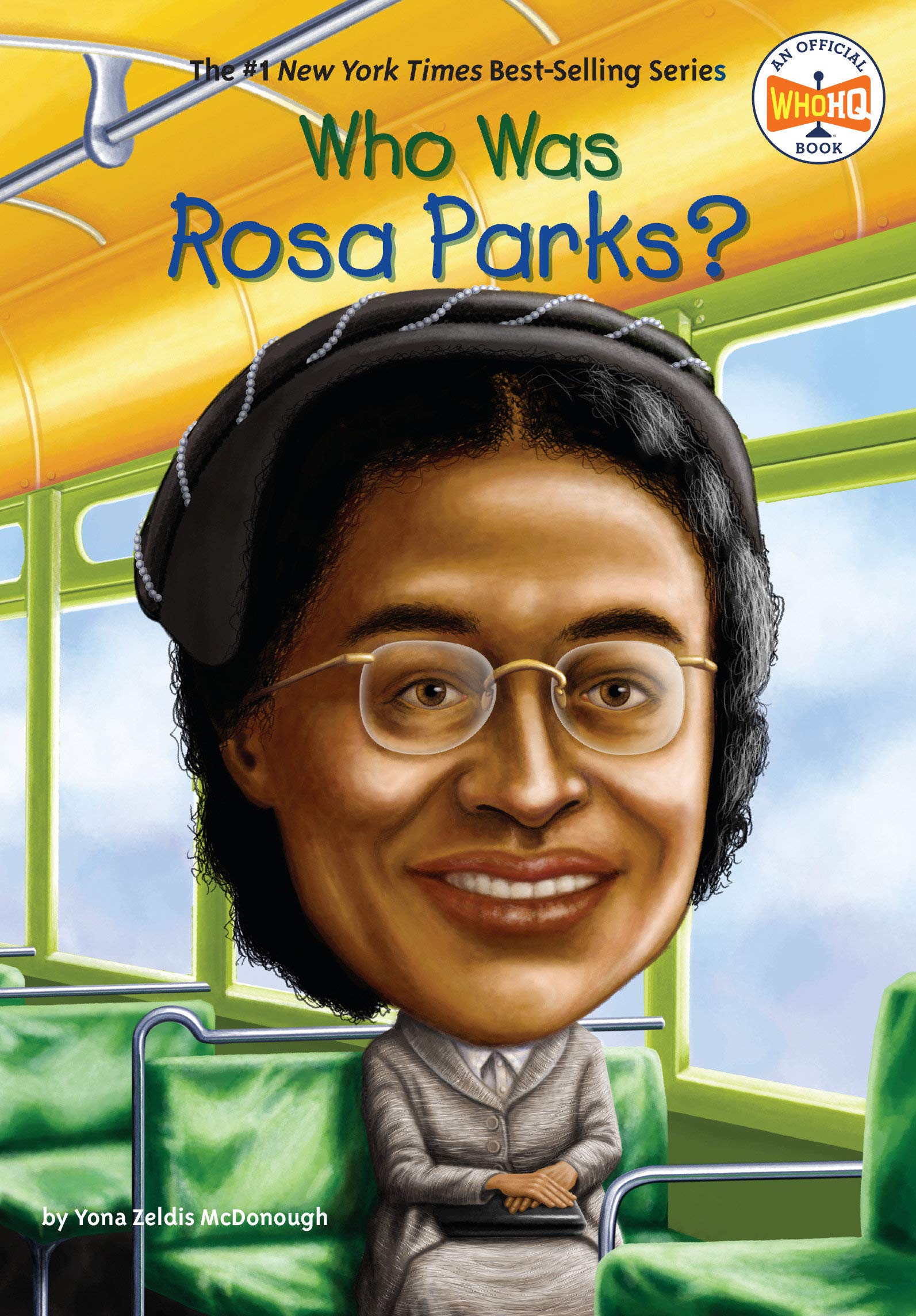
 

Who Was Rosa Parks? by Yona Zeldis McDonough, illustrated by Stephen Marchesi

The ‘Who Was’ series is well-loved by elementary-aged children across the country.  In this book, Zeldis McDonough details the life of civil rights activist Rosa Parks, famous for her refusal to change her seat on an Alabama city bus.  Her actions sparked a boycott that lasted for more than a year and were a major contribution to the work of ending segregations.


Counting on Katherine: How Katherine Johnson Saved Apollo 13 by Helaine Becker, illustrated by Tiemdow Phumiruck

Children love to be able to relate to people in books.  Counting on Katherine begins by giving readers a glimpse into the mathematician’s childhood, as a kid who loved to count, was fascinated by the universe, and did well in school.  This book tells how she went on to combine her passions while working for NASA, eventually saving lives and making history.


I Am Sacagawea by Brad Meltzer, illustrated by Christopher Eliopoulos 

Meltzer’s ‘I Am’ series appeals to children who love graphic novels and biographies.  Recommended for children ages 5 and up, this book has a way of telling the story of Sacagawea without ignoring some of the unpleasant facts but is done in a way that is appropriate for young children.  


A is for Abigail: An Almanac of Amazing American Women by Lynne Cheney, illustrated by Robin Preiss Glasser

A is for Abigail is a beautifully illustrated book full of influential American women from a wide variety of backgrounds.  Scientists, athletes, artists, politicians are among the many women celebrated in this sweet picture book. 


Malala’s Magic Pencil by Malala Yousafzai, illustrated by Kerascoët

The only autobiography on the list, Malala’s Magic Pencil was penned by the Nobel Peace Prize Winner herself.  Malala takes readers on a journey through her experiences, first imagining how she might make her life better, then coming to a realization that real action was needed.  While she once wished for a magical pencil, she grew to discover the power in her own writing.  She voiced her support for women’s rights, education, and peace in her home country of Pakistan as it was being controlled by the Taliban.
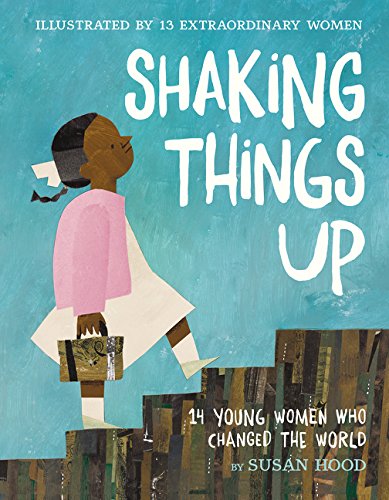
 

Shaking Things Up: 14 Young Women Who Changed the World by Susan Hood

Each page of this book features a poem about an influential woman, and each mini biography features a different illustrator.  The world-changing women include: Nellie Bly, Frida Kahlo, Maya Lin, and Angela Zhang. 

 

Mae Among the Stars by Roda Ahmed, illustrated by Stasia Burrington

Honoring the first African American woman to travel in space, Ahmed and Burrington have created a beautiful picture book about the life of Mae Jemison. Young Mae shares her dreams with her encouraging parents, later to have them dismissed by her white teacher and classmates.  Mae’s own determination, combined with the unwavering support of her family, led her to achieve her dreams and chance history.


When Marian Sang: The True Recital of Marian Anderson by Pam Munoz Ryan, illustrated by Brian Selznick

Marian Anderson had the kind of voice that one is lucky to hear once in a lifetime.  Her talent was recognized early on, though she struggled to find a teacher and to sing in certain venues because of her race.  She defied the odds, brought people together, and eventually went on to achieve her own personal singing dreams.


We hope you and your children will find these books inspiring.  Let us know if you have others to recommend!

Montessori Motivation

Motivation.jpeg

We are often amazed at the capabilities of Montessori children.  They bounce home from school each day excited about their learning.  As adults, they tend to be driven and innovative.  How does one cultivate such an attitude toward the world?  How might we guide our children to want to learn?  To want to discover?  To always pursue more without being told they must?  The key lies in what type of motivation we utilize.

Rewards and Punishments

In most traditional education settings around the country teachers use systems of rewards and punishments to drive desired behaviors.  Most of us grew up experiencing this type of system, and it can be easy as parents to occasionally rely on these tactics as well.  These are extrinsic motivators, and they’re more common than you might think.

Rewards are positive and external.  For example, a teacher might give a child a gold star sticker or a special stamp on their paper if a child does well.  They may let children have extra playtime for following directions or a pizza party in exchange for getting their homework done.  Rewards can take many other forms, too, including verbal praise or good grades on a report card.  

Punishments include any negative external motivator.  These include bad grades and removal of privileges, but sometimes include harsher examples.

Believe it or not, there are even more ways to impart subtle, nuanced external motivators.  Any time we make a statement or even use a facial expression that conveys our own pleasure or displeasure with a behavior or action, we are utilizing external motivation.  While these tactics may sometimes work in the short term, research shows they do little for long-term motivation success. 

Intrinsic Motivation

Some forms of motivation don’t come from an outside source at all, but from within the individual.  The good news is, children are born wanting to learn.  We are curious beings and have the innate ability to work for our own joy.

Think of a time you accomplished something great.  How did you feel afterward?  Were you thinking about how others would perceive your accomplishment or were you satisfied with your work for its own sake?  In Montessori schools, we often guide children to reflect on their own feelings after they complete a challenge.  They may come to us, excitedly showing or retelling.  We may be inclined to say, “Good job!”, but those types of statements are better off unsaid.  If we reward a child with our approval, they will work to seek that approval in the future.  If, instead, we ask a child how they feel about the work, or comment on something factual we notice, the drive will remain within them.  We might say, “I noticed you kept trying even when that was challenging.  How do you feel now that you completed it?” or “It seemed like you enjoyed that work.  What will you do next?”  These types of statements make it possible for us to acknowledge a child without placing our own judgements on their experiences.

Research suggests that while external rewards may work occasionally, intrinsic motivation is much more effective.  In one study, preschoolers who loved to draw were divided into three groups: one was told they would receive a reward for drawing, one was told they would not, and a third received an unexpected reward afterward.  Not surprisingly, the group that expected a reward drew for much less time and created less aesthetically appealing drawings.  There was little difference between the other two groups, although they far outperformed the first.  [ https://www.spring.org.uk/2009/10/how-rewards-can-backfire-and-reduce-motivation.php ]

Driving Forces in Academics

So how do Montessori teachers guide children to want to do their work?  As we mentioned before, that’s the easy part.  The desire to work is innate in children.  Our job is to nurture and honor it.  Even the terminology we use is intentional.  Our youngest students aren’t asked to play during the morning cycle, but to work.  We let them know we recognize what they’re doing is important.  It’s work, and we are there to support them in doing that work.

As Montessorians we also believe that a beautiful environment full of enriching materials can serve to motivate children.  We consider what the children before us need, and we carefully select and place appropriate materials on the shelves for them to discover.  

Montessori materials are typically autodidactic.  This means that the learner is able to self-correct their work while they are in the process of completing it.  For example, a child placing wooden cylinders into holes will know they need to adjust their work if the final cylinder doesn’t fit into the final hole.  These built-in corrections allow the child to work and learn directly from the materials without teacher input, essentially furthering the child’s independence and internal motivation.

Montessori guides are also adept at utilizing children’s interests to help them succeed in areas that challenge them.  A child who is reluctant to read but loves dinosaurs may just need a basket of books about dinosaurs.  A child who resists math but adores their friends may need to work cooperatively to find success.  Knowing what sparks a child’s enthusiasm is the key to opening a whole world of academic content.

There are other structures built into the Montessori day that support intrinsic motivation.  The three hour uninterrupted work cycle is one, as is allowing for ample student choice.  The strategies allow children to select work that is meaningful to them, and to spend time really getting deep into that work.  We allow them to fully explore their interests, which is where real creativity and lasting learning take place.  Children feel empowered by their independence, and this in itself drives them to explore deeper learning.

When we teach children to follow their own instincts, even when it comes to learning, we are preparing them for a lifetime of success.  School won’t just be a place they have to go and have information delivered to them; it becomes a place where they look forward to going so that they may discover the world for themselves.

Logical and Natural Consequences

table scrubbing.JPG

Raising children is a beautiful, surprising, heart-warming, and challenging adventure.  But what’s the best way to navigate through the challenging parts?  As humans, we all make mistakes, and are constantly learning throughout our lives.  How might we best guide our children through their learning in a manner that is both gentle and effective?  It turns out we need a variety of strategies, but some work better than others.  In this blog post we highlight some of the most effective ways of helping your children learn from their mistakes.

Natural Consequences

Natural consequences are whatever happens naturally as a result of a person’s action or inaction.  Natural consequences are not determined by an adult, they simply occur.  For example, if your child decides not to wear a coat outside in the winter, the natural consequence is that they will feel cold.  If they choose not to eat, they will feel hungry.  No negative parental intervention is necessary, and in fact, should not be applied.  When your child experiences a natural consequence, chances are the experience itself will teach them what they need to learn.  We need not remind them that we had suggested the coat or breakfast.

To summarize, natural consequences happen all on their own.  There is no adult control in these situations, and the consequence itself is not planned, but rather a natural outcome of interacting with the physical world.

Logical Consequences

Logical consequences are implemented by an adult (typically a parent or teacher), and they are directly related to the action of the child.  For example, if your child spills their snack on the floor, you might remind them where the dustpan is and ask them to clean it up.  

What’s really important is to remember the intention and structure of a logical consequence: it is not a punishment, but rather a gentle learning opportunity that is directly connected to the behavior.  The goal is not to have the child repent for having done something wrong, but to give them an opportunity to recognize an error that they may avoid in the future.  We must be careful and avoid shaming the child, and to present the situation in such a way that the child is not defined by the behavior.  The behavior is simply something the child did that we would like to teach them not to do.

Do These Consequences Really Work?

Yes...most of the time.

There are times we should absolutely step in and not allow natural consequences to occur.  These instances include: 

  • When your child is in danger

  • When someone else is in danger

  • When a natural consequence encourages the child to repeat the behavior or if they don’t seem to mind the consequence (it’s clear the natural consequence is not having the desired effect).  For example, sneaking lots of candy might be fun!  The natural health consequences are not immediate and therefore might not make a big impression right away.

Natural and logical consequences are empowering for children.  They leave the child in control of the situation and provide valuable learning opportunities.

A How-to Guide

Perhaps the most important idea to remember is that natural and logical consequences are not punishments, but rather an opportunity for the child to learn more positive behaviors.  When observing a natural consequence that might help the child learn from an experience, resist the urge to step in and help your child.  The natural consequence may not be pleasant, but if it’s appropriate and not hurting them, it’s okay to let them learn from it.    

When you are trying to determine an appropriate logical consequence, it’s important to keep it age/developmentally appropriate.  If your 2 year old takes out all their toys and makes a big mess in their room, they will likely need your help as they work to clean up.  A 7 year old, however, is probably capable of doing the job themselves.  

Make sure that any logical consequence is directly related to the behavior you are trying to correct.  Some examples:


Behavior

Your 5 year old was dancing while eating and spilled yogurt all over the floor.

Logical Consequence

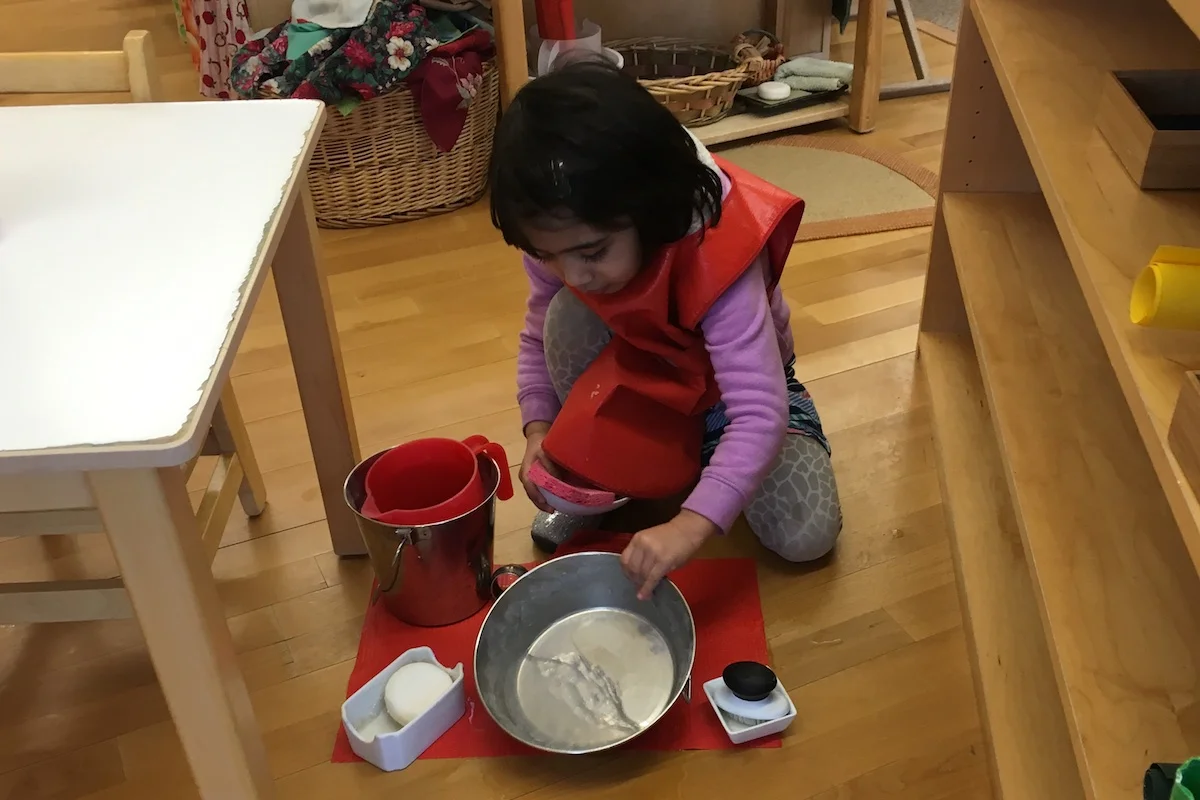
Walk them through the process of cleaning up.  Bring them to retrieve a bucket and sponge, help them fill it with soapy water, and demonstrate 1 or 2 wipes before letting them do the rest.


Your 6 year old was asked to clean up their blocks before bedtime but did not do so.  

Let your child know you will be putting the blocks in a box and they may not use them for a certain amount of time.  You might put the box in your closet for a few days.


Your 8 year old was playing baseball in the front yard where you had asked them not to and they broke a neighbor’s window. 

Help your child find ways to earn money so that they may help replace the window.


Your 12 year old chose to play video games instead of doing their homework.  They don’t seem phased by the natural consequence of having their teacher notice.

Let your child know they may play video games when their homework is finished, but not before.


Your newly-driving 17 year old did not return home by the agreed-upon time.

Make sure your child knows this consequence ahead of time, but perhaps they will not be allowed to use the car for a specific amount of time.


A few final points to keep in mind: natural and logical consequences often take time and patience.  While they are typically the best course of action for building resilient children in the long run, only rely on them when you are in a position to fully commit.  If you give in halfway through, the teaching opportunity is lost.  It can also take time to come up with appropriate logical consequences, and with the realities of life, that’s not always a possibility.  Let’s imagine that your 5 year old spilled the yogurt as you were rushing out the door to get to an important meeting.  You may want to talk to your child as you wipe it up quickly and teach them how to mop later that afternoon.  

Good luck!  As always, please let us know if you have any questions or comments.

Book List: On Kindness

We are just around the corner from Valentine’s Day!  Before we dive into paper doily cards and candy hearts let’s take a moment to think about the reason we celebrate: love.  And what better way to experience love on a daily basis than to live a life of kindness?  Your children learn kindness by watching others, including their friends, their teachers, and you.  When we take the time to have conversations about the importance of kindness, children understand that it’s something we value.  This month’s book list includes ten titles that will help you get started.  Enjoy!


The Lion and the Mouse by Jerry Pinkney

This wordless book (aside from a few beautifully illustrated sound words) is a retelling of the classic Aesop fable.  The majestic and powerful lion shows mercy on the tiny and unassuming mouse, who later returns the kindness.  Children and adults appreciate this classic and gorgeous rendition.  


The Three Questions by Jon J. Muth

Based on the classic tale by Leo Tolstoy, a small boy is searching for the answers to his three questions.  What is the best time to do things?  Who is the most important one?  What is the right thing to do?  His own journey leads him to the answers, which are of course, based in being kind and present in the moment.


Last Stop on Market Street by Matt de la Peña, illustrated by Christian Robinson

CJ is a bouncy young child who is traveling across the city with his grandmother one Sunday.  A bit annoyed that they must ride the bus instead of hopping into a car, he is full of questions which his grandmother patiently answers.  CJ learns many things and meets many different people before arriving at their final destination: a soup kitchen where he and his grandmother will help people less fortunate than themselves. 


The Giving Tree by Shel Silverstein

Many of us are familiar with Silverstein’s timeless treasure of a book.  While the tree in the story is exceedingly kind to the boy, this is a good book to teach children about the limits of kindness.  We can be kind to others without putting our own happiness and well-being at risk.


Stand Tall, Molly Lou Mellon by Patty Lovell, illustrated by David Catrow

Molly Lou Mellon’s buck teeth, short stature, and deep voice may not be what many consider to be the standard of perfection, but Molly’s grandmother has instilled a strong sense of positive self-esteem in the young girl.  When Molly moves away and is teased by another child in her new school, fierce determination and pride in her unique qualities help her shine through the challenge.


Have You Filled a Bucket Today?: A Guide to Daily Happiness for Kids by Carol McCloud, illustrated by David Messing

This beloved book encourages readers to visualize a bucket that we all carry around with us.  When the bucket is full, we feel happy and content.  When we are sad, lonely, or upset, the bucket may be empty.  The story talks about different ways our actions can affect one another, either emptying or filling each other’s buckets.  This book also helps children understand that negative actions that may empty a bucket, such as teasing, are not permanent or definitive of who we are.  There is always room for us to grow and love others.


A Chair for My Mother by Vera B. Williams

A little girl tells the story of working toward a simple yet special goal in the aftermath of an apartment fire.  All the family’s belongings were destroyed, and while their neighbors and friends donated what they could, something important was missing: one soft, comfortable chair for her to share with her mother and grandmother.  The three save every coin they are able in a large glass jar, until they are finally able to make a trip to the furniture store together.


Should I Share My Ice Cream? by Mo Willems

One hot day, Elephant Gerald hears the enticing call of Ice Cream Penguin.  He happily purchases a cone, but just before he takes his first bite, he thinks of his best friend, Piggy.  Would Piggy want some of his ice cream?  Should he wait and share?  Would she ever know if he ate it without her?  His big heart wins the internal battle, but there is a twist ending.


Leonardo, the Terrible Monster by Mo Willems

Willems says this tale is written for those as young as 3 and as old as 36, but frankly, we think those age limits could be extended a bit.  Leonardo wants nothing more in life than to scare the tuna salad out of someone, but he doesn’t seem to be able to.  He finally finds some success, but might he discover that friendship is a lot more satisfying?


We hope you and your family enjoy these books about kindness.  Please let us know what you think, and if there are any others you think we should add to the list!

Montessori Basics: Observation

observation.jpeg

Montessori classrooms rely heavily on the art of observation.  You may see it in action some time, or you may have an opportunity to try it yourself (which we welcome and encourage!).  If you ever walk past a classroom and see the children working intently, while the guide is quietly sitting in a corner with a clipboard, know that guide is working intently as well.  

Why we do it

Dr. Maria Montessori was a scientist and a physician.  Her education and background helped her look at the world in a way that is different from most traditional educators.  Observation of children was what inspired her work in education, and she used it to develop her methods.  Not only that, but Montessori guides all over the world rely on observation to learn about their students, gain insight about developmental phases, inform our decision-making, and to assess the children’s mastery of skills.  So what are the main goals of observation in the classroom?

  • Planning appropriate lessons - Montessori educators are trained to have extensive knowledge about child development.  While most traditional teacher education programs require students to take a course on the topic, development is essentially the foundation of everything we do as Montessori guides.  Practiced guides know so much about the behaviors of growing children that seemingly insignificant occurrences signal a transition into a new plane of development.  The toddler that has mastered toileting and can be observed spending long amounts of time with practical life activities is making the transition necessary for the primary classroom.  A child nearing six that has lost a tooth and seems suddenly very motivated by social interactions with their peers is moving into the second plane of development and will respond well to lessons involving storytelling and deeper information about cultures around the world.  The challenge of the guide is to identify the moment when a child is entering a sensitive period; this is their development showing they are ready to learn specific skills that must be taught in a way that honors their growth.  

  • Making sure the environment serves the children - While the guide’s role in a child’s education is important, the environment plays an even bigger role.  It is the guide’s job to make sure the classroom environment allows children to find what they need, feel inspired to work, fosters independence, and allows for safety and comfort.  If, during an observation, it is noted that a piece of furniture disrupts the flow of movement, it will be moved at a later time.  If many children prefer to work on the floor, it will be important to note whether there are enough work rugs for them all to use.  If no children have used a specific material in a number of weeks, it may need to be reintroduced or removed from the shelf.  Each item in the classroom must be placed intentionally and with a specific purpose in mind.  If it is no longer serving its intended purpose, reflection and a solution are required.

  • Assessment of skills - The word assess is derived from the Latin form to sit beside.  Montessori schools do not determine mastery with the use of tests, but rather by utilizing observation.  Instead of giving children a piece of paper with questions on it, we watch them in action.  When a child is able to independently place number tiles in random order on a hundred board, we know they have grasped the concept of ordering those numbers.  A child who is able to complete complex patterns within the shape they traced using a metal inset, and who also frequently uses the sandpaper letters correctly is likely ready to learn the written formation of letters using a pencil on a piece of paper.  This assessment, of course, ties back into planning appropriate lessons, as the guide has concrete information to inform their instruction.

What it looks like

  • Formal observations - A Montessori guide will likely observe in the classroom most days, or multiple guides may take turns observing.  These observations typically last between fifteen and thirty minutes, but the amount of time can vary.  While each guide has their own preferred method, they typically sit quietly and use a notebook to record what they observe.  Children are taught about the importance of this work and they know not to disturb the adult at this time.  Sometimes a guide will sit in a specific chair or use a special clipboard to signal to the children that they are working.  For new guides, the temptation to intervene can be powerful, but we learn that unless a child is in danger it’s often best to wait it out and see what happens.  Most classrooms have a second adult that is able to redirect a child who may be overly disruptive, allowing the observing adult to continue.  During this time the guide simply watches and takes lots of notes.  It is important that the notes be strictly observational and that any judgement or inferencing be reserved for another time.

  • Informal observations - During the course of the work period, guides will make a great many observations in the moment.  While walking across the room to retrieve something, while speaking to a child, or even whilst in the middle of a lesson, there are many helpful bits of information a guide can gather and record that will help make the children’s educational experience the best it can be.  As you may imagine, this results in many, many notebooks full of amazing and adorable anecdotes. 

Visitor observation

Whether you are considering Montessori for your child, they are in a program but getting ready to move to a new level, or if you’re just curious and want to learn more about the philosophy, observation is one of the greatest tools available to you.  Even the most experienced guides make time to visit other Montessori schools when possible so that they may observe other classrooms and gather fresh ideas and inspiration.  We invite you to contact us should you be interested in giving it a try.

When you enter a Montessori classroom to observe, it is very important to know that the children will be engaged in their work and the goal is to watch without disturbing them.  In many other scenarios in life, we announce ourselves upon entering a room, perhaps even greeting others enthusiastically.  When observing in the classroom, we ask that visitors refrain from doing these things, tempting as it may be!  You will likely be greeted by an adult or child and directed to a chair.  Having a notebook or clipboard is helpful, as you are sure to experience moments you will want to record.  If a child approaches you and greets you, by all means please feel free to briefly greet them in return.  In general, however, you will need to sit quietly and observe in a way that the children forget you are there, leaving them free to focus on their work.  Montessori children are quite used to visitors, so this shouldn’t be a problem.

Some questions that will help guide your observation include:

  • In what ways are the children displaying independence?

  • How do the children choose their work?

  • What do transitions between work look like?

  • How do the adults respond to the children?

  • How do the children respond to the adults?

  • How do the children interact with one another?

  • How do the children care for their own basic needs?

  • Does anything about the classroom environment surprise you?

When your observation is complete, it is best to slip out of the classroom quietly.  In this situation you are not expected to say any formal goodbyes.

You can do this at home!

While home is very different from the classroom, there are ways that parents can apply the basic concepts of Montessori observation.  While trying to engage with our children, it can be easy to fall into patterns in which we begin directing their play.  Every once in a while, sit back and watch as your child plays.  You may notice them using their toys in surprising ways, and this may give you insight to their interests and maturity.  Similarly, it can be tempting to jump in and help any time your child spills something, falls down, or struggles to do something.  Instead of rushing to the rescue, wait.  If they ask for help, of course, lend a hand, but oftentimes they will want to address the situation themselves.  Watching to see what our children are capable of and nurturing their independence is one of the greatest gifts you can give them.  

As you pay attention and observe your child’s play, eating habits, sleeping habits, and social habits, you may learn many new things about their development.  This, in turn, will allow you to reflect on how you might best support them on their journey through childhood.  Slow down, observe, and enjoy those moments.

Book List: The Passing of Time

As we welcome a new year we thought it would be the perfect time to share a book list about the passing of time.  Throughout human existence we have generated ways to record time, and while many of our earlier innovations are no longer used, the old has been blended with the new.  Most children are curious about time, yet it can be a tricky subject to comprehend for younger ones.  Check out our list for some helpful suggestions.


About Time: A First Look at Time and Clocks by Bruce Koscielniak

This fabulous book teaches children about the history of timekeeping.  Throughout time, humans have needed to track the passing of time and have discovered many creative ways of doing so.  This book is sure to delight children in the elementary grades and beyond.


The Reasons for Seasons by Gail Gibbons

Gibbons writes books for children that are beautifully illustrated, clearly written, and tend to mesh very well with the style of Montessori education.  The Reasons for Seasons can be appreciated by younger and older children; it contains simple text that explains the science behind our seasons.  It differentiates between the Northern and Southern hemispheres and teaches kids about solstices, equinoxes, and why the Earth’s axis plays an important role.


I Had a Favorite Dress by Boni Ashburn, illustrated by Julia Denos

We believe that representation matters, and having children’s books that feature children of color is a good thing for all kids.  This is a fun days-of-the-week book in which the main character begins by telling readers about her favorite dress that she wears each Tuesday, which happens to be her favorite day of the week.  One day she discovers the dress is too small, but her creative mother transforms the dress into a shirt that the girl then wears every Wednesday.  That is, until it no longer fits...


A Second, a Minute, a Week with Days in it: A Book About Time by Brian P. Cleary, illustrated by Brian Gable

The title of this book says it all: it’s a simple and straightforward explanation about simple units of time.  The illustrations help give children a clear visual representation of these abstract concepts.


The Story of Clocks and Calendars by Betsey Maestro, illustrated by Guilio Maestro

Like Koscielniak’s book, The Story of Clocks and Calendars fills the important role of teaching children about the history of time.  Maestro details the differences in calendars from different societies, along with descriptions of various types of clocks.


Chicken Soup with Rice by Maurice Sendak

“In January it’s so nice while slipping on the sliding ice to sip hot chicken soup with rice.  Sipping once sipping twice sipping chicken soup with rice.”  This classic Sendak book will help young children learn the names of the months while being delighted by his poems and illustrations.


Thirteen Moons on Turtle’s Back by Joseph Bruchac and Jonathan London, illustrated by Thomas Locker

A young Abenaki child is treated to a lesson and storytelling from his grandfather.  The grandfather explains that just as there are thirteen scales on the old turtle’s back, there are thirteen moons during the year.  This book honors the Native American tradition of storytelling, and each page teaches about a different nation’s moon story.  This book would be best appreciated by elementary-aged children.


When the Moon is Full: A Lunar Year by Penny Pollock, illustrated by Mary Azarian

Another book about the Native American lunar year, the illustrations in this book make it come alive.  Poetry and tradition guide the reader through twelve moons.  While older children would likely enjoy this book, it easily appeals to younger children as well. 


A Child’s Calendar by John Updike, illustrated by Trina Schart Hyman

Updike’s poems carry readers through the months of the year, highlighting seasons, holidays, and favorite childhood pastimes.  A Child’s Calendar is a Caldecott Honor Book.  


Me Counting Time: From Seconds to Centuries by Joan Sweeney, illustrated by Annette Cable 

As a child prepares to celebrate her seventh birthday, she pauses to think about time.  This story is relatable, informative, and entertaining for kids.  Written at about a second-grade reading level, the content would be best enjoyed by children ages 4-7.  They will learn all about units of time, from a second to a millennium.


We hope you and your family enjoy these books.  Let us know what you think!