On the Topic of Competition

competition.jpg

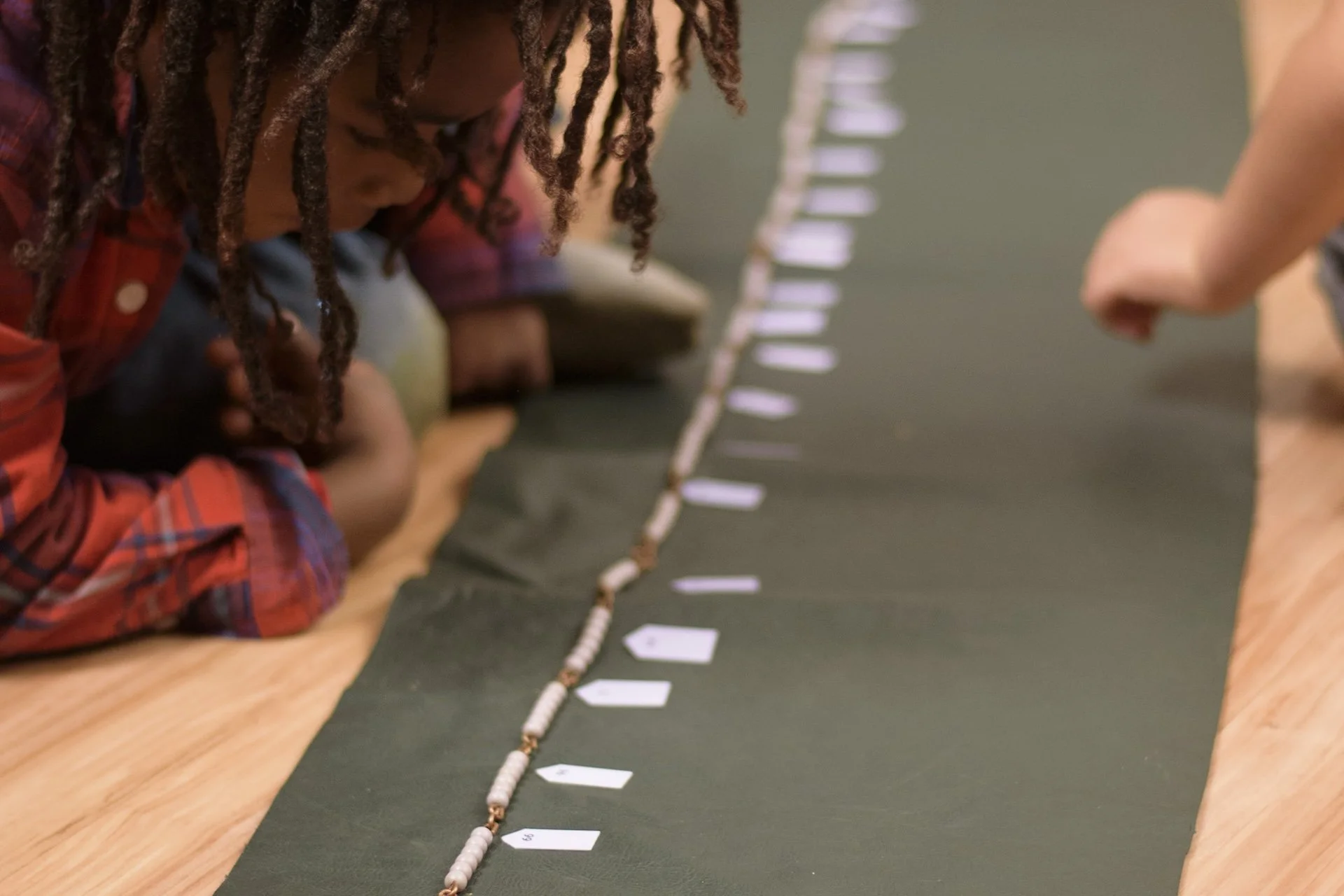
You may have noticed that in Montessori schools, we do not typically encourage competition between children.  Our lack of traditional grading is one obvious marker of this approach, but you will notice that the lack of peer competition threads itself pretty much throughout the entire program.  This is quite intentional, and we work hard to give children a foundation built on competition with oneself, rather than with others.  

It is important to note, however, that a Montessori education does not leave children unprepared for “the real world”.  We recognize that competition is a part of life for many, and we work hard to cultivate characteristics that will allow children to engage in healthy, fulfilling competitive experiences.

Curious to learn more about what we do?  In this post we not only explain why we favor internal motivation, but what we do to help nurture well-rounded and adaptable children.

Internal versus External Motivation

One of our core values as Montessorians is that we believe intrinsic motivation is far more powerful than external rewards.  This has been the foundation of our educational model for over a century.  In recent years, studies have backed the theory that we are most successful when we are driven by our own internal motivations, not perceived rewards (like prizes, grades, or money).  Information on one such study can be found here.

How We Prepare Children for Healthy, Real-World Competition

Montessori schools can sometimes feel like a bit of a protective bubble.  As educators, we need to recognize this and make sure we are preparing children for what comes next.  Montessori students tend to be highly successful when they eventually move on to more traditional schools, regardless of when that might be.  The following character traits are cultivated throughout a child’s time with us, and we believe this is part of what it takes to create successful and fulfilled people in the long run.

Self Confidence

We all like having the ability to believe in ourselves, and we do whatever we can to guide our children toward feeling the same way.  From a very young age, Montessori children learn to do things for themselves.  They are respected by the adults in their lives and their personal autonomy is honored. 

When a toddler sweeps up her own crumbs, she feels it.  When a four-year-old makes his own sandwich for the first time, he feels it.  When an eight-year-old solves a challenging long division problem, they feel it.  

We build routines and structures that allow children to accomplish big things, and to revel in the feelings of self-accomplishment.  After many, many of these experiences, children develop a strong sense of self, and an “I can do it” attitude.

Resiliency

In Montessori classrooms, we know what children are capable of.  We know that traditional settings often expect less than what is developmentally appropriate for them.  When our students feel driven to work hard on challenging tasks, failure becomes an early and welcome part of their experience.  

As adults, we often equate failure with negative outcomes.  In reality, failure is nothing more than a learning experience, and we can use that experience to guide us toward mastery.  When following an internal desire to learn about or accomplish something, children welcome these necessary building blocks.  They see them for what they are: another motivator to keep pushing forward. 

Independence

If it’s not already obvious, our students are encouraged to be as independent as they are able to be, both according to their age and their individual needs.  This means they do not need to rely on others to get started on or execute tasks; they have plenty of experience confronting challenges independently.

Having a strong sense of independence allows us to take on leadership roles.  It brings us towards self-awareness and trusting our own abilities.  Our independence can encourage us to block out unimportant details and distractions, leading us to focus clearly on the task at hand.

Cooperation

While independence is critical to our success, it is equally valuable to be able to work cooperatively with others.  Many competitive situations involve teams of people working together toward a common goal, and this is something Montessori children get lots of practice in.

We recognize that one of the hallmarks of the elementary age (6-12) is that children are highly motivated by social interactions.  To this end, we carefully craft the classroom environment to support this need.  Children are given lessons in small groups, and even the furniture is arranged for a variety of seating options. If you were to observe in an elementary classroom, you would notice most of the children clustered in small groups working together, and this inevitably leads to many opportunities to practice important skills like compromise, flexibility, and advocacy. 

Self Advocacy

Montessori classrooms have a bit more flexibility in terms of daily scheduling than most settings.  One critical element that must remain is the three-hour work cycle in the morning.  Beyond that, our guides are able to schedule class meetings regularly, or any time conflict arises.  We teach our students skills they need to navigate all sorts of interpersonal situations, including how to advocate for themselves.  

Another interesting aspect of a Montessori classroom is that even young children have frequent opportunities to present their work and ideas to their classmates.  Being able to stand up and speak in front of a group of people from the time one is six years old seems to have a profoundly powerful effect on how we are able to convey, with confidence, our ideas and feelings.  

Did you know that there are a number of well-known figures who attribute their Montessori education at least partially to their success?  In this video, NBA MVP Stephen Curry shares how his own Montessori education gave him the confidence necessary to become the successful adult he is today.
Montessori Basics: How we Teach Handwriting

handwriting.jpg

Handwriting or penmanship; no matter what you call it, it was likely an important part of your early education.  Pressured by time and content constraints, many schools have abandoned explicit handwriting instruction.  This is resulting in a generation of children who do not know how to write in cursive, and who sometimes even struggle to form legible printed letters.

A number of scientific studies point to the importance of handwriting, including this one which concluded that handwriting (as opposed to typing or tracing) guides preliterate children toward developing reading skills.  

Interested in learning more about the scientific evidence that supports the importance of teaching handwriting as a skill?  Check out this article that highlights five of the important reasons we should not allow direct instruction in this area to go by the wayside.  Not only does learning handwriting early help children develop skills needed for reading, evidence suggests it makes children better writers, spellers, and leads them towards future success in academics.  Higher brain density and gray matter volume have been connected to high-quality handwriting, suggesting that frequent practice may aid in neural processing.  Studies also conclude that it is critical for teachers to model the correct way to form letters, but also to utilize direct instruction.

In Montessori schools, handwriting is a critical component of children’s learning.  As with so many other skills, our curriculum takes a spiraling approach, indirectly preparing children prior to direct instruction.  Very young children develop the muscles necessary for a pincer grasp while they manipulate materials such as the knobbed cylinders, a Montessori favorite!  

There are two other important materials in the primary classroom that facilitate handwriting readiness: the metal insets and the sandpaper letters.

The metal insets are wooden trays that hold a series of stencil-like shapes.  Removable shapes are blue with a pink background.  Some shapes have straight-lined sides while others are curved.  Children trace the shapes with a pencil, giving their hands a chance to practice creating a variety of lines.  Increasingly challenging activities encourage children to create different patterns with colored pencils while staying inside the original traced lines.  At first glance, this may appear to be a fun art activity (which it certainly is!) but its main intention is to prepare children for their upcoming work in handwriting.

Montessori sandpaper letters take the work a step further.  Twenty-six wooden tiles are adorned with gritty, sand-textured letters of the alphabet.  Children are given lessons on how to trace these letters with their fingers and say the sound.  (As a side note, Montessori children are taught the sound of each letter in conjunction with its name, which makes much more sense for reading preparation.)  Perhaps you have observed this in a Montessori classroom; if you have not, we highly suggest coming in to watch the magic of this work in person.

Interestingly, children who attend Montessori schools are typically able to write even before they have begun to read.  Once they do begin reading, these previously developed skills allow them to seamlessly work on the various components of literacy development simultaneously.

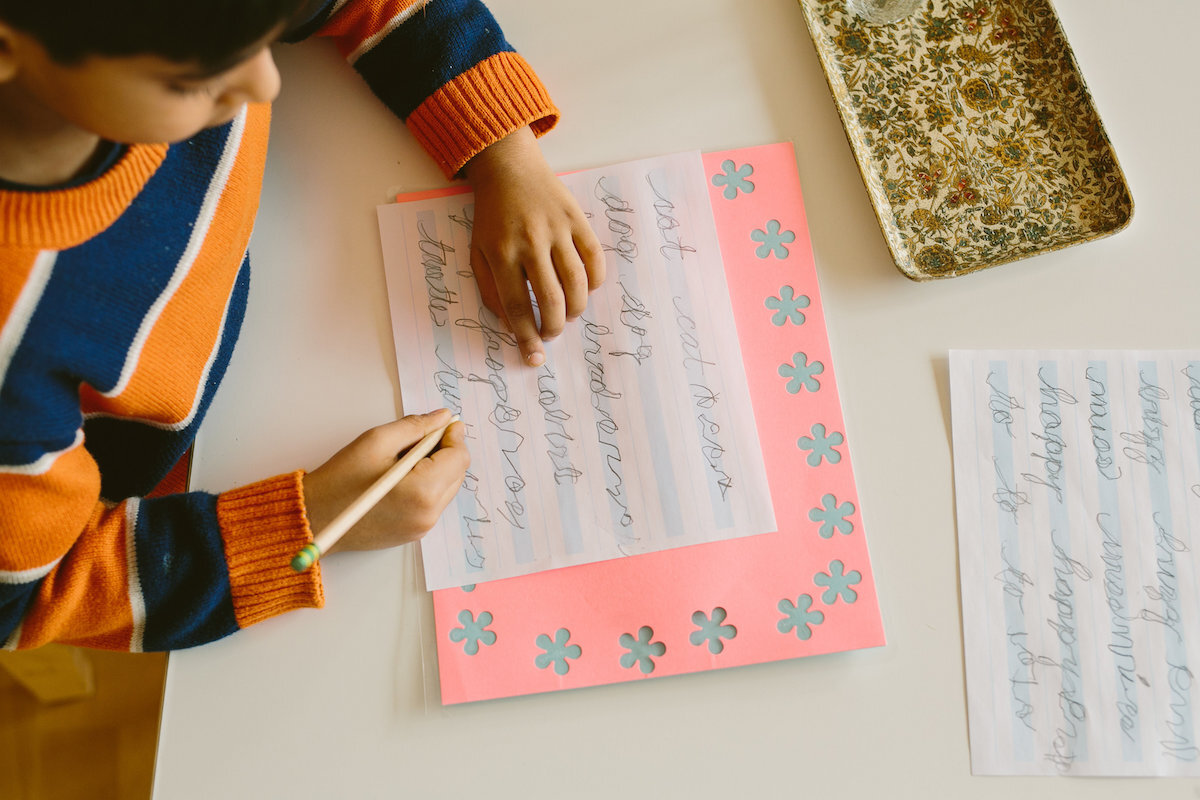
Once children enter the elementary years in a Montessori school, they are required to write throughout the day.  Typically, children work throughout the three-hour work period in the morning on a largely independent basis, unless they are receiving a direct, small-group lesson from the guide.  During this independent work they record parts of what they do in notebooks.  For example, if a child uses a card material to learn about the internal body functions of a fish (how they perform the tasks of respiration, circulation, movement, and so on), they will record at least part of this work in their notebook.  For example: “Circulation.  Fish have two chambers in their hearts.”  This writing continues throughout the day and is directly connected to other content children are learning.

Some classrooms include direct handwriting practice even in the elementary years.  This is typically something for children to copy in their notebooks, such as a poem or a paragraph about something they recently had a lesson on.

One final and very important reason to teach handwriting: when children learn how to form beautiful letters early on, they are better able to focus on a myriad of other things.  For example, when writing a story, they can actually think about their story ideas instead of belaboring over how to write a ‘q’.  

Interested in learning more?  As mentioned earlier, we encourage you to come visit the school and observe in one of our classrooms.  Doing so is common practice in Montessori schools, is unobtrusive to the children, and can provide excellent insight for those who are looking to learn more about this unique educational approach.

Holiday Gift Giving Guide 2019

Believe it or not, the holiday season is rapidly approaching!  We thought it might be fun to share some of our favorite Montessori-friendly gift ideas.  Click on the name or picture for shopping information..


Montessori Infant Mobiles

Montessori infant environments traditionally use mobiles for newborns.  There are different types, but their purpose remains the same: they aid babies in the development of their visual tracking, but they also just bring the babies a sense of joy.  Etsy is a great source for finding beautiful handmade versions.  To learn more about Montessori mobiles, take a look at this article.


Baby Boo Silk Scarves

Silk scarves are an excellent option for open-ended play.  Children use their imaginations and creativity as they think of ways to incorporate them into their play.  The scarves will be used for hiding, covering, waving, dancing, and as a dress-up option.  We have even seen them worn by patient and willing family pets.  This particular scarf is a bit smaller and colored with nontoxic dyes, making it perfect for babies and toddlers.  

 
a275_fsh09_p.jpg

Crayon Rocks

Art supplies are a must for any child.  Keep it simple; children are happy to use paper from the recycle bin and whatever else you have around.  If you’re looking for something a little more special, check out these crayon rocks.  Comfortable for tiny hands to grasp, they are made with soy wax and colored with mineral powders.  They lay down gorgeous color and are appreciated by children of all ages.

 
q40_ms1718_p.jpg

Child-Sized Snow Shovel

Young children love to do whatever the beloved adults in their lives are doing.  The tasks we often view as monotonous or even tedious are exciting for little ones.  Giving children real tools that are sized down for them makes this important work possible.  This snow shovel will allow you to get your driveway cleared while your child learns alongside you, getting fresh air, exercise, and important bonding time with you.


Young Carpenter’s Set

Much like the snow shovel listed above, this toolbelt, hammer, and safety glasses set will allow aspiring young carpenters to work alongside the adults they admire.  Montessori Services offers many different child-sized tools, depending on your child’s level of interest and what types of projects you have envisioned!


Leaf and Flower Press

Children are collectors.  Especially when they spend time outdoors, their natural fascination with the world spurs them to gather tiny objects.  We are all familiar with pockets full of rocks and crushed dandelions found in the back seat of the car.  As children get a little older, this leaf and flower press can allow them to preserve their botanical finds.  Once leaves and flowers are dried and pressed, they can be used in many different ways.


Marble Run

If your child loves to build, marble runs are a great way to encourage independent development of a wide range of skills.  Kids will experience trial and error, general engineering concepts, creativity, and more.  There are endless possibilities for configurations, and children can enjoy using the toy by themselves or with a friend or adult.


Jigsaw Puzzles

Puzzles are a classic way to pass the time together.  We really appreciate this particular brand because they are well-made and have many great designs for children.  The beauty of puzzles is that they don’t need to be completed in one setting.  Designate a tabletop and have one out for the family to work on together a little bit each day.  Rather than linking to one particular puzzle, we decided to just share the page for children’s puzzles so you can find one that would be appealing to your child.


Child-Sized Mug

There’s nothing quite like cozying up with a warm drink on a chilly winter day.  These 4-ounce ceramic mugs were created with kids in mind.  They are adorned with pictures of wild animals, and a portion of each sale is donated to conservation efforts.


Kites

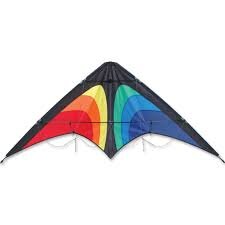
Kites are a classic children’s toy.  They encourage our children to run around outside and to pay attention to keeping the kite afloat.  Teaching your child how to fly one can be a fun and rewarding experience, and there are so many different places to take them.  Some families like to keep one in the trunk of their car, just in case!


We hope this list has provided you with some helpful inspiration.  Do you have other ideas to share?  Let us know!

Montessori Basics: Reality vs. Fantasy

Hollis Montessori General Photos June 2016-10 copy.jpg

Our Montessori Basics posts are created in order to teach parents about Montessori philosophy and curriculum.  Today’s post helps illuminate how one element of the philosophy drives the curriculum.  We all know Montessori classrooms differ vastly from their more conventional, traditional counterparts, and views on how children developmentally react to fantasy and reality are one of the key components of those differences.

You may or may not already know, but Montessori schools discourage the introduction of fantasy to young children (children under the ages of 5 or 6).  This means we do not use play kitchens, have a dress-up area in the classroom, or rely on books with dragons and fairies.  This often evokes a visceral reaction from those new to the approach, but after learning the scientific reasoning it makes much more sense.

Some people hold a misconception about Montessori regarding their assumption that the method stifles imagination and creativity.  The is unequivocally false.  We wonder if this misconception stems from tangled definitions of fantasy and imagination, which are two very separate concepts.  Fantasy is the stories and ideas drawn from a world which does not exist (those fairies, dragons, talking horses, etc.).  Imagination is the ability to conjure images or scenarios in one’s own mind, separate from present sensorial input.  

So, what is the difference, really?

Fantasy is giving wooden fruit to play with instead of a real banana to slice.  Fantasy is reading a book about a talking dog rather than reading a book about the different breeds of dogs around the world.  

Imagination is a child on the playground pretending they are an eagle because they saw a live one for the first time that weekend.  Imagination is children playing ‘family’ because they are driven to practice the roles that are modeled for them in their own homes.

Imagination is inherent in the human mind. It’s where our creativity comes from, and it’s one of the ways we process learning about the amazing world around us.  As Montessorians, we revel in the magic of imagination (and, as children get a bit older, we use it to our advantage, but more on that later).

As Montessorians, we recognize that young children have a difficult time distinguishing the differences between reality and fantasy, and that blending the two within their experience can be confusing.  We also know, from Dr. Montessori’s own observations, that young children typically prefer reality to fantasy.  For example, in her first classroom, she had a dollhouse and read folktales.  Children were far more interested in leaving those activities behind to observe an earthworm or serve tea to visitors.

Our perspective asserts that in a young child’s life, everything they encounter is awe-inspiring and fills them with wonder.  We need not tell them tales of unicorns, in part because they often have a hard time distinguishing between whether they are real or not, but also because an actual horse is just as fantastic to them.  When the whole world is still relatively brand-new, animals, plants, the environment, and real people provide more than enough inspiration for their young minds.

We all know that even very young children utilize their imaginations (as we mentioned several examples above).  This is a normal and natural part of development which we value and honor.  We would just rather give our students real, authentic opportunities as opposed to presenting them with fake ones.  We know that a three-year-old is fully capable of learning basic food preparation skills, so we guide them and leave them with a sense of empowerment.  Even a toddler is old enough to begin learning how to sweep up a mess on the floor.  Rather than supplying a toy cleaning set, we make available real cleaning tools that are appropriately sized, and we guide young children as they learn to use them effectively.

Once children enter the second plane of development, around age 6, our approach shifts.  We know children are more able to differentiate between reality and fantasy, so we don’t discourage fantasy books (although we do provide plenty of nonfiction).  We also know that children at this age, through about age 12, are highly motivated to learn through the use of their imaginations.  

While we still do not rely on fantasy to drive our teaching, we do lean heavily on imagination for older children.  Several of our most important, foundational lessons about the universe, life on Earth, and humanity itself are delivered with the use of storytelling.  The stories we tell are true, but we allow children to mentally picture themselves in historically critical moments.  Elementary-aged children are seeking to find their own place in the universe, and their developed sense of imagination helps take them there.

Are you interested in learning more about this topic?  We would love to start a conversation, and we also welcome you to come observe in our classrooms.  Most traditional schools do not allow prospective parents to come and sit in a classroom, but we believe it is the very best way to discover Montessori for yourself.

How to Guide Your Child Through Their Emotions

emotion.jpg

Human emotion.  We are so very lucky to each experience such a wide-ranging set of feelings, but that experience can be quite the roller coaster!

As adults, our own emotions can sometimes get the best of us.  How might we help our children find healthy ways to navigate through their own?

Choosing a title for this post was tricky.  Do we want to teach our children how to control their emotions?  Is manage the right word?  Should we encourage some emotions and discourage others?

Let us begin by stating that infants and young toddlers naturally rely on trusted adults to help them with their emotions.  They will look to you for physical comfort and solutions to their problems.  As they get a bit older, however, we can gradually guide them to begin tackling their emotions on a more independent level.

Our emotional experience is such a nuanced journey.  There’s no wrong way to feel, and suppression of emotion is never a long-term solution.  When it comes to emotion, we like to think a three-step approach is helpful.

  1. Accept

  2. Observe

  3. React

Accepting our emotions can often be the hardest part!  Especially hard for adults, we often deny the presence of certain emotions because we have been taught that some are better than others.  We can make sure our children don’t feel the same pressure by reminding them - often - that there is no wrong way to feel.  Our emotions are simply emotions.  They don’t define who we are and are simply normal responses to events that happen in our lives.  They serve many purposes and can teach us plenty about ourselves, other people, and even the world around us.

Let your child know that it’s okay to feel frustrated.  Let them know that sadness and anger are normal.  The same goes for intense joy and love. 

One way to accept an emotion is to name it.  Keep it simple; one word is plenty.  If your child is feeling too deeply or hasn’t had enough experience to name the emotion themselves, supply the word you think they might be searching for.  “You seem angry.”  State it as a fact, without judgement or solution.

Once we have accepted the emotions we are feeling, it’s time to observe them.  To guide your child through this step, it’s best to talk about the process when emotions are not high.  Have a conversation over dinner or during a relaxing cuddle session.

How do we observe our emotions?  We step back and look at the emotion as if it is something separate from ourselves.  We know - this concept is hard enough for many adults to attempt in the heat of the moment.  How can we guide children to do this?

Ask them where in their body they feel the emotion the strongest.  Some of us feel queasiness in our stomachs, pounding in our hearts, lightness in our heads, tightness in our shoulders, or a myriad of other possibilities.  Ask your child to think about where they physically feel the emotion in their body, then encourage them to focus on that feeling.  Does a pounding heart feel pleasant?  Of course not!  At least not in the presence of uncomfortable emotions.  

How might we react to what we have noticed?  Leaning into those feelings and allowing our emotions to run their course is truly the healthiest approach, and it’s more likely to help negative feelings pass more quickly than if we were to resist them.  Tell your child that it is normal to feel how they are feeling, and to let their body feel the way it needs to.  Ask if you can help (sometimes children like to be held, have their back rubbed, etc.), but know that we won’t always be able to.  

Leaning into our feelings is one way to react, but there are other equally helpful and supportive methods that vary from person to person.  Again, during a time of calm, talk with your child about specific emotions.  Ask them what might help them while they are in the midst of an experience.  If a child is inclined to scream, how might they find a healthy way to fulfill or counteract that impulse?  Could they sing instead?  Could they learn to identify clues that come before a strong emotion and react to those instead?

Consider what healthy reaction options would work for your family and talk about them together.  Establishing what is okay (asking for a moment alone) and what is not (hitting a sibling) helps to set your child up for success.

Looking for more information on this topic?  Here’s a great article.  We really loved the part about how we, as adults, can use our own mistakes as teaching points for our kids.

https://www.psychologytoday.com/us/blog/compassion-matters/201201/tips-helping-kids-handle-their-emotions

This great piece includes lots of activities for practice, and even suggests using picture books as models for identifying emotions and reactions.

http://csefel.vanderbilt.edu/familytools/teaching_emotions.pdf

We would love to hear if you have any success with these steps, or if you have any further questions/ideas!

2 Types of Assessment: Which One Do Montessori Schools Favor?

Assessment is a topic often discussed in the many corners of the education world.  Whether a child is enrolled in their local public school, an independent school, or is homeschooled, assessment will most likely play a role in that experience.  To what extent it plays varies greatly, however, as does the prevalence of the different styles of assessment.

Parents often have strong feelings about assessment, although their perspectives can vary greatly.  Many are frustrated by the now-common high-stakes testing, the amount of time testing can take, and the young age at which formal assessments are now taking place.  Others, with their child’s future firmly in the forefront of their mind, want to be sure there are assessments in place that will clearly identify their child’s strengths and weaknesses.

So why do we assess in the first place?

One important reason is to measure learning.  Another is to (theoretically) encourage success.

We pose the following questions:  How do we define success?  What exactly is it that we value and want to encourage in our children?  What kinds of time restraints should (or should not) be placed on children as they progress through the learning of various skills?  Should learning be measured in a standardized and linear fashion?

The following types of assessment are regularly used in educational settings.  We describe each one and take a look at how Montessori does (or does not) implement them.

Formative Assessment

Formative assessment can be classified by the following characteristics:

  • It is generally done while the student is learning.

  • It is either unobtrusive or minimally intrusive to student work.

  • It is almost never graded.

  • It allows teachers to shift their approach mid-lesson.

Summative Assessment

Summative assessment is quite different.  It can be classified by these characteristics:

  • It is done periodically to determine whether a student has mastered a skill/skills.

  • Learning and instruction must stop and time must be set aside to administer assessment.

  • Grades/scores are typically assigned.

  • It serves to categorize students and define success/failure.

Just by reading through the characteristics you will likely draw your own conclusions as to which style is more helpful to both students and teachers.

Keep in mind that in Montessori schools, we believe the following basic principles:

  1. Learning is not linear. There are general developmental phases that children pass through, but we recognize that there is great variation among individuals. This variation is honored and even celebrated. One of the greatest benefits of our three year cycles is that teachers have that much time to work with children and guide them toward various goals. Most teachers understand that a child may progress in reading for 6 months while their math skills plateau, but that could easily switch in time. Not feeling the pressure of having a child for one year only allows us to support natural learning and growth, and to let children learn according to more normal timelines.

  2. We believe that children do not need to compete with one another, but rather draw on internal motivation to better themselves. Grades lead to such competition. All people have areas of strength and areas that we may have to work harder at. When children begin comparing themselves to one another, many will be left with completely unnecessary feelings of inadequacy. Such dips in self-confidence can take a serious toll on children in the long term.

  3. To expand upon point number three, we do not utilize external rewards. We find them ineffective and would rather guide children toward trusting their own process. There is significant scientific research that backs this approach. More on that here.

  4. We provide learning materials that allow children to assess themselves. Most Montessori materials are autodidactic, that is the children learn the skill just from using them. If there is a series of different sized pegs with corresponding holes to place them in, there is only one way to complete the activity correctly. When a child is working independently with such a material and the last peg does not fit into the last remaining hole, they know a mistake has been made along the way and they can work toward correcting it.

  5. Scientific observation is the most effective method for teachers to learn about students’ understanding. Dr. Montessori based her entire set of teaching methods on what she had observed about children’s learning over a span of 40+ years. Her constant observations allowed her to make changes in the environment and her approach. We believe this form of assessment to be the most effective tool we have. Montessori guides observe the children to determine what changes need to be made in their instruction in order to meet academic goals, but we also observe how the environment serves the children so that it can act as another tool to support learning.

What it boils down to is that we hope to teach children how to learn, not how to get a good grade.  We want them to be enamored with the world and find a deep and authentic desire to learn as much as they can about it.  We do not wish to interrupt their learning with tests that do not actually serve them in the long run; rather we believe that the summative assessment approach of highly trained and skilled educators is the best way to support growth.