A Pride Book List

Happy Pride Month! June is the month we celebrate the history and contributions of LGBTQ+ folks, and we are thrilled to share this special book list with you all. Whether someone in your family is LGBTQ+ or not, we could all benefit from reading these amazing titles. As always, regardless of your child’s age or reading level, we have tried to include a little something for everyone: from picture books right up through young adult fiction and graphic novels.

We hope you find one or two books to enjoy on this list, and if you have any you think others should know about, please share!

Picture Books

The Little Library by Margaret MacNamara, illustrated by G. Brian Karas

Jake's class is so excited about the new school library…but not Jake. Jake isn’t a huge fan of reading, but he manages to make a connection with the new (nonbinary) librarian, and he discovers something he’s passionate about. Over the course of the school year, Jake’s perspective on reading changes, and he finds a special way to say thank you to Librarian Beck.

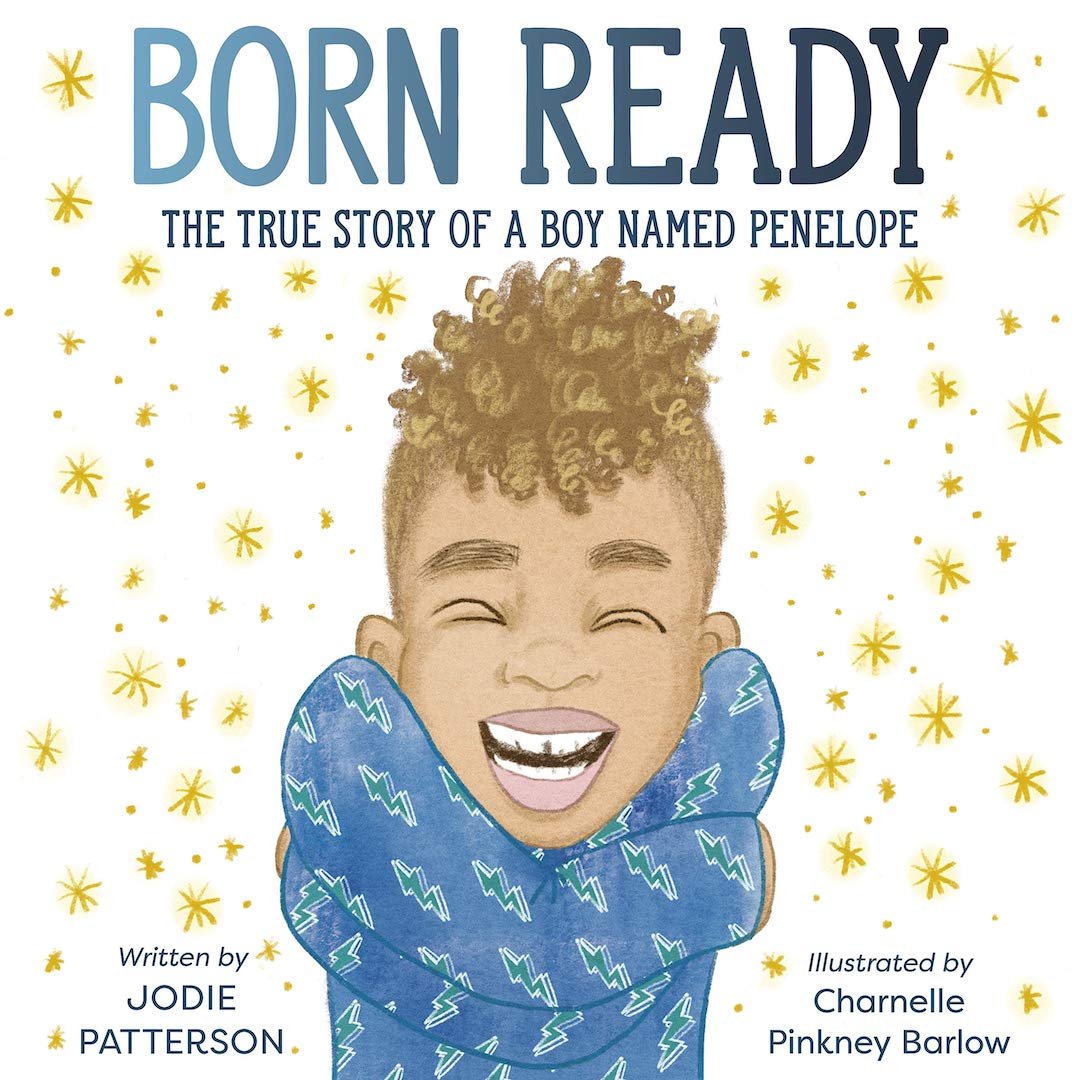
Born Ready: The True Story of a Boy Named Penelope by Jodie Patterson, illustrated by Charnelle Pinkney Barlow

Penelope is named after his grandmother, but nothing feels quite right. He knows deep down that he’s a boy, but everyone else thinks he’s a girl. This makes him angry, and he feels unseen and unheard, until he talks to his mom. His fifth birthday is his chance to tell his loving family, and the next day at school, he confidently walks in with his new (to the rest of the world) identity.

Harriet Gets Carried Away by Jessie Sima

Harriet loves costumes, and she wears them everywhere she goes. As she gets ready for her birthday party, she and her two dads realize they need to run some last-minute errands. Her imagination gets a little carried away, and she finds herself on an adventure with penguins, an orca, and some helpful pigeons.

Children’s Nonfiction

People of Pride: 25 Great LGBTQ Americans by Chase Clemesha, MD

Easy-to-read mini biographies, each accompanied by a photograph, share some of the most influential LGBTQ+ Americans’ lives. Additionally, there is a list of more notable people kids may want to learn about, a historical timeline of relevant events, and a glossary of helpful terms.

Rainbow Revolutionaries: 50 LGBTQ+ People Who Made History by Sarah Prager, illustrated by Sarah Papworth

One of the coolest parts of this book is the colorful world map that shows the birthplaces of each person listed in the book. Prager wrote the book specifically to increase representation for youth: “When I was growing up, I didn’t know that LGBTQ+ people had changed the world, I wrote the book to make sure you never have to think that.”

Children’s Graphic Novels

Wait, What?: A Comic Book Guide to Relationships, Bodies, and Growing Up by Heather Corinna and Isabella Rotman, colored by Luke B. Howard

Probably best for middle schoolers and up, this title says it all. Comprehensive, body positive, encouraging, and inclusive, this is a must-read as your child gets a bit older.

Snapdragon by Kat Leyh

Snapdragon is named after her mother’s favorite flower. She finds herself suddenly helping out the neighborhood “witch” and learns that not everything is as it first seems. Untangling family rumors, characters revealing true identities, and people showing their different sides, this book is magical, sweet, and entertaining. A variety of queer identities are represented.

Middle Grade Fiction

The Best at It by Maulik Pancholy

A Stonewall Honor Book, The Best at It features a diverse cast of characters and exposes readers to different cultures and identities. Rahul is a very relatable and likable character who has set out to figure out just one thing he can be the best at. Motivated by his grandfather’s advice, he is determined to meet his goal, while trying to also stay true to himself.

Birdie and Me

Jack and her brother Birdie are dealing with the aftermath of their mother’s death. Their uncles share the responsibility of caring for the kids, but when they go to live with Uncle Patrick, things begin to change. Uncle Patrick doesn’t accept Birdie’s love for gender-noncomforming clothing, and when Birdie begins being bullied at school, Jack steps into the role of protective big sister.

Both Can Be True 

Ash is nonbinary. Daniel often feels overwhelmed by his emotions. Somehow they both end up working together to save a dog, but Daniel doesn’t realize who Ash truly is. Their friendship evolves, and they have to figure out how to accept each other - and themselves.

Young Adult

Aristotle and Dante Discover the Secrets of the Universe by Benjamin Alire Sáenz

We typically try to recommend newer books, but this classic just cannot be left off the list. A sweet story of two teenage boys who meet and become fast friends. Over time, their relationship shifts, although it takes them each different amounts of time to recognize and acknowledge their feelings. They go through tragedies together, navigate major life changes, and depend upon their supportive families as they find their way.

The Girl from the Sea 

A graphic novel that takes classic selkie folklore but  makes it queer-friendly. Morgan meets Keltie, and her whole life begins to change. She faces family upset, environmental problems, and a first love she never anticipated.

Elatsoe by Darcie Little Badger

This book fills two much-needed niches: Indigenous experiences and asexual experiences. Blending fantasy and reality, this book is well-loved by teens. 

Beyond the Classroom: Montessori Extending Into Adulthood

Montessori for Adults

Montessori: it’s not just for children. What was originally created as an educational model for preschoolers in Italy has expanded significantly over time. Today, more and more adults are noticing there is potential for application far beyond the Casa dei Bambini. Whether you’re interested in learning more for yourself, or learning more about how Montessori education is trickling into various parts of our society, plenty of interesting changes are happening around the globe.

Training and Degrees

It may surprise you to learn that many people first hear about Montessori education through the lens of being a Montessori parent. The more people discover about the method, the more they become curious about the model, and this leads to many seeking their own Montessori credentials and eventually becoming guides.

Have you thought about Montessori education for yourself? If so, there are a number of options.

To become a Montessori-credentialed guide, it’s important to enroll in a training program recognized by a major Montessori organization. Two of the most respected are AMI (Association Montessori Internationale) and AMS (American Montessori Society). To learn more about affiliated training programs, visit their sites directly:

About AMS-Affiliated Teacher Education Programs

AMI Teacher Training | Association Montessori Internationale

Are you more interested in higher education? There are a number of programs offering master’s degrees in Montessori Education, and many include online options. Here is a great list for exploring education options for adults.

Montessori in the Workplace

People all over the world are beginning to recognize that the general philosophy of Montessori is extremely applicable in the workplace. If a model works well, why can’t it be applied elsewhere? Montessori schools are effective. They create an atmosphere of joyful learners that contribute to their communities. What if we modeled our workplaces to reflect these successful classroom environments?

Digital marketing professional (and Montessori mom) Amanda Shelley has some thoughts on what effective modern workplaces look like. Perhaps unsurprisingly, she draws comparisons from the different types of schools available to our children. She shares these ideas in this article.

Sophie Bryan, another Montessori parent and award-winning HR consultant, advocates for bringing Montessori principles into the workplace in order to drive innovation and employee freedoms. She believes this benefits both employees and the organizations they work for. Bryan explains these ideas in her TEDx talk and gives her thoughts on how we might make changes in our workplaces.

Shelley and Bryan are just two of many leaders currently advocating for a shift toward more Montessori-inspired work environments for adults.

Montessori in Prisons

Brian Walsh leads education programs in two prisons in Washington State. He and his wife also own and operate a school together. This diverse experience led him to draw conclusions about the similarities between the two environments, and use those experiences to create innovative solutions.

In this TEDx Talk Walsh shares the ways in which education in prisons is a smart investment, but also how we can make it effective by implementing some of the same principles as we do in children’s Montessori schools. The whole video is compelling, but jump to minute 8:14 if you’re short on time.

What might we consider when developing educational programs for incarcerated individuals? How can we create safe and appropriate tools and environments, while giving students control of their learning? Walsh has found solutions to these questions, and has found them to be highly successful.

Montessori for People with Dementia

The application of Montessori principles to care for people with dementia is becoming more and more extensive.

There have been numerous studies and academic papers published indicating Montessori principles are effective when applied to dementia care.

AMI even has a division of their organization dedicated to this emerging branch of study.

If you are the caretaker of an individual experiencing dementia, considering basic Montessori principles will help make your life easier as well as giving the individual an increased sense of joy and independence. Strategies will naturally change depending on the development and stage of memory loss. Some thoughts:

  • What needs are not being met in the environment? How might small changes create a sense of independence?

    • Label doors throughout the house with words written on index cards or sticky notes.

    • Lay out necessary items to complete a task: clean clothes to change into after a shower or items to put together and eat a simple no-cook breakfast.

  • What are the individual’s interests? How might those be incorporated into the environment?

    • Leave out books and activities around the home for the person to notice and engage with. This might include puzzles, magazines, or even a broken alarm clock with simple tools to tinker with. If the person was creative earlier in life, leave out art supplies. If they loved music, make the songs they enjoyed available for them to listen to.

  • What changes can be made to the home to create a built-in structure of safety? Are there simple ways to prevent potentially harmful situations? This is the application of ‘freedom within limits’. Once dementia progresses to a certain point, it’s not safe for a person to be completely independent. The key is to consider how to create an appropriate level of freedom.

5 Traits Nurtured In the Montessori Environment

Five Traits Montessori

When we choose a course of education for our children, we ask ourselves a lot of questions. At some point, we begin to wonder how various models align with our own personal values. What’s really important? What should the goals of education be? What do we want our children to gain from the experience?

It all depends on why and how the methods were developed. What were the initial goals when a particular approach was conceived? What do current practitioners value? These are important questions to consider.

In a list like this, you might be expecting one of the items we feature to be independence. While it’s true that we work hard to build a sense of independence in the children we guide, we talk about it so much we figured it might be nice to focus on some of the other traits that are nurtured in a Montessori environment.

When it comes down to it, Montessori educators care deeply about the academics we teach, because we are curious people who are fascinated with the world around us. But we’re passionate about other things, too. We want the children in our care to go out into the world feeling good about themselves, caring about others, and excited about what they do. That’s what drives our work. That’s what makes us feel so strongly about what we do.

Without further ado, here are five traits Montessori education nurtures in children:

1. Kindness

Interpersonal skills are some of the most important skills we can teach our students. They can learn all the math and language arts skills out there, but if they can’t interact with other people their lives won’t feel overly fulfilling. More than that, we think humans can accomplish so much more together than individually, so we may as well learn to get along with one another.

The very structure of the Montessori day allows for time dedicated to planned and spontaneous lessons about kindness. We read stories that teach children how to handle hard situations. We use role-playing games to make the work fun. And when a conflict happens in the classroom or the playground? We teach children skills in the moment. How do we handle our own emotions? How do we communicate with someone we disagree with? What does it look like to disagree but still respect one another?

Sometimes the work consists of giving children the script to work through solving issues. Sometimes we enlist the help of the whole group, discussing problems and asking for solutions without targeting individuals.

2. Powerful Work Ethic

The Montessori approach focuses on intrinsic motivation. Extrinsic motivation can be effective in small doses and with short-term goals, like when you don’t want to do the dishes and reward yourself with an iced coffee afterward. Those types of rewards, however, are not particularly effective at cultivating a deep motivation to learn or help others.

Some people find it shocking that Montessori schools don’t give grades, have tests, or hold award ceremonies. The real world doesn’t function like that, so why should we teach children one type of motivation and then expect them to switch to something else as adults? Are employees evaluated at work? Absolutely. The thing is, they’re not receiving grades; they receive narrative feedback that highlights their areas of strengths and what they might improve on. We do the same with our students.

You’ve likely heard the argument that instead of saying “good job” to our children, we should replace that with observations such as “I notice you worked really hard on that. How does it feel to complete it?” Putting the emphasis on a person’s efforts, rather than our judgment of their accomplishments, helps nurture a developing sense of internal motivation.

Rather than focusing on accolades, our students grow with a desire to solve problems, gain insights, and pursue their passions.

3. Creativity

Put simply, Montessori encourages creativity in two main ways: we incorporate the arts whenever possible, and we give children a chance to find their own solutions to problems.

Montessori guides integrate art education in countless ways. Here are just a small sampling of what may happen in classroom during the course of the year:

  • Drawing, labeling, and painting maps

  • Listening to music or learning the traditional dance of a culture being studied

  • Using collage to review and label the external parts of a fish

  • Reading biographies about influential artists

  • Teaching sewing or weaving as practical life

As mentioned, the other side of creativity involves the way we encourage our students to think. We do not simply feed them all the answers. We give lessons, sure, and provide students with factual information. But when they run up against a problem we don’t race to give them the solution. Whether it be social, academic, or something else altogether, we ask guiding questions that lead the child to generate their own possible solutions.

This, we believe, is one of the keys to developing innovative mindsets.

4. Joyful Learning

When it comes to creating joyful learners, intrinsic motivation and creativity are a pretty good start. Combine that with copious amounts of freedom and gorgeous autodidactic materials, and you have an environment that kids simply cannot resist.

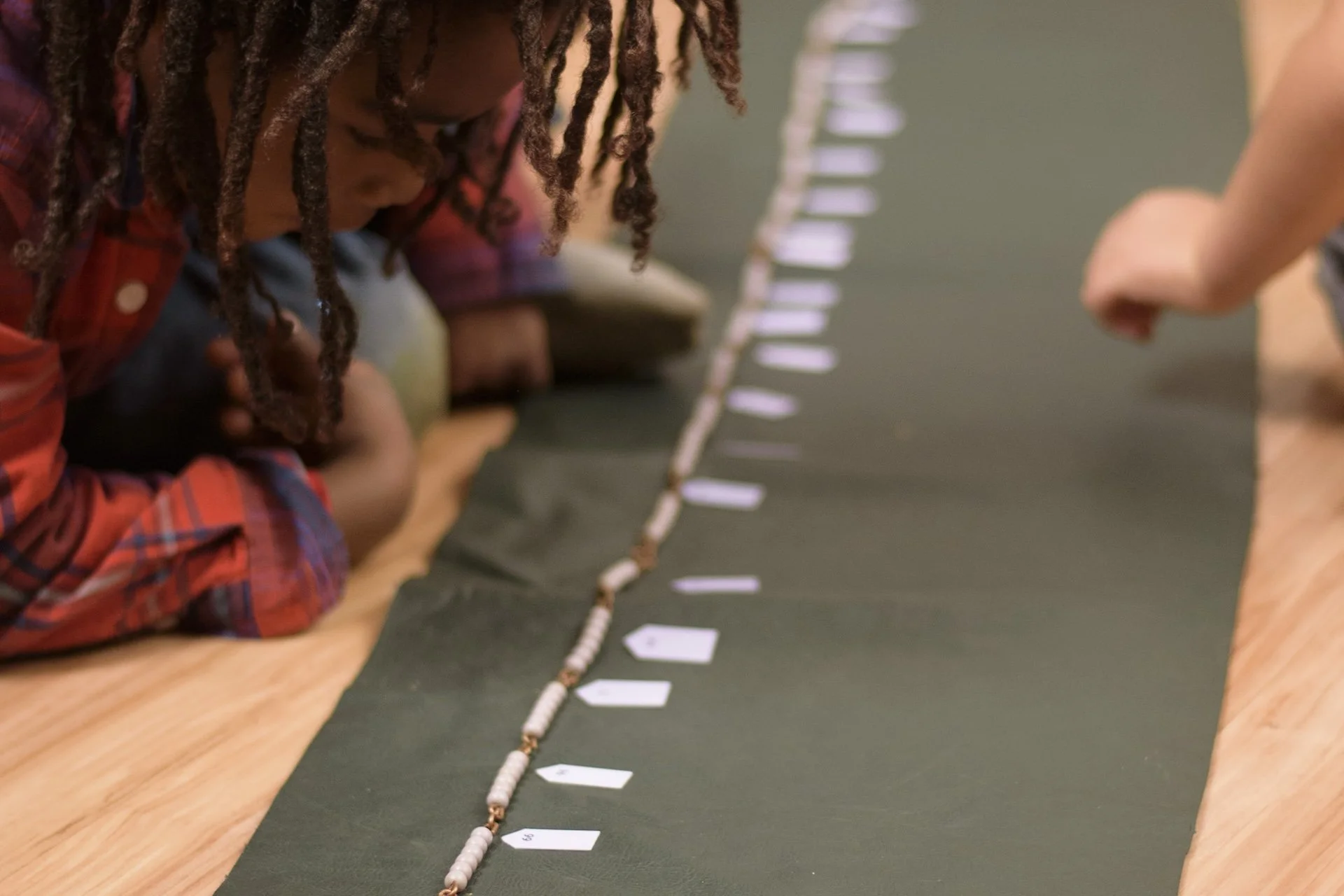
We think learning is fun, or at least it should be. Otherwise, what’s the point? We really are invested in helping our students become adults who love to learn and pursue learning independently for the rest of their lives. Even the most basic of skills can be delivered in ways that are exciting. Take the Montessori positive snake game for example: it’s a game, and it involves making snakes out of colorful groupings of beads, then eventually transforming the snake until it’s entirely gold. But what’s it really about? Learning how to exchange smaller numbers to make ten in preparation for multiplication work.

5. Service-Mindedness

We believe it’s of critical importance to give our children a sense of the world as a whole and to really see the ways in which everything is connected and interdependent.

This belief is embedded into our curriculum, and most easily seen in our history lessons. In lower elementary, children learn first about the beginnings of our universe, followed by the formation of Earth, then the evolution of life on our planet. Later on, they explore early humans and early civilizations. It isn’t until adolescence that they begin to learn about more recent periods in history.

This is intentional. We believe learning about those who have come before us instills a sense of gratitude and dedication to others.

We also make a point of launching student-driven service projects. These tend to start small, and may focus on the school community. As students get older, their capabilities and visions expand outward into the greater local community. These projects look different every year, because they’re student-led.

These five traits are really just a glimpse of some of Montessori’s most revered values. There are plenty more. Want to see for yourself? Call us to schedule a tour.

What’s a Work Period? Your Questions Answered

Montessori Work Period
The mind takes some time to develop interest, to be set in motion, to get warmed up into a subject, to attain a state of profitable work. If at this time there is interruption, not only is a period of profitable work lost, but the interruption produces an unpleasant sensation which is identical to fatigue.
— Dr. Maria Montessori, What You Should Know About Your Child

Consider, as an adult, what it takes for you to do your best work. What must your environment look like? What do you need from others? What constraints do you need to be removed in order to meet your goals?

Dr. Montessori spent years observing children as they played. She quickly recognized that immense learning takes place during play, leaving it reasonable to call it the child’s work. Left without interruptions, she witnessed pure magic.

Children, even very young children, have the capacity for intense concentration. They have the innate ability to work through problems and develop solutions all on their own. They want to do these things. And what’s even better? They do it with a sense of self-satisfaction, not because they feel pressure or expectation to.

What Montessori realized is that we, as adults, sometimes need to get out of kids’ way. We often imagine they require more help than they actually do, or that we must offer rewards or incentives to ensure they do their schoolwork, but those assumptions are misguided. What children really need is time, respect, and an environment in which they may focus deeply on their work.

Thus, the work period was born. Generally spanning about three hours long in the morning, this precious time is a cornerstone of Montessori education.

How does it begin?

The start of the work period varies, but typically it begins as children arrive in the morning. For some classes, on some days, and during some parts of the year, there may be a whole class morning meeting or circle time at the start or end of the work cycle.

A typical day begins with the child hanging their belongings on a designated hook, changing their shoes, and greeting their teacher as they walk into the room. They may say hello to a friend or two, take a moment to transition, and then select a work from the shelf. Others may be so eager to begin, they waste no time at all and go straight to the material they have been thinking about since the day before.

Prior to age six the child will likely work by themselves, but near their peers, most of the time. They may lay out a work rug, set up their material, and delve into a deeply concentrated state. They use the materials in the way they have been taught, then clean up and replace everything when they are done. 

As children older than six, due to their development and desire for social connection, the start of the day can be a bit noisier and more chaotic. They still get to work rather quickly, although it’s often in the form of group or partner work.

What do the adults do?

A Montessori classroom typically has two adults present: the guide and an assistant. The assistant busies themselves with ensuring the room stays neat and orderly and that everything the children need is available to them. If children need help or redirection, the assistant is quick to engage while still allowing the child to maintain an appropriate level of independence.

This allows the guide to focus on two main tasks: observation and presenting lessons. During the work period lessons are not given to the whole group; individuals or small groups of children work with the guide to learn or review skills and materials. This is done as unobtrusively as possible. Adults in a Montessori classroom do their best not to interrupt the work of a child. If they need to speak with a student, there is often a non-verbal structure in place, such as leaving a name tag beside the child as they are working. This alerts the child to check in with the guide whenever they complete the task they are focused on.

Do children really focus the entire time?

Not usually! Can any of us truly focus for three hours straight without breaks? We definitely don’t expect our students to, either. This is one of the reasons our environments are designed for students to meet their own needs independently, when the time is right for them. If they feel hungry, they are welcome to have a snack. If they need to use the restroom, they don’t need to ask permission. Even if they just need to get up and stretch their legs or look out a window - we do not prevent children from doing these things. Allowing for breaks lets us all focus better in the long run anyway.

There is one interesting phenomenon worth mentioning here. Sometime around 10:00-10:30 in the morning, toward the end of the work cycle, classroom communities often experience what we refer to as false fatigue. Like clockwork, the volume of the children’s voices will rise, there is noticeably less engagement with the materials, and fewer children are sitting in one place - rather they seem to be wandering around the room. The adult instinct is to ring a bell or clap and make a plea for re-engagement, but we have learned to hold back. False fatigue is a normal part of the flow of the day. If we pause, observe, and wait even two or three minutes, we will see the children find their way back into their work. It can be pretty amazing to observe.

What might one work period look like for an individual child?

This article has probably already given you a fairly good idea of what this might look like. Once the child completes their first work of the day, they begin another. This repeats for the duration of the morning, but is fractured by any number of other activities. The child will likely have a lesson or two with their guide while the rest of their classmates continue working independently. At some point, the child will get hungry, have a snack, and clean up after themselves. They may take several water breaks, socialize with friends, or even spend some time watching a squirrel climb a tree outside.

In short, the work period is a way to honor the child’s way to balance focused learning with meeting one’s own needs, on one’s own timetable. It’s a way to show the child we trust them, and our students absolutely rise to the occasion.

Curious to see what a morning work period looks like in action? We would love to have you visit. Reach out today to schedule a tour.

Biographies in Contemporary Children’s Literature

Biography books for children have come a long way from the dull accounts of people’s lives that many of us read when we were young. Today’s young readers are captivated by learning about other people, whether they be major historical figures or not. The art of the memoir has changed how we tell the story of a life, and that style of writing has slipped itself beyond just autobiographies and can be found in mainstream biographies as well.

It’s impossible to list all the amazing books we would like to in this brief article, but please consider them to be a tiny slice of what’s available. As always, we provide links for you to learn more about each title, and we have sorted the books into different categories making it easier to find something suitable for readers of all ages. Enjoy!

Picture Books (primary and lower elementary children)

Picture book biographies are incredible works of art. The illustrations are gorgeous, and the writing grabs the attention and wonder of young children and the adults who read to them.  There are countless beautiful books out there; these are just a few titles that have been recently published.

In these books, children can learn about important human perspectives at a developmentally appropriate level. This includes the tragedy of the Holocaust, thriving with a disability, working hard to achieve one’s goals, preservation of native culture, dedication to social justice, and more.

Children’s Biographies (elementary and middle school children)

The first two books in this section of our list are appropriate for lower elementary-aged children, while the rest are middle grade fiction best suited to upper elementary and middle school.

Just as with the picture books above, these cover a wide variety of important and interesting topics. They explore the lives of artists and their inspirations, living with a disability, how animals can make a profound impact on our lives, the complicated experience of living between two cultures, and life as a black child in the Jim Crow South.

Graphic Novels (these particular titles are suitable for elementary children)

As we have mentioned before, graphic novels are appealing to many children, but they open doors for some. Pictures help increase our understanding of context within a story, and graphic novels present literature in easier-to-consume “bites”. Accessibility is important, and getting kids to read, in whatever way works for them, is a great thing.

These three books happen to be about famous figures, but they have a nice way of presenting biographical information to children in an interesting and memorable way.

Young Adult Biographies (high school)

High school students are typically ready to consider heavier topics. They have a deep sense of justice and the motivation to make change. This makes it the perfect time to introduce them to how life is sometimes messy, complicated, and unfair.

Themes include growing up black in America, immigration and war, surviving sexual assault, and being falsely accused and imprisoned. One of the books - Passport - is a graphic novel that details the author’s life growing up with parents who work for the CIA.

Materials Highlight: The Word Study Cabinet

Each month we highlight one of the amazing Montessori learning materials here on our blog. This week we take on a well-recognized  feature in any lower elementary environment: the word study cabinet.

Typically housed in a tower of tiny labeled drawers, groups of cards allow children to study an important area of language, and to do so independently.

The Presentations

Perhaps it is easiest to start by listing the skills covered by the word study materials:

  • Compound words

  • Prefixes

  • Suffixes

  • Homophones

  • Homonyms

  • Homographs

  • Synonyms

  • Antonyms

  • Contractions

  • Syllabication

One of the most important parts of word study happens before a child even touches a drawer of cards. A small group of children gather with a guide, usually on the floor around a work rug. The teacher often has any number of supplies that may include strips of paper and markers, a small chalkboard or dry erase board, prepared booklets, charts, and so on. What the teacher brings varies depending on the lesson - and there are many!

Many of the skills listed above require more than one lesson to be given to each child over time, as their understanding increases. Each of these lessons can look very different.

Here is one way the concept of contractions might be presented to a child:

Using the movable alphabet materials, the guide lays out the letters for a group of words, appearing as follows. (Note the red used to isolate the apostrophes.)

she is     she’s

can not     can’t

you have     you’ve

who would     who’d

will not     won’t

After reading through the words, which the children recognize from speaking, the guide defines the task of an apostrophe. The children are asked what else they notice, and they eagerly point out the missing letters.

The guide asks the children to take a deep breath, pointing out how the ribs expand and contract. They say that to contract means to become compressed, or smaller, and then they are able to tell the children that these types of words are called contractions.

Continued Work

Once the child has a basic understanding of the skill, they are asked to progress through the drawers independently. For example, after having received the above mentioned contraction lesson, the child begins with contraction drawer 1. This may not happen until the next day when the child is independently selecting materials during the work cycle.

The child takes the drawer out and lays out all the cards. They see before them a group of words much like the one the guide had laid out using the movable alphabet. The child gets to work matching, and the nature of the material ensures they match correctly, or else the final cards would not make sense.

The child records the words in their notebook, cleans up the cards, and puts everything away. The next time they’re ready for independent word study work, they move on to contractions drawer 2, and so on, until the guide recognizes the need for a new lesson or skill.

Extensions

Sometimes, a child may progress through the drawers more quickly than expected, or they may have extra enthusiasm for the subject area. To provide more excitement and challenge, the guide will have a file of black line masters intended to give children more practice with the same skills, but using pencil and paper instead of the material.

Perhaps surprisingly, these are essentially worksheets! While it is rare to find a worksheet in a Montessori classroom, their novelty is just what is needed in some situations, and they can provide a nice transition for the lower elementary child who is moving away from the heavy reliance on physical materials.

Want to see the word study materials in action? Call us today to schedule a tour. The best way to learn about Montessori is to spend time in the classroom.