
The Work That Grounds Us: Junior High Summer Work Days
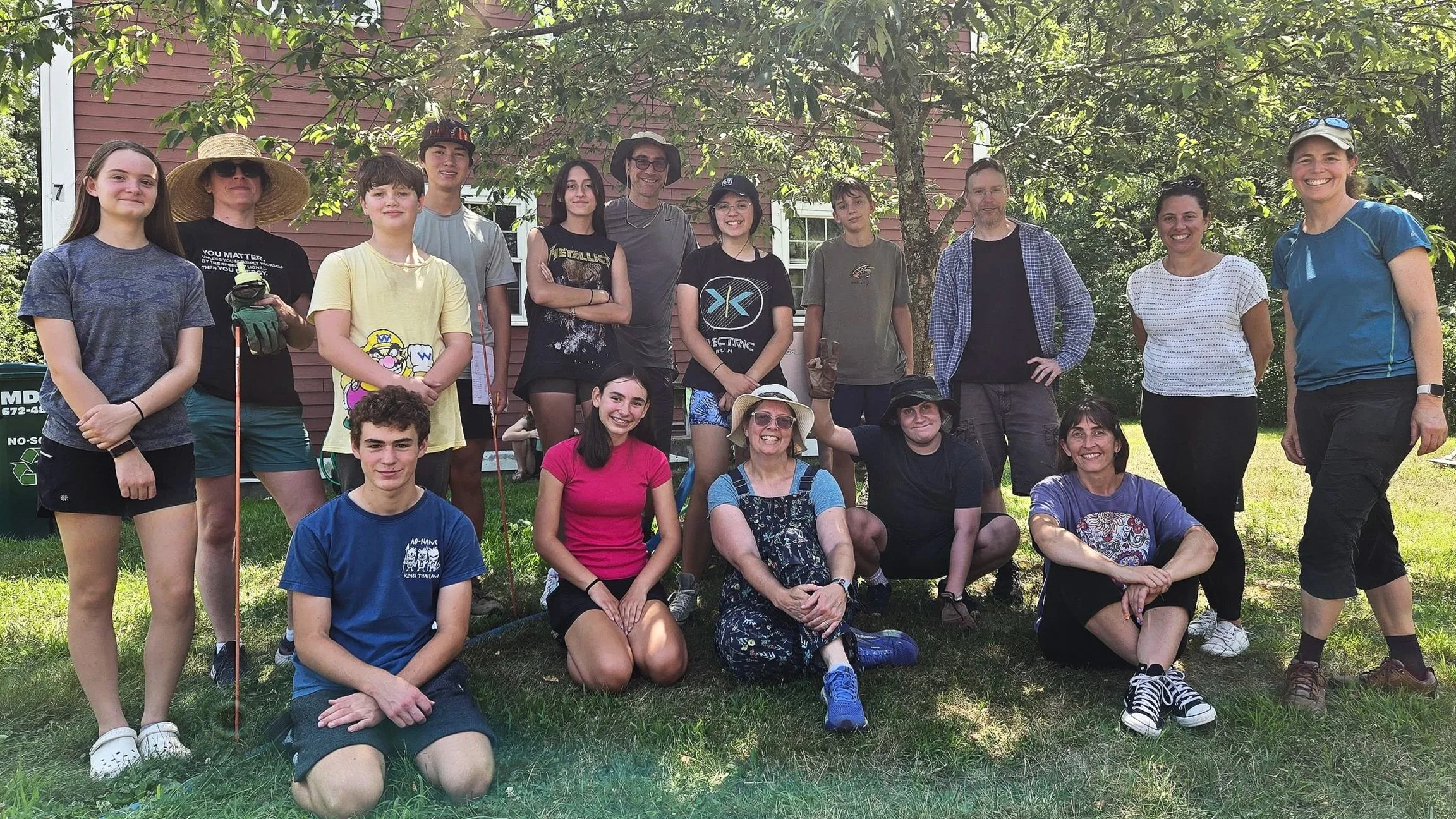
Long before the first day of school, the Junior High (which we call the Adolescent Program—AP) campus at Hollis Montessori was already buzzing with energy. Over several days this summer, AP students, guides, and families came together for hands-on work that keeps our small community thriving. They repaired the chicken tractor, weeded and tended the garden, began building a protective fence around the beds, and organized tools and supplies in the shed.
At first glance, it might look like simple manual labor. But in Montessori education — and especially in the Adolescent Program — there’s always more happening beneath the surface.
Why Chickens and Gardens?
Maria Montessori believed that adolescents need to engage with the real world in meaningful ways. The farm environment at Hollis Montessori gives students the opportunity to experience real world work and responsibility.
The chickens, gardens, and orchard play a key role in our study of production and exchange, where students practice operating a business. They also give us subjects for academic research, areas for students to develop expertise, and fresh ingredients to cook with. The hands-on nature of our work allows students to develop practical life skills, as well as a sense of responsibility for their environment.

Chicken care
Caring for chickens and cultivating vegetables are not side projects —they transform the school grounds into living laboratories where biology, ecology, and economics come to life. Our chickens, for example, are more than egg producers, they are part of an interconnected system. Their waste fertilizes our gardens, their habits spark lessons about behavior and adaptation, and their care requires consistent attention. Similarly, the vegetable gardens allow students to see firsthand how soil, water, sunlight, and human stewardship combine to sustain life. It’s a daily reminder that food doesn’t just appear — it’s cultivated through patience, observation, and care.
The Purpose of Doing the Work Themselves
In the AP, students don’t just study sustainability — they practice it. When something breaks, they repair it. When the weeds overtake the beds, they get their hands dirty restoring balance. These tasks give adolescents real ownership and agency. Doing this kind of work builds perseverance and problem-solving skills, but it also meets a deep developmental need. During adolescence, young people are seeking to understand their place in society. Purposeful work helps them find it. When they work side by side, they learn to depend on one another, manage frustration, and see the results of their efforts in real time.
What We Accomplished
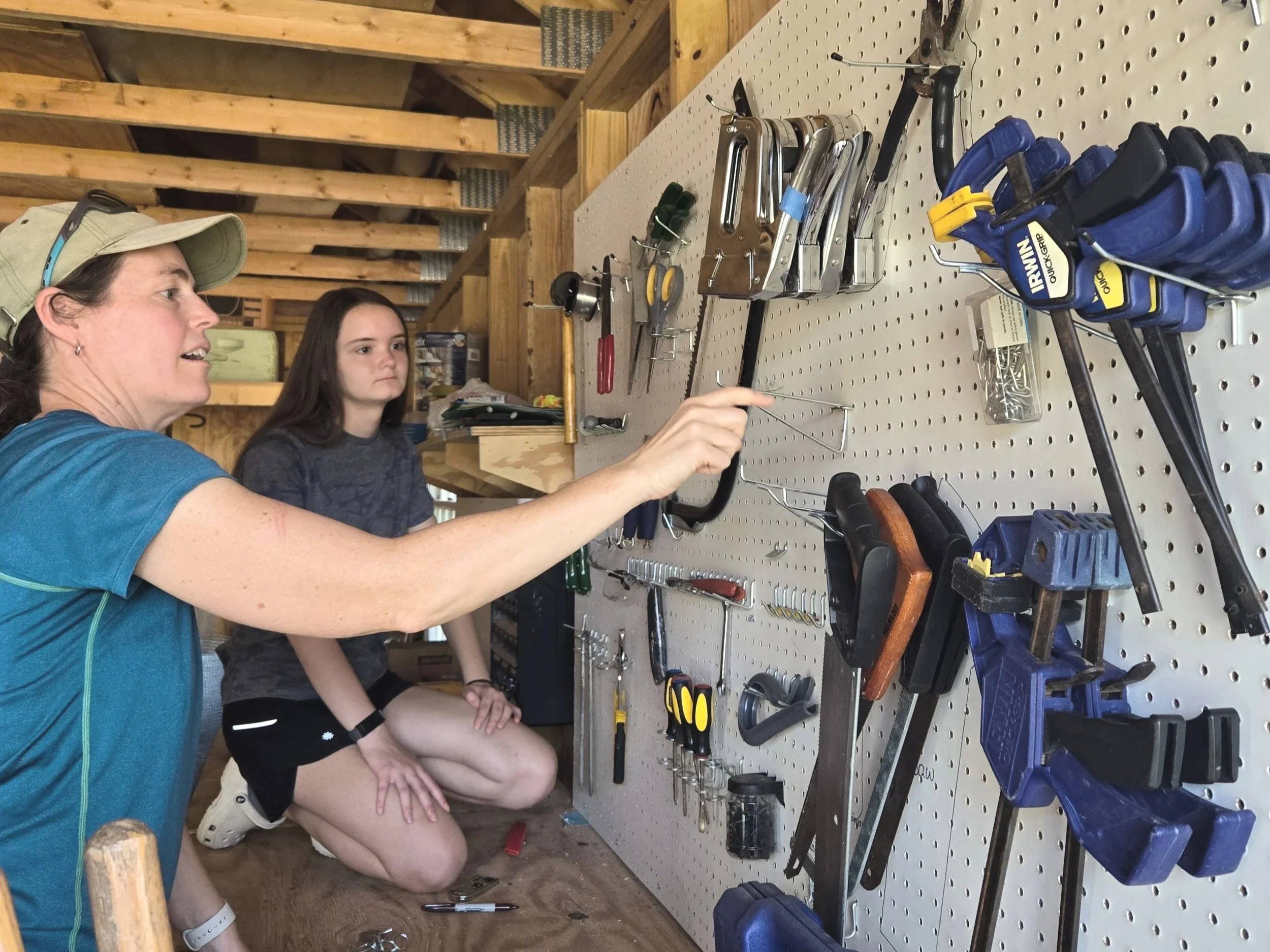
Organizing the tools in the shed
This summer’s projects touched nearly every part of the AP’s working landscape. The chicken tractor needed repairs after several years of use, and students assessed what was required, gathered materials, and rebuilt the frame so the flock could safely roam the pasture again.
In the garden, students weeded, harvested, and prepared the beds for fall planting. They also began building a sturdy new fence to protect the crops from the chickens— a project that required measurement, planning, and teamwork. Inside the shed, students sorted tools, created a more efficient system with a pegboard, and repaired shelving to make shared resources easier to find and maintain.
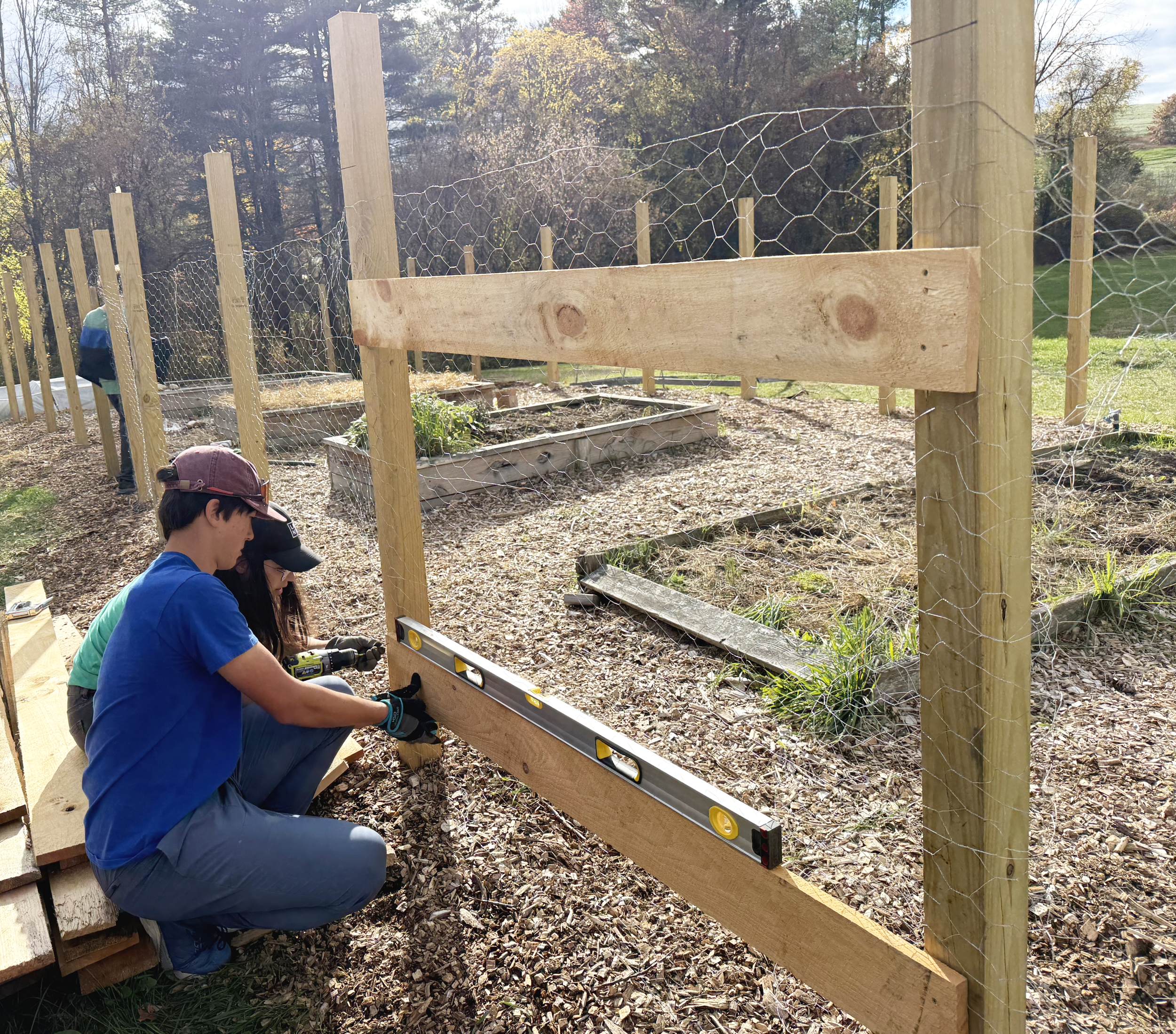
Daniel working on the fence
AP 9th year student Daniel O’Sullivan has spent the last two years working on the fence project. “Although it might not seem like much to look at,” he notes, “it took a lot of consideration and time to plan. I’ve had help carefully researching, choosing materials, and choosing designs from other students—which I’m very grateful for. While trying to keep a low budget and a sturdy design, I’ve tried my best to manage this project to make it something that fits and will stay with the school for at least a decade.
Each project reflects collaboration and care. Every nail hammered, every weed pulled, and every tool hung on the wall are part of a larger story — one of community, stewardship, and growth.
Why This Work Matters
The AP environment depends on the students who inhabit it. Their effort maintains the systems that sustain both their learning and their sense of belonging. When students come back in the fall, they see the results of their labor—the chickens thriving, the gardens productive, the shed ready for use — and they know that their hands made that possible.
Work days also offer opportunities for community building over the summer. The students’ families got to work together with their children and the classroom guides, and rising 7th graders were able to work alongside their older classmates. The number of students and adults who came greatly increased the ability to do side by side work—which was instrumental for tasks like digging fence posts. The students weren’t the only ones involved in problem solving—it was fun to see problem solving among the parents, as well. Even more importantly, when the class returned to the work once school was in session, they knew what to do and were more independent, which made the work come together quickly.
As Maria Montessori wrote, “Work is the cure for all that ails.” For our adolescents, this work cultivates independence, empathy, and joy. The summer work days remind us that education is not only about knowledge, but about becoming adults—growing capable, connected, human beings who understand the value of contributing to something real.
"Work on the land is an introduction both to nature and to civilization and gives a limitless field for scientific and historic studies. If the produce can be used commercially this brings in the fundamental mechanism of society, that of production and exchange, on which economic life is based. This means that there is an opportunity to learn both academically and through actual experience what are the elements of social life."
—Maria Montessori, "From Childhood to Adolescence”